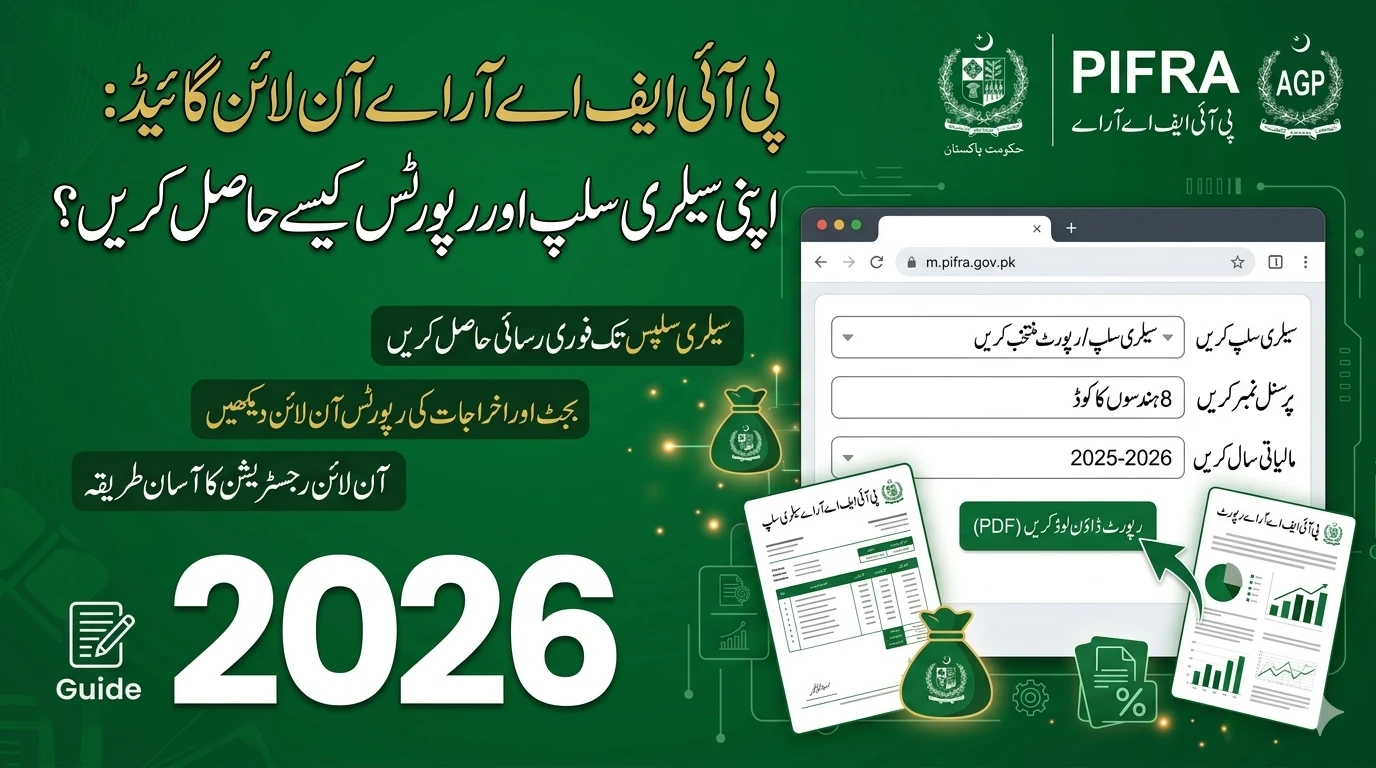
Every month, thousands of government employees across Pakistan—from teachers in Punjab to police officers in Sindh—receive an automated email. Inside is a PDF document filled with numbers, abbreviations, and specific codes like “A01101” or “G06202.” This is your PIFRA salary slip.
For many, these codes look like a secret language. You might see your “Gross Pay” and your “Net Pay,” but do you really know what every line item means? Understanding these “Object Codes” is the best way to ensure you are being paid correctly and that your future pension and GP Fund are being tracked accurately.
In this comprehensive guide for 2026, we will decode the PIFRA payroll system. We will break down the allowances you earn and the deductions taken out, so you can read your pay slip like a professional accountant.
What Exactly are PIFRA Object Codes?
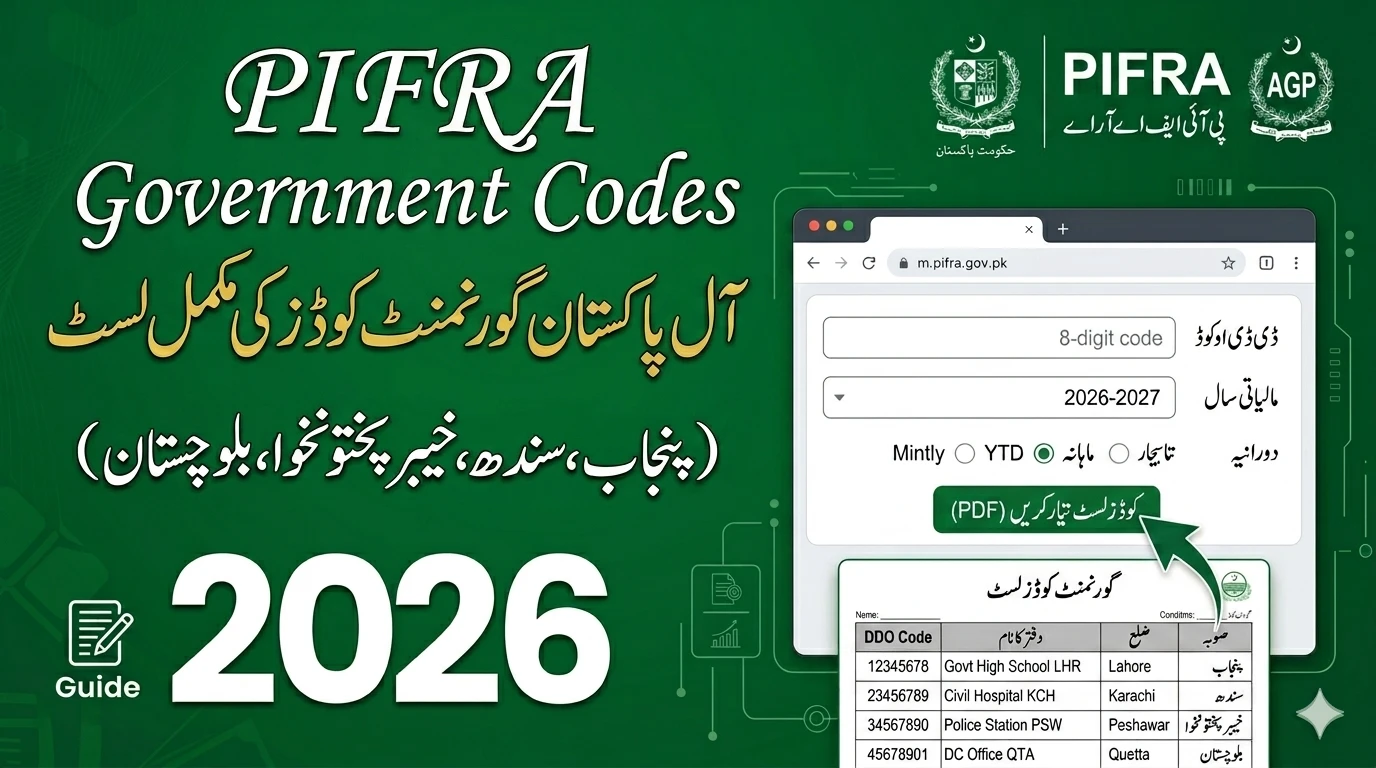
Before we look at the specific numbers, let’s understand the system. PIFRA stands for the Project for Improvement of Financial Reporting and Auditing. The government uses a powerful software called SAP to manage the payroll of millions of employees.

Every type of payment or deduction is assigned a unique “Object Code.” Think of these codes as a filing system. Instead of the computer writing “Monthly Basic Salary for Grade 17,” it simply uses A01101. This helps the Accountant General (AG) offices across Pakistan keep records uniform and error-free.
1. The Allowances: Understanding the Money You Earn
The left side of your salary slip usually lists your Allowances. These are the various components that make up your total “Gross Salary.” Most of these codes start with the letter “A.”
A01101: Basic Pay
This is the most important code on your slip. It represents your core salary based on your current Basic Pay Scale (BPS) and your “stage” or number of increments. When people talk about a “pay scale increase,” this is the number that changes.
The “Adhoc Relief” Series (A012 series)
You will likely see several lines starting with “Adhoc Relief.” These are the salary increases given by the government in previous budgets. Because the government often gives a percentage increase instead of revising the entire pay scale, they keep them as separate codes.
- Adhoc Relief 2023, 2024, and 2025: Each of these has a specific code. They are calculated as a percentage of your Basic Pay.
- Why so many? Each one represents a different year’s budget promise. Eventually, the government “merges” these into the basic pay, but until then, they stay separate.
A01202: House Rent Allowance (HRA)
If you are not living in a government-allotted house, you receive HRA. In most cases, this is calculated as 45% or 30% of the 2008 pay scales (though this varies by province and urban/rural location).
A01217: Medical Allowance
This is a fixed monthly amount given to support your health expenses. For lower grades, it is often a set amount (like 1,500 PKR), while for higher officers, it may be a percentage of their pay.
A01203: Conveyance Allowance
This code covers your travel costs from home to the office. If you are provided with a government vehicle and a driver, you will notice this allowance is missing or significantly reduced on your slip.
2. Special Allowances: Department-Specific Perks
Depending on where you work, you might see “Special” or “Technical” allowances. These are meant to compensate for specific types of work.
- A01274 (Special Allowance): Often given to employees in the Secretariat or specific high-pressure departments.
- A01253 (Science Teaching Allowance): Specifically for science teachers in schools.
- A0120D (Personal Allowance): Often given when an employee is promoted but their previous salary was higher than the new scale’s starting point.
3. The Deductions: Understanding Where the Money Goes
The right side of your slip lists the Deductions. This is the money taken out of your gross pay before the final “Net Salary” is deposited into your bank account.
G01101: GP Fund Subscription
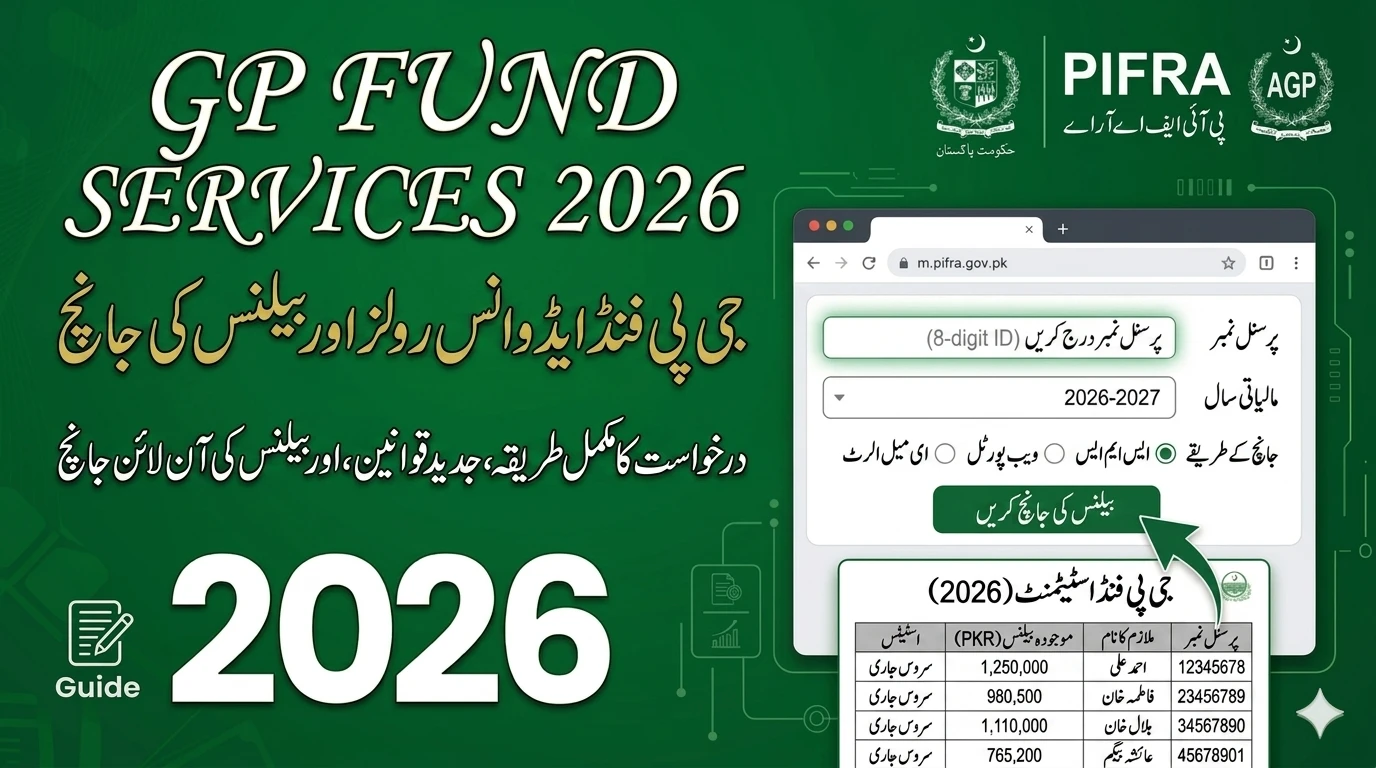
The General Provident Fund is your mandatory savings. Every month, a set amount is deducted from your salary. This money stays with the government and earns interest (unless you opt for the interest-free version) until you retire or take an advance.
G06202: Benevolent Fund (BF)
This is a welfare deduction. The money goes into a pool used to provide grants for marriages, funerals, and scholarships for the children of government employees.
G06409: Group Insurance (GI)
This is a very small monthly deduction that acts as a life insurance policy. If an employee passes away during service, their family receives a lump sum payment based on this contribution.
B01187: Income Tax
As of 2026, income tax rules for salaried individuals are strictly followed. If your annual income exceeds the tax-free threshold set by the Federal Board of Revenue (FBR), a monthly portion is deducted here.
C02701: 5% House Rent Deduction
This code is often confused with the House Rent Allowance. If you live in a government house, the government deducts 5% of your basic pay as a “maintenance” or “rent” charge.
4. Recoveries: Repaying Your Loans
If you have taken a loan or an advance from the government, you will see “Recovery” codes.
- B02101 (GP Fund Advance Recovery): If you took a loan from your GP Fund, the monthly installment is listed here.
- HBA Recovery: This relates to the House Building Advance.
- Motor Car/Cycle Advance: If the government helped you buy a vehicle, the repayment will appear under these codes.
How to Check if Your Codes are Correct
In 2026, errors in the SAP system are rare but possible. Here is how you can verify your information:
- Compare with Colleagues: If someone is in the same grade (BPS) and has the same years of service as you, their “A01101” and “Adhoc Relief” codes should be identical to yours.
- Check the Gazetted Circulars: Every year after the budget, the Finance Division issues a “Salary Circular.” This document lists the exact amounts for every grade.
- Visit the DAO: If you see a code like “A13101” (Misc. Recovery) and you don’t know what it is for, visit your District Accounts Office. They can look into the SAP backend and tell you exactly why that money was deducted.
Summary Table: Most Common PIFRA Codes 2026
| Category | Code | Description |
|---|---|---|
| Earnings | A01101 | Basic Pay (Monthly Salary) |
| Earnings | A01202 | House Rent Allowance |
| Earnings | A01217 | Medical Allowance |
| Deductions | G01101 | GP Fund (Mandatory Savings) |
| Deductions | G06202 | Benevolent Fund (Welfare) |
| Deductions | B01187 | Income Tax (FBR) |
3 Tips for Managing Your Pay Records
- Save Every PDF: Don’t just look at the email and delete it. Create a folder on your Google Drive or computer and save every month’s slip. You will need these for pension processing later.
- Watch the “Increments”: Every December, you get an “Annual Increment.” Check your December salary slip to ensure your Basic Pay (A01101) has increased correctly.
- Verify Tax Deductions: At the end of the fiscal year (June), check your total tax deducted. You might be eligible for a refund if you have invested in insurance or paid high school fees.
FAQs
1. What does it mean if a code starts with “A”?
In the government’s Chart of Accounts, the letter “A” represents Expenditure. Since your salary is an expense for the government, all your earnings (allowances) start with A.
2. Can I stop the GP Fund deduction (G01101)?
No. GP Fund subscription is mandatory for all permanent government employees. However, the amount deducted can be increased if you want to save more for retirement.
3. Why did I get a “Recovery” (B-Series) code suddenly?
This usually happens if you were overpaid in a previous month or if you recently took a loan. If you didn’t take a loan, it could be a “recovery” of an allowance that you were no longer eligible for (for example, if you moved into a government house but were still receiving House Rent Allowance).
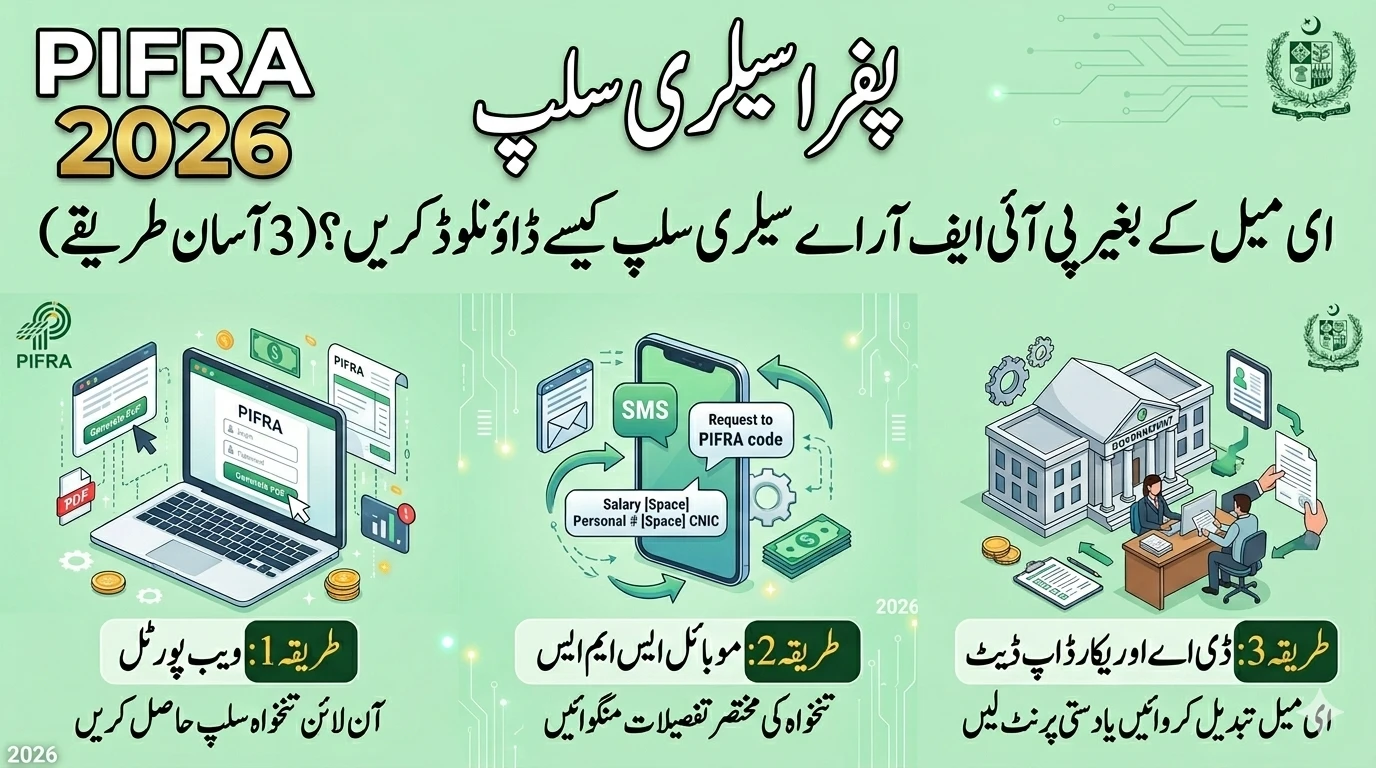
4. How can I get my salary slip if I don’t receive the email?
You can visit the official PIFRA or AGPR web portal. By entering your CNIC and Personal Number, you can generate a “duplicate” slip for any month in 2026.
Final Thoughts: Knowledge is Financial Power
Opening your salary slip shouldn’t feel like looking at a math exam. By understanding these PIFRA codes, you take control of your financial life. You can spot errors early, track your savings, and understand exactly how much the government is contributing to your welfare.
Keep this guide bookmarked or printed. The next time you see a new code on your slip, you won’t be confused—you’ll be the expert in your office who knows exactly what it means.