If you are one of the thousands of lucky people preparing for Hajj in 2026, congratulations! You are about to embark on the most important spiritual journey of your life. However, if you haven’t been to Saudi Arabia recently, you might be surprised by how much has changed. The days of carrying stacks of paper maps and physical permits are mostly over.
Today, being a pilgrim means being a “digital pilgrim.” The Saudi government and the Pakistan Ministry of Religious Affairs have moved almost everything to smartphone applications. From booking your time in the Rawdah Rasool (PBUH) to tracking your shuttle bus in Makkah, your phone is now your most important tool after your Ihram.
Setting up your “digital workflow” before you leave home will save you hours of frustration in the heat. Let’s look at the four must-have apps you need to download and master for Hajj 2026.
Why Technology is Your Best Friend This Year
I know what you might be thinking. “I’m going there for prayer, not to stare at a screen.” I totally get that. But here is the deal: the tech is there so you don’t have to worry about the small stuff.

When your permits, flight info, and hotel location are all tucked safely in your pocket, your mind is free to focus on Zikr and Dua. In 2026, the crowds are managed with surgical precision. If you don’t have the right app, you might miss your chance to enter certain holy sites. It’s better to be prepared now than to be confused at a checkpoint later.
1. Nusuk: The “Master Key” to the Holy Sites
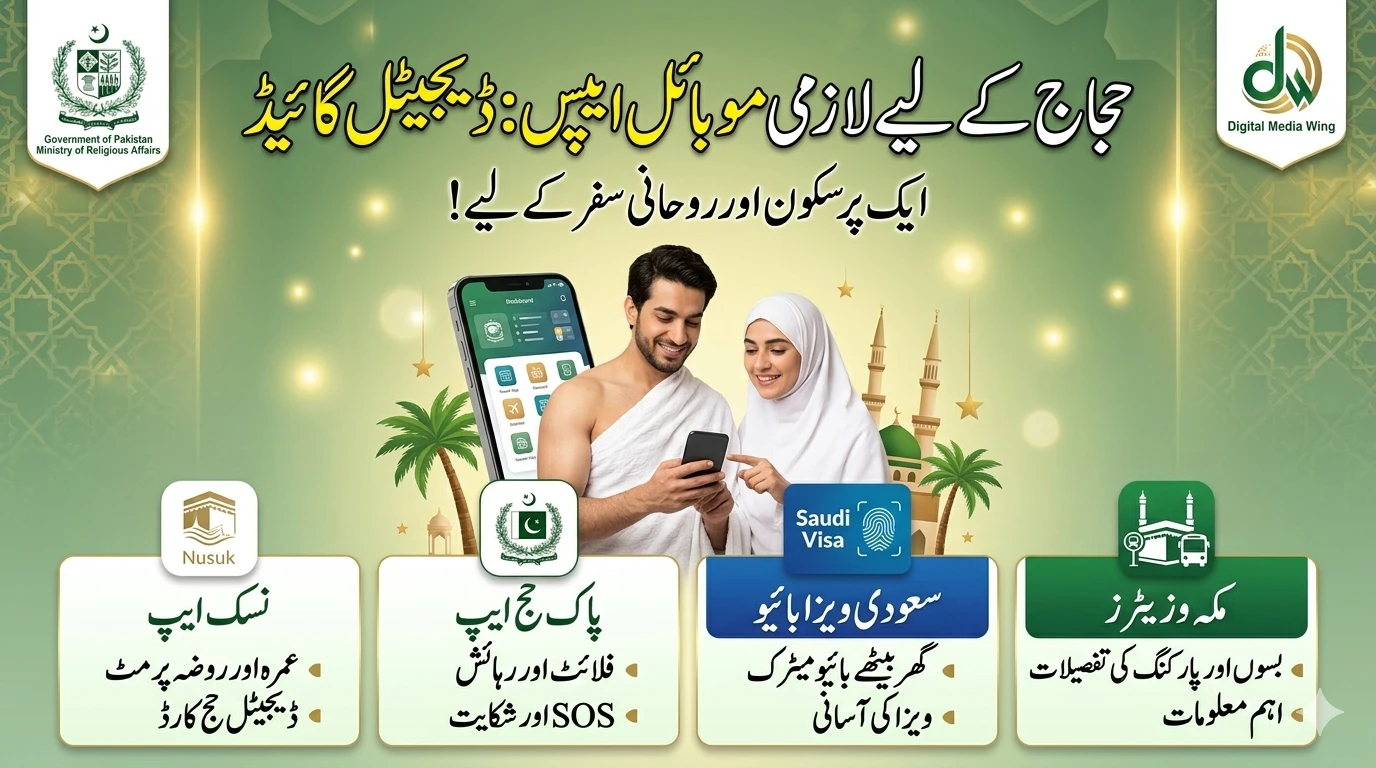
If you download only one app, make it Nusuk. This is the official platform managed by the Saudi Ministry of Hajj and Umrah. Think of it as your digital passport for everything happening inside the Kingdom.
Securing Your Permits
The most important thing you will do on Nusuk is book your visit to the Rawdah Rasool (PBUH) in Madinah. Because millions of people want to visit at once, the government uses Nusuk to give everyone a specific time slot. Without a digital permit on this app, security will not allow you to enter the sacred area.

The Digital Hajj Card
For 2026, the physical Hajj card has been largely replaced by the Digital Hajj Card inside Nusuk. This card contains your photo, your Muallim (group leader) details, and your health status. When you move between Makkah, Mina, and Arafat, officials will often ask to scan this QR code to verify that you are a registered pilgrim.
2. Pak Hajj App: Your Direct Link to Home
While Nusuk is for the Saudi side, the Pak Hajj App is your lifeline to the Pakistani government. This app is specifically designed for pilgrims traveling under the government or private schemes from Pakistan.
Tracking Your Logistics
The Pak Hajj App is incredibly useful for the “boring but important” details. It shows your:
- Flight Schedule: Real-time updates on when your plane leaves and lands.
- Accommodation: The exact name and GPS location of your building in Makkah and Madinah.
- Room Number: No more wandering around hotel lobbies trying to find your group.
The SOS Feature
One of the best parts of this app is the SOS button. If you get lost in the massive crowds or have a medical emergency, you can hit this button. It sends your exact GPS coordinates to the Pakistani Hajj Mission’s control room. Within minutes, a volunteer or staff member can find you and help you out. This feature alone is worth the download.
3. Saudi Visa Bio: Skip the Airport Queues
In the past, pilgrims spent hours at the airport or visa centers getting their fingerprints and eyes scanned. The Saudi Visa Bio app has fixed this “workflow” problem.
Biometrics at Home
This app allows you to do your biometrics—scanning your fingerprints and your face—using your own phone’s camera and NFC chip. By doing this in your living room in Pakistan, you save a massive amount of time when you land in Saudi Arabia.
Since your data is already in the system, you can often breeze through immigration much faster. It’s a “smarter” way to handle the paperwork so you can get to your hotel and start your worship sooner.
4. Makkah Visitors: Navigating the Holy City
Makkah is a city that is constantly growing. During Hajj, many roads are blocked, and the transport system changes daily. The Makkah Visitors app is like a specialized version of Google Maps just for pilgrims.
Bus and Parking Details
If you are staying a bit further from the Haram, you will rely on shuttle buses. This app shows you:
- The nearest bus stop to your hotel.
- The real-time location of the buses.
- Which routes are currently open or closed due to crowds.
Using this app helps you time your departures. Instead of standing in the sun for 30 minutes waiting for a bus, you can check the app and leave your room exactly when the bus is approaching.
Scaling Your Digital Readiness
Simply having the apps isn’t enough. You need to make sure they actually work when you are standing in a crowd of two million people. Here is how you build a “smarter” setup:
- International Roaming vs. Local SIM: While you can use roaming, I highly suggest getting a local Saudi SIM (like STC or Mobily) as soon as you land. Data is cheaper, and the apps will load much faster.
- Power Up: All these apps use GPS, which kills your battery. Carry a lightweight power bank in your bag at all times.
- Screenshots are Life: Sometimes the internet gets slow near the Haram. Take a screenshot of your Rawdah permit and your hotel location. A photo in your gallery works even if the app won’t open.
- Stay Updated: Apps for Hajj 2026 will get updates right before the season starts. Make sure you hit “Update” on the Play Store or App Store before you head to the airport.
Technology as a Servant to Worship
We often think of technology as a distraction, but for Hajj 2026, it is a servant. When the logistics are handled by these “smarter” tools, you don’t have to stress about where to go or how to get your permit.
The goal of the Ministry of Religious Affairs and the Saudi government is to scale the quality of the Hajj experience. They want every person to feel like an honored guest. By using these apps, you are helping them help you.
Final Thoughts
The journey of Hajj is a test of patience. Things will still get crowded, and it will still be hot. But by using the Pak Hajj App, Nusuk, and the other tools mentioned, you are removing the unnecessary “friction” from your trip.
Do yourself a favor: download these apps today. Play around with them. Get comfortable with the menus. When you finally stand in front of the Kaaba, you will be glad that you handled the digital side of things early, leaving your heart open for the spiritual side.
Frequently Asked Questions (FAQs)
1. Can I use these apps on an older smartphone?
Most of these apps require a relatively modern version of Android (9.0+) or iOS (14.0+). They also need a working camera for QR codes and biometrics. If your phone is more than 5 or 6 years old, you might want to consider borrowing a newer device from a family member for the trip.
2. What if I lose my phone in Makkah?
This is why paper backups are still important! Always keep a printed copy of your Hajj visa, your passport, and your hotel address in your neck pouch. If you lose your phone, you can always log into your Nusuk or Pak Hajj account on a friend’s phone to show your permits.
3. Is there a cost to use the Nusuk or Pak Hajj apps?
No. All official government apps for Hajj are completely free to download and use. Be very careful of “third-party” apps that ask for money to book permits. Always use the official links provided by the Ministry.
4. Do I need an internet connection at all times?
For things like live bus tracking and booking new permits, yes, you need the internet. However, once you have a permit (like for the Rawdah), it is often saved in the app’s “offline” section or can be shown via a screenshot.
5. I am not tech-savvy. How will I manage?
Don’t worry! Every Hajj group has “Khuddam” (volunteers) and group leaders who are trained to help pilgrims with these apps. If you get stuck, just ask a younger pilgrim or a volunteer; they are usually very happy to help a fellow traveler of the House of Allah.