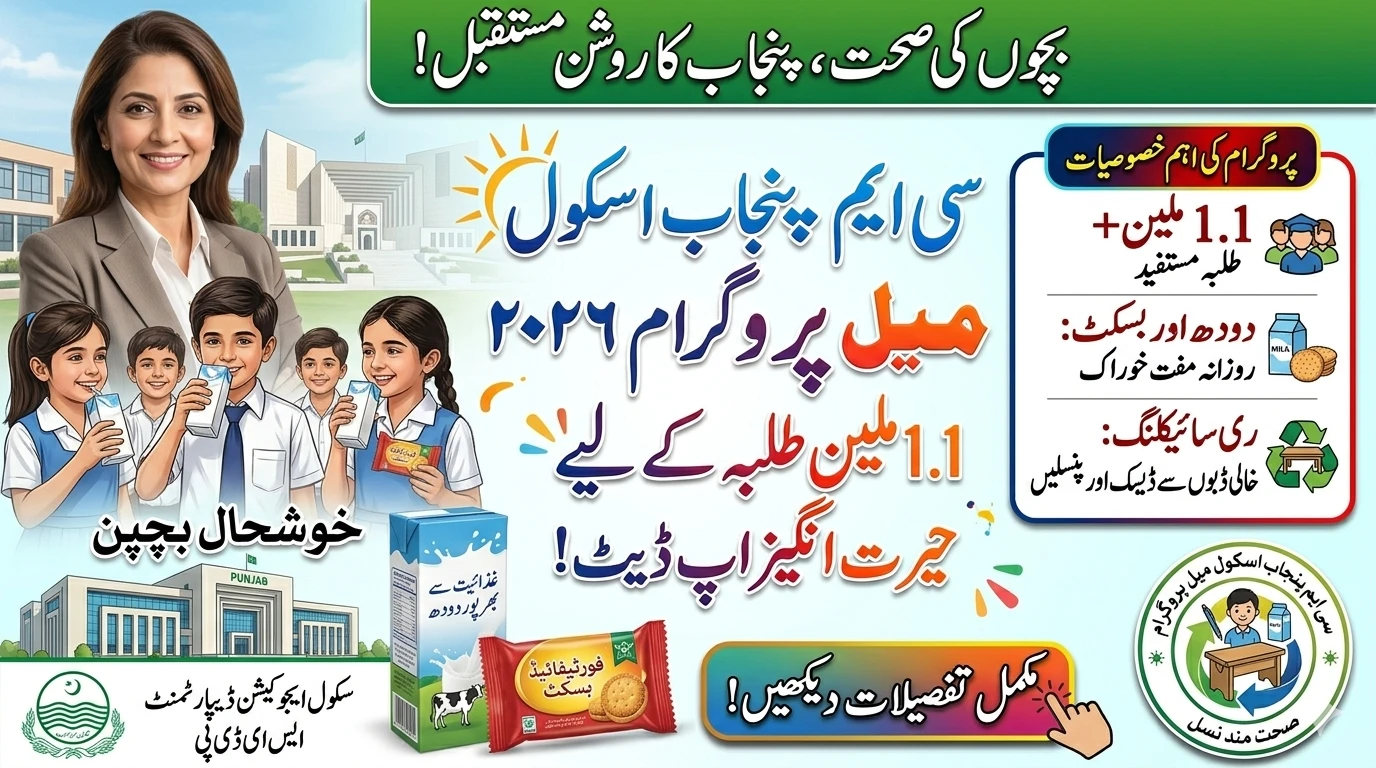
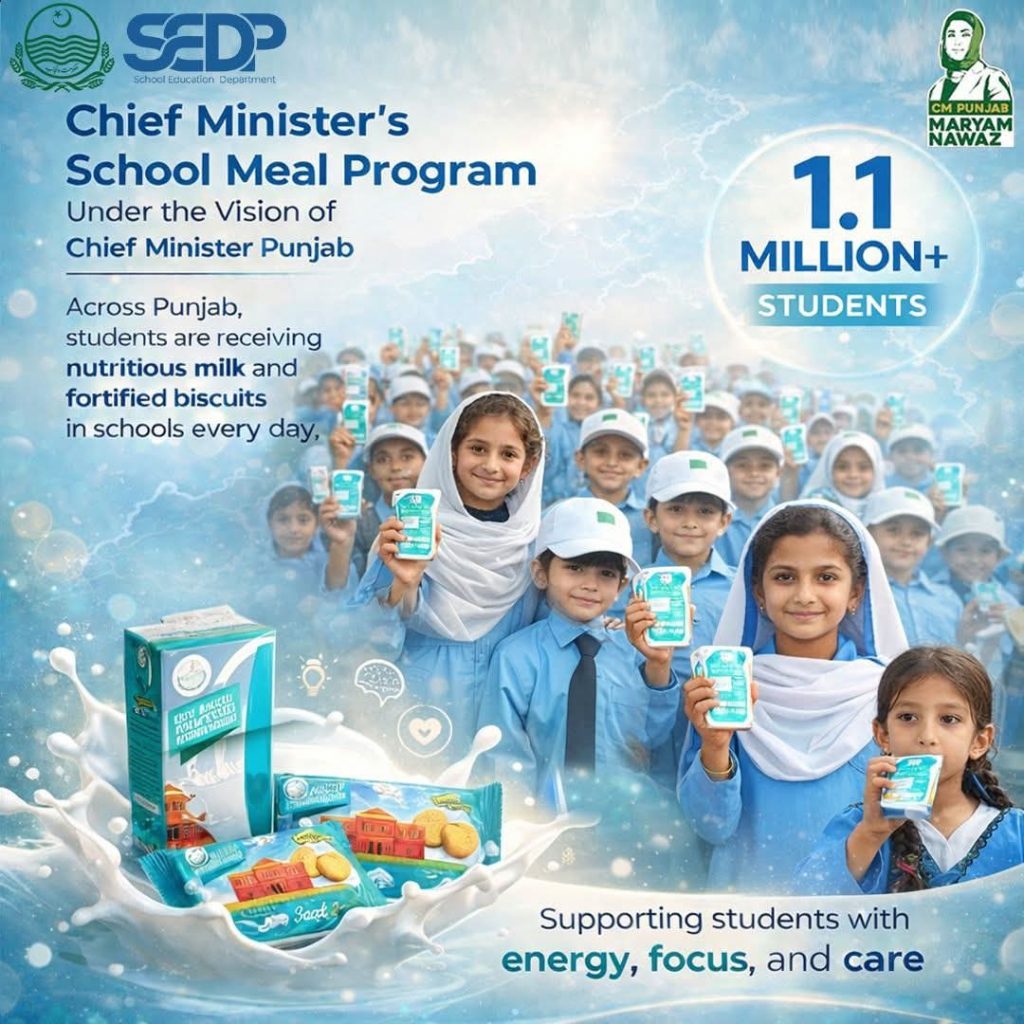
The health of our children is the foundation of a bright future for Pakistan. Recognizing this, the Government of Punjab has taken a massive step forward. The CM Punjab School Meal Program 2026 is now fully operational, reaching over 1.1 million students across the province. This is not just a food scheme; it is a revolution in how we care for our young learners.
Under the leadership of Chief Minister Maryam Nawaz, the vision is simple: no child should study on an empty stomach. By providing high-quality nutrition right in the classroom, the government is tackling both hunger and low school attendance at the same time.
What is the CM Punjab School Meal Program?
The School Meal Program is a flagship initiative designed to provide daily nutritional support to primary school students. Many families in rural areas struggle to provide a balanced diet. This program steps in to bridge that gap.
Every school day, children receive a set of healthy snacks. This ensures they have the energy to focus on their lessons and participate in physical activities. It is a direct investment in the human capital of Punjab.
The Core Components: Milk and Biscuits
The program focuses on two main items that are essential for growing children:
- Nutritious Milk: Each child gets a pack of high-quality, ultra-high-temperature (UHT) treated milk. This milk is fortified with essential vitamins like Vitamin A and D, which are crucial for bone health and eyesight.
- Fortified Biscuits: Along with milk, students receive biscuits that are enriched with iron and minerals. These help in preventing anemia and improving cognitive function.
Reaching 1.1 Million Students: The 2026 Scale
The scale of this project is truly impressive. In early 2026, the program underwent a major expansion. It now covers more than 1.1 million students. This makes it one of the largest school feeding programs in South Asia.
The focus is currently on primary schools in 13 specific districts, mostly in Southern Punjab. These areas were selected based on high poverty rates and nutritional deficiency data. By targeting these regions, the government ensures that the help reaches those who need it most.

Districts Currently Included
The program is making a huge difference in the following areas:
- Dera Ghazi Khan
- Rajanpur
- Muzaffargarh
- Layyah
- Bhakkar
- Mianwali
- Kot Addu
- Jhang
- Chiniot
- Khushab
- Lodhran
- Vehari
- Khanewal
CM Punjab School Meal Program 2026
Beyond Nutrition: The Recycling Revolution
One of the most unique and “expert” parts of this program is how it handles waste. Chief Minister Maryam Nawaz has introduced a “Green” aspect to the meal program. Instead of throwing away empty milk cartons, the government has started a massive recycling project.
From Waste to Classrooms:
Empty milk packs are collected from schools. These packs are then processed and recycled into durable materials. What do they become? They are turned into school desks, benches, and pencils.
This cycle is brilliant because it teaches students about the environment while also providing furniture for the schools. It is a win-win situation for education and nature.
The Science of a Healthy Mind
Why focus so much on milk and biscuits? Science tells us that a child’s brain develops rapidly during the primary school years. If a child is malnourished during this time, it can lead to lifelong learning difficulties.
How Nutrition Boosts Learning
- Better Focus: Stable blood sugar levels from a healthy snack prevent the “mid-day slump.”
- Improved Memory: Essential minerals like Iron and Zinc help the brain process and store new information.
- Higher Attendance: When kids know they will get a tasty and healthy meal at school, they are more likely to attend every day.
- Growth Milestones: Protein from milk helps children hit their physical growth targets, making them less prone to illness.
Impact on School Enrollment and Attendance
Since the full launch of the CM Punjab School Meal Program 2026, there has been a noticeable spike in school enrollment. Parents in rural districts feel relieved that their children are getting at least one nutritious meal a day.
In many villages, the “Milk and Biscuit Day” has become a highlight for the community. Teachers report that students are more active and alert during the second half of the school day. This shift is vital for improving overall literacy rates in the province.
The Role of the School Education Department (SEDP)
The School Education Department (SEDP) is the backbone of this operation. They manage the logistics of moving millions of milk packs every week. This is no small feat.
Ensuring Quality and Safety
- Storage Standards: Schools are provided with specific guidelines on how to store the milk to prevent spoilage.
- Regular Checks: Food safety teams conduct surprise visits to ensure the quality of the biscuits and milk remains top-notch.
- Teacher Training: Teachers are trained on how to distribute the meals fairly and how to lead the recycling collection efforts.
How Parents Can Give Feedback
The government wants this program to stay transparent. If there are any issues with the quality or distribution of the meals, parents have a voice. Through the “Maryam Ko Batain” portal and the dedicated SEDP helpline, parents can report concerns directly.
This feedback loop ensures that the program remains “Helpful Content” for the community. It holds local administrations accountable and keeps the focus on the welfare of the students.
The Future: Expanding to All of Punjab
While the program currently covers 1.1 million students in 13 districts, the ultimate goal is much bigger. The Punjab government plans to eventually expand this to every primary school in the province.
As the economy stabilizes and the recycling model brings in more resources, more districts will be added. The 2026 update is just the beginning of a long-term commitment to child health.
Conclusion
The CM Punjab School Meal Program 2026 is a shining example of proactive governance. By providing 1.1 million children with free, fortified nutrition, the government is solving a problem that has persisted for decades.
This program is not just about a pack of milk; it is about dignity, health, and the promise of a better tomorrow. As these children grow up healthy and educated, the whole nation will reap the rewards of this “Amazing Update.”
Frequently Asked Questions (FAQs)
1. Who is eligible for the CM Punjab School Meal Program?
Currently, all students enrolled in government primary schools within the 13 designated districts (including DG Khan, Rajanpur, and others) are eligible.
2. What exactly do the children get to eat?
Every child receives a pack of fortified milk (200ml) and a packet of high-energy, fortified biscuits daily.
3. Is there any cost to the parents for these meals?
No. The program is 100% free. The Punjab government covers all costs as part of its educational welfare initiative.
4. How is the waste from the milk packs managed?
The empty cartons are collected by the schools and sent to recycling centers. They are then turned into school furniture and stationery like pencils.
5. How can I report a problem with the food quality?
Parents and community members can use the official SEDP helpline or the “Maryam Ko Batain” online portal to register complaints or provide feedback.