Every year on April 7th, the world stops to think about health. In 2026, the conversation in Pakistan, especially in Punjab, feels different. It is no longer just about fixing old buildings or buying a few new beds. It is about a massive shift in how a province looks after its people.
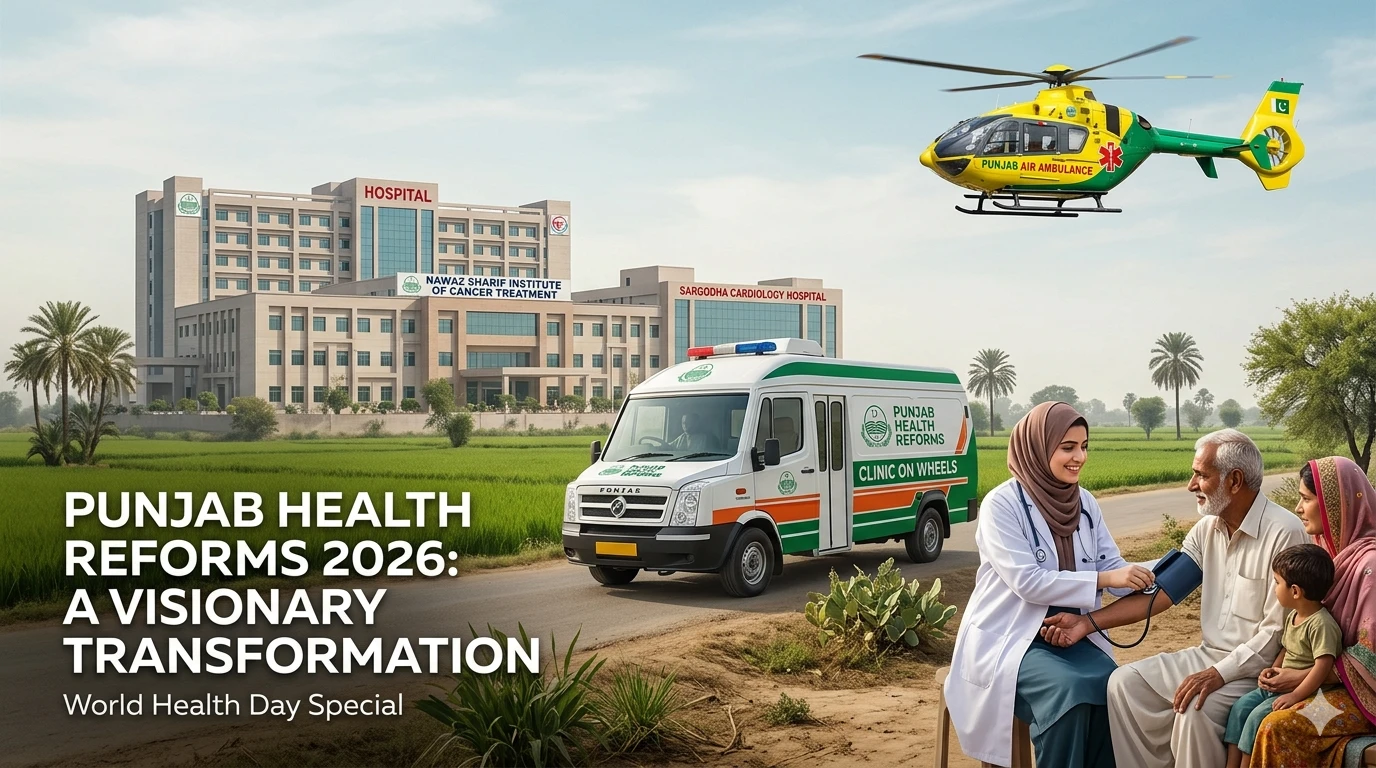
Under the leadership of Chief Minister Maryam Nawaz, Punjab is seeing a healthcare makeover that many thought was impossible. From the skies with air ambulances to the narrow streets with mobile clinics, the focus has shifted. The goal is simple: healthcare should find the patient, not the other way around.
The Foundation of Specialized Care
For decades, patients with serious illnesses like cancer or heart disease had to travel hundreds of miles to Lahore. This journey was often expensive and exhausting. To solve this, the current administration has focused on building specialized centers where they are needed most.
A New Hope for Cancer Patients
The Nawaz Sharif Institute of Cancer Treatment in Lahore is a standout project. Cancer treatment is famously expensive and mentally draining. By creating a dedicated, state-of-the-art facility, the government is providing a lifeline to families who previously had no place to turn. This isn’t just a hospital; it is a center of excellence designed to offer world-class care for free to those who cannot afford it.
Cardiology Expansion in Sargodha
Heart health is another major priority. The Nawaz Sharif Cardiology Hospital in Sargodha is a game-changer for the region. Previously, residents of Sargodha and nearby districts had to rush to Faisalabad or Lahore during emergencies. In heart care, every minute counts. Having a high-tech facility close to home is literally a matter of life and death for thousands.
Bringing the Hospital to the People
One of the most praised moves in 2026 is the “Clinic on Wheels” program. It recognizes a hard truth: many people in rural Punjab cannot afford the bus fare to go to a city hospital. Others are too sick to travel.
Clinic on Wheels: Healthcare in Your Street
These mobile units are essentially small clinics on four wheels. They move through neighborhoods, providing check-ups, basic medicines, and diagnostic tests. It’s a neighborly approach to medicine. Instead of a mother having to take a whole day off work to take her child to a doctor, the doctor now comes to her street.
Field Hospitals for Remote Areas
While the mobile clinics handle the streets, Field Hospitals handle the remote regions. These are larger, semi-permanent setups that provide more advanced services than a mobile van. They act as a bridge between local dispensaries and major city hospitals. This ensures that even the most distant village in Punjab feels connected to the provincial health network.
Innovation in the Skies: The Air Ambulance Service
Perhaps the most talked-about initiative is the introduction of Pakistan’s first Air Ambulance service. In a province as large as Punjab, traffic jams or broken roads can slow down a traditional ambulance.

The Air Ambulance service changes the math of emergency response. Whether it is a victim of a highway accident or a patient in a remote desert area needing urgent surgery, the helicopter service ensures they reach a specialized trauma center within the “golden hour.” This is a standard of care usually seen in developed Western nations, now being implemented in Punjab.
Targeted Programs for Chronic Illnesses
General healthcare is good, but chronic diseases need specific plans. The 2026 health agenda includes several “CM Programs” that target the most common struggles of the people.
The CM Insulin Program
Diabetes is a silent killer in Pakistan. Many patients skip their doses because insulin is expensive or hard to find. The CM Insulin Program has started delivering life-saving medication directly to the doorsteps of registered patients. This ensures that no one has to choose between buying food and buying medicine.
CM Heart Surgery and Dialysis Initiatives
Surgery costs can ruin a family’s finances. The CM Heart Surgery Program covers the costs for both children and adults, ensuring that a lack of money isn’t a death sentence. Similarly, the CM Dialysis Program has expanded across the province. New machines and free treatment cycles are helping kidney patients live with dignity.
Advancing Medical Technology: The Co-ablation Cancer Clinic
Innovation isn’t just about more beds; it’s about better technology. The establishment of the first Co-ablation Cancer Clinic at Mayo Hospital is a testament to this. Co-ablation is a modern, less invasive way to treat certain types of tumors.
By bringing this technology to a public hospital, the government is making “rich-man’s medicine” available to the common citizen. It reduces recovery time and improves the quality of life for cancer survivors.
Why This Matters for the Future
The transformation we see in 2026 isn’t just about equipment. It’s about building trust. When a citizen sees an air ambulance in the sky or a clinic van in their street, they feel that the state is looking out for them.
These initiatives are also creating thousands of jobs for doctors, nurses, and technicians. It is an investment in the people of Punjab that will pay off for generations to come.
Frequently Asked Questions (FAQs)
1. How can I access the “Clinic on Wheels” service?
The Clinic on Wheels follows a set schedule in various districts. You can check the local health department’s social media or ask your local lady health worker for the date and time the van will visit your neighborhood.
2. Who is eligible for the CM Heart Surgery Program?
Any permanent resident of Punjab with a valid CNIC who cannot afford the cost of surgery is eligible. You usually need a referral from a government hospital to enter the program.
3. Is the Air Ambulance service free?
Yes, the Air Ambulance is a government-funded emergency service intended for critical patients who cannot be moved safely or quickly by road.
4. Where is the Nawaz Sharif Institute of Cancer Treatment located?
The main institute is located in Lahore, serving as a central hub for advanced oncology treatments for the entire province.
5. How does the CM Insulin Program work?
Patients need to register at their nearest government hospital. Once their data is verified, their monthly insulin supply is delivered to their registered home address by a dedicated team.