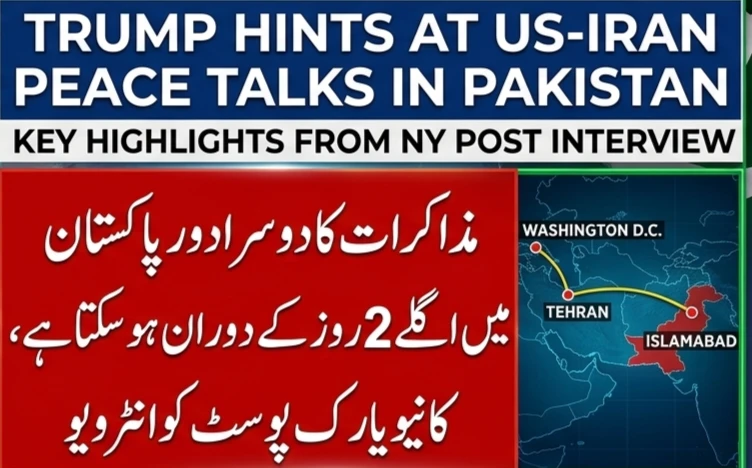
The world’s attention has suddenly shifted toward South Asia. In a recent exclusive interview with the New York Post, President Donald Trump dropped a diplomatic bombshell. He suggested that the next phase of negotiations between the United States and Iran might happen on Pakistani soil.
This news comes at a time of high tension and even higher stakes. For years, the relationship between Washington and Tehran has been a focal point of global worry. Now, it seems a new door is opening, and Pakistan is holding the key.
If these talks happen, they could change the landscape of international politics for decades. Let’s break down exactly what was said and why this matters to you.
The Interview That Started It All
During his conversation with the New York Post, President Trump was candid about his desire for a “fair deal.” He praised the idea of using a neutral ground to bring both sides to the table. According to Trump, the second round of these critical talks could happen within the next few days.
He specifically mentioned Pakistan as a preferred location. This isn’t just a random choice. Pakistan has long maintained a delicate balance in its relations with both the West and its neighbor, Iran. By choosing Islamabad or Lahore, the U.S. is signaling that it trusts the regional stability that Pakistan can provide.
The President’s tone was optimistic but firm. He made it clear that while he wants peace, he is looking for terms that ensure long-term security. The mention of Pakistan has sent ripples through diplomatic circles worldwide.
Why Pakistan? The Neutral Mediator Role
You might wonder why the United States wouldn’t just meet in Europe or at the United Nations. The choice of Pakistan is strategic. Pakistan shares a border with Iran and has a long-standing security relationship with the U.S.

In the past, Pakistan has often acted as a bridge. Whether it was helping open doors with China in the 1970s or managing regional conflicts, Islamabad has experience in “back-door diplomacy.”
A Move Toward Regional Stability
By hosting these talks, Pakistan positions itself as a central player in global peace. This isn’t just about the U.S. and Iran. It is about proving that the region can solve its own problems without always relying on Western capitals.
Security and Logistics
Pakistan has the infrastructure and the security apparatus to host high-profile world leaders. For a meeting this sensitive, privacy and safety are the top priorities. President Trump’s confidence in the “next two days” timeline suggests that the logistical groundwork might already be in place.
The Core Issues on the Table
What exactly will they talk about? While the full details of the “second round” are under wraps, we can look at the primary sticking points that have defined this conflict.
- Nuclear Agreements: The most significant hurdle remains the nuclear program. The U.S. wants strict limits, while Iran seeks the right to peaceful energy.
- Sanctions Relief: Iran’s economy has been under heavy pressure. Any deal will likely involve a roadmap for lifting trade barriers.
- Regional Influence: Both sides have concerns about military presence in the Middle East. Finding a middle ground here is essential for a lasting peace.
- Trade and Energy: With global oil markets constantly fluctuating, a stable Iran could help lower energy costs for everyone, including citizens in Pakistan.
What This Means for the People of Pakistan
When global giants meet in your backyard, it has a direct impact on your daily life. It isn’t just about headlines; it’s about the economy and your wallet.
If Pakistan successfully hosts these talks, its “country risk” rating could improve. This means more foreign investment and a stronger currency. Furthermore, if the U.S. and Iran reach an agreement, we could see a stabilized energy market. For the average person, this eventually leads to lower petrol prices and cheaper electricity.
It also boosts the “Utility” of Pakistani diplomacy. Instead of just being a country in the news, Pakistan becomes the country that makes the news happen for the right reasons.
A Faster, Smarter Path to Peace
President Trump’s approach to this has been described as “unconventional.” Instead of months of low-level meetings, he seems to prefer high-impact summits. This “faster, smarter” workflow in diplomacy mirrors how we handle modern business—getting straight to the point to find a solution.
By bypassing some of the traditional bureaucratic hurdles, this second round of talks aims to achieve in days what usually takes years. However, this speed requires immense trust in the host nation.
Potential Challenges to the Talks
Despite the optimism, we must be realistic. Peace is never easy. There are several factors that could complicate the upcoming days:
- Hardliners on Both Sides: There are people in both the U.S. and Iran who do not want a deal. They prefer the status quo of “maximum pressure.”
- Timing: A two-day window is incredibly short. It leaves very little room for error.
- Third-Party Interests: Other regional powers may feel left out and could try to influence the outcome of the talks.
Final Thoughts: A Historic Opportunity
We are standing at a crossroads. If President Trump’s hints become a reality, Islamabad could become the most important city in the world this week. For the readers of maryamkobatain.pk, this is a moment of pride and a moment of caution.
A successful summit would not only bring peace closer but would also prove that Pakistan is a pillar of global stability. We will be watching the next 48 hours very closely.
Frequently Asked Questions (FAQs)
1. Is the date of the US-Iran talks in Pakistan confirmed?
While President Trump mentioned the “next 2 days” in his interview, an official joint schedule from the foreign offices of all three countries has yet to be released. It is currently in the “highly likely” stage based on presidential comments.
2. Why is Trump choosing Pakistan over other countries?
Pakistan offers a unique mix of geographical proximity to Iran and a long-standing diplomatic relationship with the U.S., making it a logical “neutral” ground for high-stakes security talks.
3. Will this affect petrol prices in Pakistan?
Indirectly, yes. If the talks lead to a deal that allows Iran to export more oil, global supply will increase. This usually leads to a decrease in international oil prices, which benefits Pakistani consumers.
4. Who will represent Pakistan in these meetings?
Typically, such high-level summits involve the Prime Minister, the Foreign Minister, and top military leadership to ensure security and diplomatic protocol are met.
5. What happened in the first round of talks?
The first round focused on establishing “lines of communication” and identifying the main deal-breakers. The second round in Pakistan is expected to dive into the actual terms of a potential treaty.
This article was crafted to provide clear, helpful information without unnecessary jargon. Our goal is to keep you informed with original, high-quality content that matters to your life and your country.