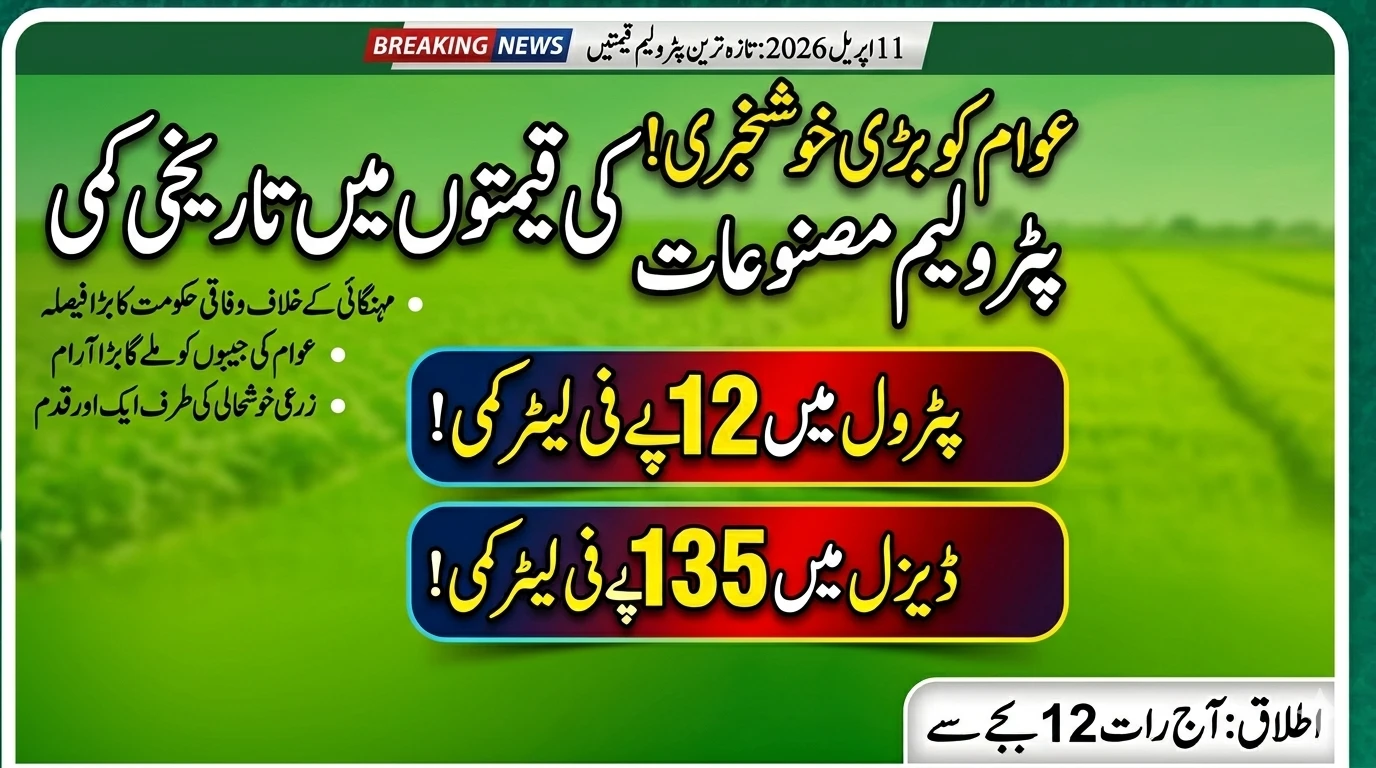
The people of Pakistan have received a massive wave of relief this morning. In a move that few expected to be this large, the federal government has announced a significant reduction in the prices of petroleum products. For a nation struggling with high inflation and the rising cost of living, these new rates are a breath of fresh air.
Whether you are a daily commuter on a motorbike, a truck driver moving goods across the country, or a farmer in the middle of harvest season, this update affects your pocket directly. Today, we look at the official changes, why they happened, and what they mean for your monthly budget.
The Big Announcement: New Fuel Rates Confirmed
In a televised address to the nation, Prime Minister Shehbaz Sharif shared the news that everyone was waiting for. Effective from midnight today, April 11, 2026, the prices of petrol and diesel have been slashed. This decision comes after a period of extreme price hikes that saw fuel reaching record levels earlier this month.
Official Price Breakdown for April 2026
The government has passed on the full benefit of international market trends to the public. Below are the finalized rates that you will see at the pumps today:

| Fuel Type | Old Price (Approx.) | Price Decrease | New Price (Current) |
|---|---|---|---|
| Petrol (Motor Spirit) | Rs. 378.41 | Rs. 12.00 | Rs. 366.41 |
| High-Speed Diesel (HSD) | Rs. 520.35 | Rs. 135.00 | Rs. 385.35 |
The reduction in diesel is particularly historic. A cut of Rs. 135 per liter in a single revision is one of the largest reliefs ever provided in Pakistan’s history.
Why the Government Slashed Prices Now
You might be wondering why the government decided to make such a deep cut today. This wasn’t a random decision. It is the result of a combination of global diplomacy and changing market conditions.
1. Global Oil Price Drop
International crude oil prices have seen a steady decline over the last week. As global supply stabilized, the cost of importing fuel became cheaper for the Pakistani government. Instead of keeping that extra money for the treasury, the Prime Minister decided to provide “Good News” to the citizens.

2. The US-Iran Peace Talks
A major factor in this economic shift is the hosting of peace talks between the United States and Iran in Islamabad. This diplomatic breakthrough has helped calm the global energy markets. With the risk of war in the region decreasing, oil prices have dropped significantly, allowing Pakistan to buy fuel at much lower rates.
3. Economic Stability Efforts
The government is working hard to bring down the overall inflation rate. Fuel is a “primary mover.” When fuel is expensive, everything from bread to clothing becomes expensive. By cutting these prices, the government is trying to trigger a “cool-down” effect across the entire economy.
A Huge Win for the Agricultural Sector
The timing of this price cut is perfect for our farmers. Currently, a large part of the country is entering the peak of the wheat harvesting season. Farming in Pakistan relies heavily on machinery that runs on high-speed diesel.
- Lower Harvesting Costs: Tractors and harvesters burn hundreds of liters of diesel during this time. A saving of Rs. 135 per liter will save individual farmers thousands of rupees.
- Cheaper Irrigation: Tubewells that run on diesel will now be much cheaper to operate.
- Lower Food Prices: When it costs less to grow and harvest wheat, the price of flour (Atta) is likely to stay stable or even decrease in the coming months.
This relief for farmers is a relief for the whole country, as agriculture is the backbone of our food supply.
Impact on Transport and Daily Commuting
For the urban middle class and students, the Rs. 12 cut in petrol is the most relevant news. While it is smaller than the diesel cut, it still offers significant savings over time.
For Motorcyclists and Car Owners
If you fill your bike’s tank twice a week, you will start seeing a noticeable difference in your monthly fuel bill. This extra cash can be diverted toward other household essentials or savings.
For Public Transport and Goods Movement
The massive diesel cut should lead to lower transport fares.
- Buses and Vans: We expect transport unions to announce a reduction in ticket prices shortly.
- Trucking and Logistics: The cost of moving fruits, vegetables, and electronics across the country will drop. This is the most effective way to fight inflation in the long run.
Historical Context: A Rollercoaster Month
To understand how big this news is, we have to look back just a few days. On April 2, 2026, the government was forced to hike prices significantly due to global tensions. At that time, diesel hit an all-time high of over Rs. 520.
The fact that the government has reversed that hike so quickly shows a commitment to passing on relief as soon as it becomes available. This “u-turn” in pricing is actually a positive sign of a flexible and responsive economic policy.
Tips for Consumers Following the Price Drop
Even though prices are down, it is always a good idea to practice fuel-efficient habits. Here is how you can make the most of this relief:
- Wait for the Official Rate: Ensure that the petrol station you visit is charging the new official rate of Rs. 366.41 for petrol and Rs. 385.35 for diesel.
- Check Tire Pressure: Properly inflated tires can improve your fuel efficiency by up to 3%.
- Combine Your Errands: Plan your trips so you aren’t making multiple short drives throughout the day.
- Watch for Fare Drops: If you use public transport, keep an eye on official fare lists. Don’t let transporters overcharge you now that their costs have decreased.
Conclusion: A Step Toward Brighter Days
The reduction in petrol and diesel prices is more than just a change in numbers. It is a signal of hope for many families who have been feeling the weight of the economy. By prioritizing the needs of the common man—especially during the crucial harvesting season—the government has taken a bold step toward stabilizing the country.
As global markets continue to shift, we hope to see more of these benefits reaching the public. For today, you can breathe a little easier the next time you visit the petrol pump.
Frequently Asked Questions (FAQs)
1. When exactly do the new petrol prices take effect?
The new prices of Rs. 366.41 for petrol and Rs. 385.35 for diesel are effective from 12:00 AM (midnight), April 11, 2026.
2. Why is there such a big difference between the petrol and diesel price cuts?
Diesel is the primary fuel for transport and agriculture. The government prioritized a larger cut for diesel to directly impact food inflation and farming costs, whereas petrol is primarily used for private transport.
3. Will the prices of groceries go down because of this?
In theory, yes. Since the cost of transporting goods will drop due to lower diesel prices, the retail prices of essential commodities like vegetables and grains should stabilize or decrease.
4. How long will these new rates stay in place?
The government typically reviews petroleum prices every 15 days. These rates are expected to remain valid until the next review, likely around April 16 or May 1, unless a special notification is issued earlier.
5. Has the price of Kerosene oil also decreased?
Yes, typically when petrol and diesel prices are slashed, the government also reduces the prices of Kerosene and Light Diesel Oil (LDO) to provide relief to low-income households.