
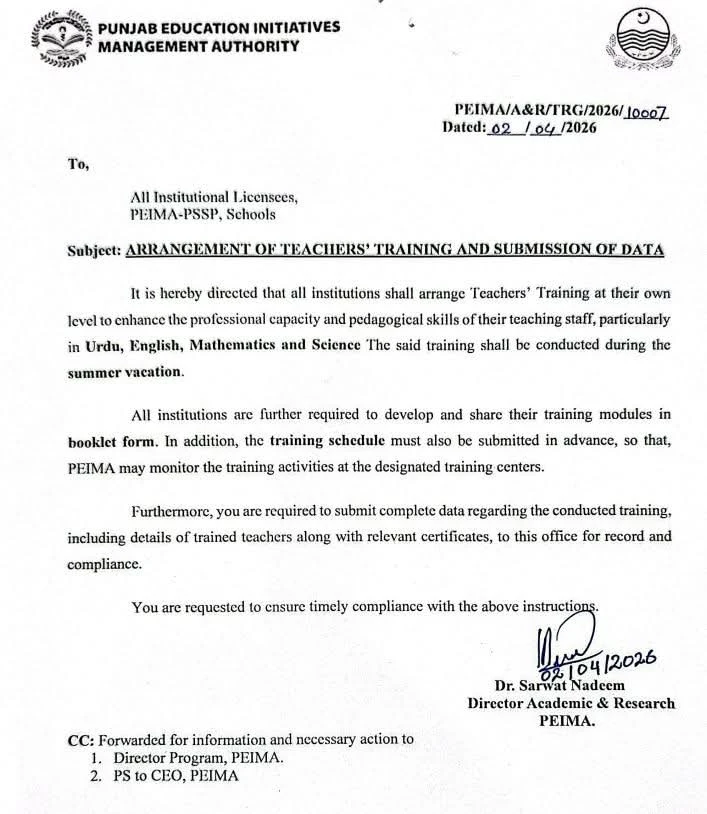
The School Education Department (SED) of Punjab has officially shared its roadmap for the 2026 Teacher Training Program. This initiative is set to take place during the upcoming summer vacation period.
For many educators, summer is a time to rest. However, the provincial government believes this is the best window to sharpen skills without disrupting the regular academic calendar. This year’s focus is significantly different from previous years, moving toward digital literacy and modern classroom management.
In this guide, we will break down what teachers can expect, the schedule for different districts, and how this program aims to change the face of public education in Punjab.
What is the 2026 Summer Training Program?
The 2026 Summer Training Program is a mandatory professional development phase for public school teachers across Punjab. Led by the Quaid-e-Azam Academy for Educational Development (QAED), the program targets primary, middle, and high school staff.

The goal is simple: to make sure every teacher is ready for the new challenges of the 2026-2027 academic year. Instead of traditional lectures, this year’s sessions will focus on “hands-on” learning and interactive workshops.
Key Goals of the 2026 Initiative
The Punjab government has set clear objectives for this summer. The focus isn’t just on finishing a syllabus. It is about improving the quality of teaching at the grassroots level.
- Digital Integration: Teaching staff will learn how to use AI-assisted tools for lesson planning.
- Mental Health Awareness: Training on how to identify and support students facing emotional or mental stress.
- Literacy and Numeracy: Focusing on the “Foundational Learning” goals set for the 2026-2030 period.
- Climate Change Education: How to teach students about environmental shifts happening in Pakistan.
Schedule and Location Details
The training is expected to be spread across three phases to manage the high number of participants. Since Punjab deals with intense heat during the summer, the government has planned a mix of online and in-person sessions.

Phase 1: Early June
This phase will cover Primary School Teachers (PSTs). The focus here is on the Single National Curriculum (SNC) updates and basic literacy techniques.
Phase 2: Late June to Early July
Elementary School Teachers (ESTs) will join during this window. Their training will focus more on specialized subjects like Science, Mathematics, and English.

Phase 3: Late July
Secondary School Teachers (SSTs) and Subject Specialists will finish the cycle. This group will look at advanced laboratory techniques and exam preparation strategies for board levels.
Mandatory Attendance and the SIS Portal
The Punjab Government has made it clear that attendance is linked to the School Information System (SIS). Teachers must check their assigned slots through their official accounts.
Failure to attend without a valid, pre-approved reason may result in a delay in annual increments or professional certifications. The government is using an automated attendance system to ensure transparency and accountability.
Why Training During Summer Vacations?
There has been a lot of discussion among teacher unions about the timing of these workshops. Why hold them when the temperatures are high and schools are closed?
The School Education Department argues that this is the only way to avoid “learning loss” for students. If teachers are pulled from classrooms during the term, students lose precious hours of instruction. By using the summer break, the government ensures that teachers return in August fully prepared and energized for the new term.
To make things easier, the government has promised to provide:
- Standardized transport allowances for attendees.
- Air-conditioned environments in selected QAED centers.
- Certificates that count toward future promotions.
New Modules: What’s Different in 2026?
The 2026 curriculum for teacher training has been revamped. It is no longer just about reading from a textbook. Here are the three most talked-about modules:
1. The Smart Classroom Module
With more schools receiving tablets and smartboards, teachers need to know how to use them. This module teaches how to find high-quality educational videos and use them to explain complex topics.
2. Inclusive Education
Punjab is pushing for more inclusive classrooms where children with different learning abilities sit together. This module trains teachers on how to adjust their pace for students with special needs.
3. Data-Driven Teaching
Teachers will be taught how to analyze student test scores to see where the whole class is struggling. This helps in targeted teaching rather than a “one-size-fits-all” approach.
How to Prepare for the Training
If you are a teacher in Punjab, you can start preparing now to make the most of this opportunity.
- Check Your SIS App: Ensure your contact details and current posting are updated.
- Review the New Syllabus: Familiarize yourself with the 2026 textbook updates.
- Prepare for Technology: If you aren’t comfortable with Zoom or Google Meet, try to practice basic navigation, as some modules may be remote.
Punjab Government Announces 2026 Summer Vacation Teacher Training Program
The Role of QAED in 2026
The Quaid-e-Azam Academy for Educational Development (QAED) remains the backbone of this operation. For 2026, QAED has hired “Master Trainers” from top universities to lead the sessions.
These trainers bring fresh ideas from global education systems but tailor them to fit the local culture and language of Punjab. This bridge between global standards and local reality is what makes the 2026 program unique.
Impact on the Future of Education in Punjab
This announcement is a big step for the province. When teachers are better trained, student results naturally improve. The 2026 program is designed to move away from “rote learning” (memorizing) and move toward “conceptual learning” (understanding).
By investing in teachers during the summer, the Punjab Government is essentially investing in the millions of children who will sit in those classrooms come August.
Frequently Asked Questions (FAQs)
1. Is the 2026 Summer Training compulsory for all teachers?
Yes, it is mandatory for all public school teachers. Private school teachers may also join in specific districts if their schools are registered with the PEIMA program.
2. Will there be any financial compensation for attending?
While there is no “extra salary,” the government usually provides a daily allowance (DA) and travel allowance (TA) to cover the costs of attending the training centers.
3. Can I choose my training dates?
No. The dates are assigned automatically via the SIS portal based on your district and your designation (PST, EST, or SST).
4. What happens if I miss the training due to an emergency?
Teachers who miss their sessions must provide a medical certificate or a valid reason through their District Education Officer (DEO). A makeup session is usually held at the end of the summer for such cases.
5. Will the training be online or physical?
It will be a “hybrid” model. Theory-based lectures might be held online, while practical workshops and science-related modules will require physical attendance at local QAED centers.
Conclusion
The Punjab Government’s 2026 Teacher Training Program is more than just a summer requirement. It is a strategic move to modernize the education system. While it requires a commitment of time during the holidays, the long-term benefits for career growth and student success are undeniable. Stay tuned to the official School Education Department portal for your specific schedule and instructions.