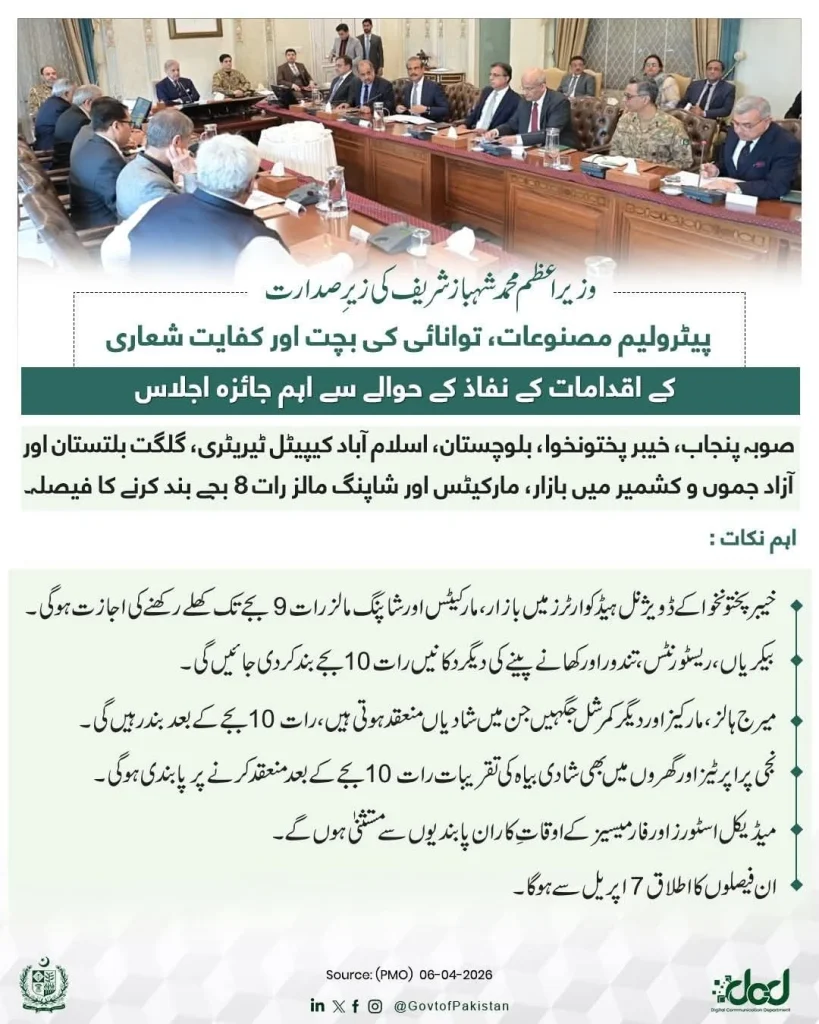
Starting Tuesday, April 7, 2026, daily life across Pakistan is set to look a little different. Following a high-level review of the country’s energy and petroleum needs, the government has introduced a fresh set of austerity measures. These rules aren’t just for one city; they apply to Punjab, Khyber Pakhtunkhwa (KP), Balochistan, Islamabad, Gilgit-Baltistan, and Azad Jammu & Kashmir.
If you are used to late-night shopping or midnight dinners, it is time to adjust your schedule. The primary goal is simple: save energy and reduce the national fuel bill. But for the average citizen, it means planning your day much more carefully.
The Big Shift: Markets and Malls Closing at 8:00 PM
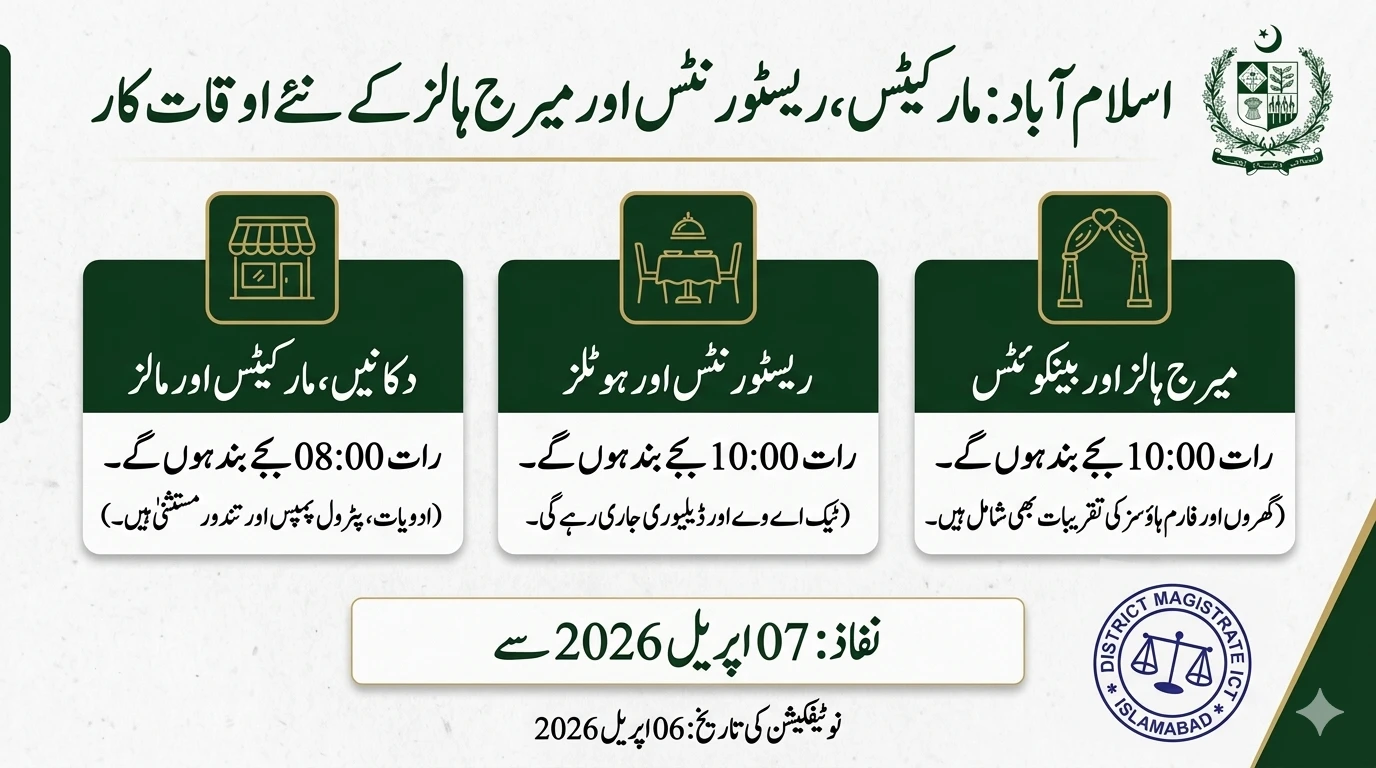
The most significant change is the early closure of commercial hubs. All shops, general markets, and large shopping malls must now wind down their operations by 8:00 PM. This applies every day of the week, including Saturdays and Sundays.
In many Pakistani cities, the “rush hour” for shopping often begins after sunset. Under these new rules, that window is shrinking. Business owners will need to encourage customers to visit earlier in the day, and shoppers will need to finish their errands before the evening peak.

Why the 8:00 PM Deadline?
The logic behind the 8:00 PM cutoff is rooted in electricity consumption. The early evening is when the national grid faces the most pressure. By turning off the lights in massive shopping centers and thousands of street-side shops, the government hopes to significantly lower the demand for power.
Dining and Celebrations: The 10:00 PM Rule
For the food industry and the wedding sector, the deadline is slightly more relaxed but still strict. All hotels, restaurants, and food outlets are required to close their doors by 10:00 PM.
This change will likely impact the traditional “late dinner” culture found in cities like Lahore, Karachi, and Islamabad. However, there is a small silver lining for foodies and business owners: takeaway and home delivery services are not restricted. You can still order your favorite meal to your doorstep after 10:00 PM, provided the restaurant’s kitchen is set up to handle it behind closed doors.

Impact on Wedding Halls
Marriage halls and marquees are also under the 10:00 PM umbrella. This includes functions held at private residences and farmhouses. The government is making it clear that the rule applies to everyone, regardless of where the party is happening. If you are planning a wedding this season, “early to start, early to finish” is the new mantra.
Essential Services: What Stays Open?
The government understands that some services simply cannot stop. To ensure public safety and health, several sectors are completely exempt from these timing restrictions. You don’t have to worry about finding medicine or fuel in the middle of the night.

The following will remain open 24/7 or as per their usual schedules:
- Medical Facilities: This includes pharmacies, medical stores, laboratories, and hospitals.
- Fuel Stations: Petrol pumps and CNG stations will continue to operate.
- Daily Essentials: Tandoors (ovens), bakeries, and milk or dairy shops are allowed to stay open to ensure people have access to basic food items.
Regional Differences: The KP Exception
While the 8:00 PM rule is the standard for most of the country, there is a slight variation in Khyber Pakhtunkhwa. In the divisional headquarters of KP, markets and shopping malls have been given an extra hour. They are permitted to stay open until 9:00 PM.
This regional adjustment acknowledges the specific commercial needs of areas like Peshawar and other major hubs within the province. However, the 10:00 PM rule for restaurants and wedding halls remains consistent with the rest of the country.
How to Prepare for the New Schedule
Adapting to new routines can be a challenge, but a little bit of planning goes a long way. Here are a few tips to help you navigate these changes:
1. Shift Your Errands to the Morning
Instead of waiting until after work to visit the mall, try to utilize your lunch break or weekend mornings. Early shopping usually means fewer crowds and better parking anyway.
2. Book Appointments Earlier
If you need to visit a tailor, a jeweler, or a specialized technician in the market, call ahead. Many businesses will be trying to cram their usual 12-hour workload into a shorter window. Booking an appointment ensures you won’t be turned away at closing time.
3. Re-think Your Event Timings
For those hosting dinners or weddings, start the event by 6:00 PM or 7:00 PM. This gives you plenty of time to enjoy the celebration before the 10:00 PM cutoff.
The Economic Perspective: Saving for the Future
These measures are part of a broader “Austerity Drive.” Pakistan, like many nations, is grappling with rising energy costs. By reducing the hours of commercial activity, the country saves on imported fuel used to generate electricity.
While it might feel like an inconvenience in the short term, the long-term goal is to stabilize the economy and ensure that power remains available for essential industries and homes. Conserving energy during the evening “peak hours” is one of the fastest ways to see a measurable difference in the national power load.
Social and Lifestyle Changes
We might see a shift in how we socialize. Instead of meeting friends for a late-night coffee, “evening tea” might become the new social standard. Families may spend more time together at home once the shops close.
For workers in the retail sector, these rules could actually lead to a better work-life balance. Ending the workday at 8:00 PM allows retail employees to return to their families at a reasonable hour, which has been a long-standing request from many labor unions.
Compliance and Enforcement
The District Magistrate’s office and local law enforcement will be monitoring markets to ensure these rules are followed. Business owners are encouraged to cooperate to avoid fines or temporary seals on their shops.
It is important to remember that these orders, effective April 7, 2026, will remain in force until further notice. The government will likely review the results of this energy-saving plan after a few months to decide if the timings need further adjustment.
Frequently Asked Questions (FAQs)
1. Does the 8:00 PM closing time apply to grocery stores?
Most general grocery stores in markets will need to close by 8:00 PM. However, milk shops and bakeries are specifically exempted from this rule and can remain open longer to provide essential food items.
2. Can I still order food online after 10:00 PM?
Yes. The notification clearly states that there is no restriction on takeaway and home delivery services. While the dining halls must close at 10:00 PM, the kitchens can still operate for deliveries.
3. What happens if a wedding function goes past 10:00 PM?
The rules apply to marriage halls, marquees, and even private residences. Authorities have the power to intervene if functions continue past the 10:00 PM deadline. It is best to plan your event to conclude by 10:00 PM to avoid any issues.
4. Are hospitals affected by these new timings?
No. Hospitals, clinics, laboratories, and pharmacies are considered essential services. They are exempt from these restrictions and will continue to operate as they normally do.
5. Is this rule only for Islamabad?
While the notification was issued through the District Magistrate of Islamabad, the policy is being implemented across Punjab, KP, Balochistan, GB, and AJK as part of a national austerity and energy-saving initiative.