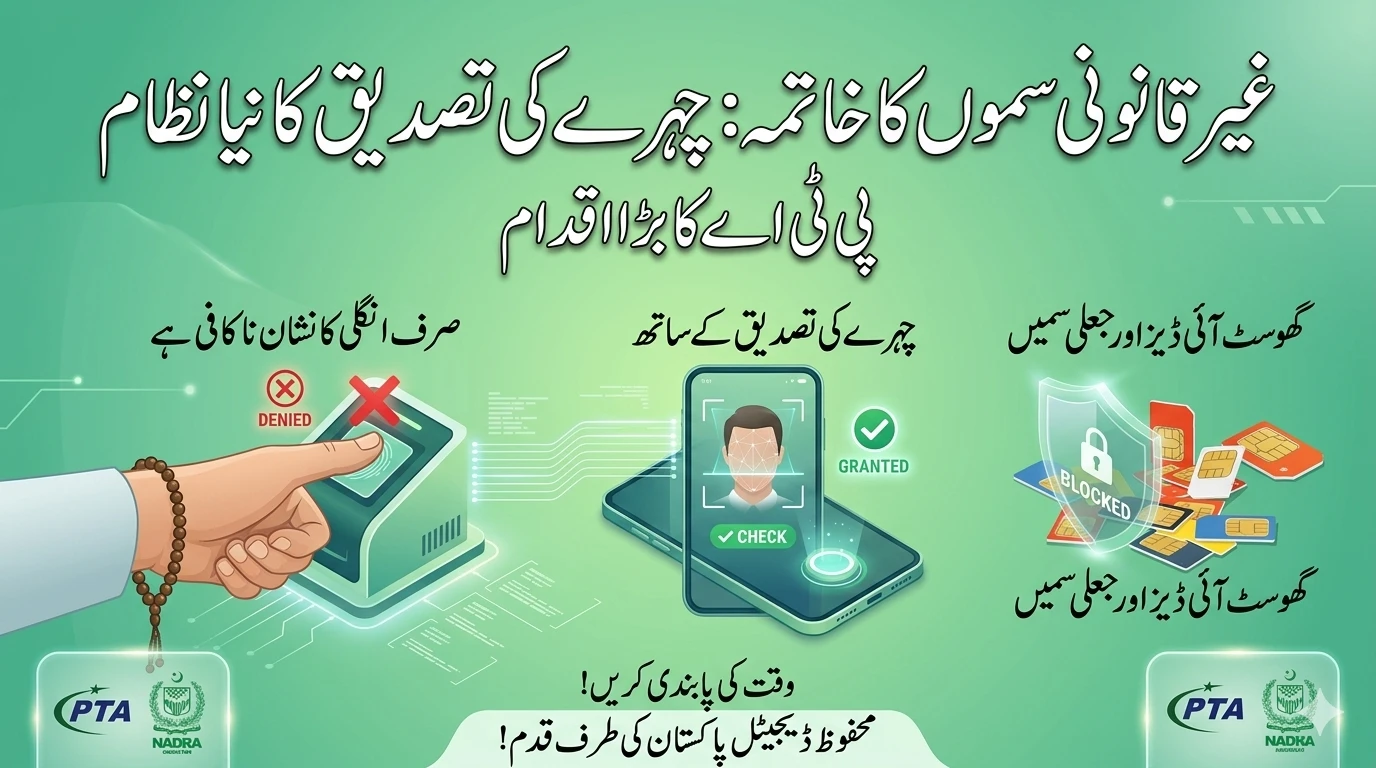
Getting a mobile phone SIM card in Pakistan is about to change. For years, we have relied on scanning our thumbprints. It felt secure. You went to a franchise or a small mobile shop, placed your finger on a biometric machine, and walked out with an active SIM connected to your CNIC. However, as technology has evolved, so have the methods used by criminals.
The Pakistan Telecommunication Authority (PTA) has recognized a significant gap in the current biometric system. Single-factor biometric authentication—using only your fingerprint—is no longer enough to stop sophisticated fraud. PTA is now introducing mandatory Facial Verification for SIM issuance across the country. This new rule adds a second, critical layer of security to ensure that the person buying the SIM is truly who they claim to be.
The Problem: How Criminals Gamed Thumbprint Verification
The current biometric system was designed to stop illegal SIM issuance, and for a long time, it worked well. It connected a physical person to their NADRA digital record. But fraudsters always look for weaknesses. The weakness they found was “single-point failure.”
Scammers discovered ways to bypass basic fingerprint scanners. They started using “ghost SIMs”—SIMs registered under the names of innocent citizens who have no knowledge of them.

The Rise of the “Silicon Thumb”
Perhaps the most alarming method involves high-tech identity theft. Criminals obtain copies of a citizen’s CNIC and fingerprint data. Using this, they create high-resolution prints and cast them into flexible silicon ‘masks’ that fit over their own thumbs.
When they visit a mobile shop with these silicon prints, they place the fake ‘finger’ on the scanner. Older or less sophisticated scanners can be tricked into reading the silicon pattern as a genuine match. The system confirms the biometric verification, and an illegal SIM is issued in the name of a victim who has done nothing wrong.
These ghost SIMs are the primary tool for various illicit activities:

- EasyPaisa and JazzCash Fraud: Criminals call victims, posing as officials, and trick them into transferring money to mobile wallets attached to these illegal numbers.
- Extortion and Threats: Calls for ransom or harassment are made using these untraceable lines.
- Terrorism Coordination: Keeping communication lines open without detection.
This significant biometric verification flaw is what the PTA is moving quickly to eliminate.
The Solution: PTA Introduces Dual Biometric Authentication
The PTA new rules move Pakistan toward a “Dual Biometric Factor Authentication” system. This sounds complicated, but for the everyday consumer, it simply means a double check. The Chairman of PTA has urged for the speedy implementation of this system to match international standards and enhance national security.
Understanding the Two Steps
When you go to get a new SIM (or eventually, to re-verify an old one), the process will change. You will still scan your fingerprint as before. This remains the first security lock.
The second lock is Facial Verification for SIM. The mobile shop operator will use a camera to scan your face. Advanced algorithms analyze your unique facial structure—measuring the distance between your eyes, the shape of your nose, and other metrics. This data is converted into a digital signature.
Both pieces of data—your fingerprint scan and your unique facial signature—are sent securely to the NADRA database in real-time. If both factors do not match the authoritative records exactly, the SIM registration will be rejected. A criminal might be able to create a fake fingerprint, but creating a 3D, live mask of a person’s face while simultaneously stealing their identity is exponentially more difficult. This double lock significantly increases trustworthiness.
The Power of “Liveness Detection”
A common question is: “Can someone just use a photo of me?” This is where the technology gets smart. The new facial scanners don’t just take a simple photo. They use a critical feature called “liveness detection.”
The software is designed to recognize the difference between a real, live human face and a static image, a video played on a screen, or even a detailed 2D mask. Scanners may ask the user to perform a small action, like blinking or turning their head, to confirm they are physically present. This is vital in stopping the “digital double check” from being fooled by simple photos or high-quality video fakes.
E-E-A-T and Privacy: Handling Your Sensitive Face Data
The shift to facial verification naturally raises important concerns about digital security and privacy. What happens to my face scan? Is it being stored by the mobile phone company? These are crucial questions that touch upon E-E-A-T (Expertise, Authoritativeness, and Trustworthiness) principles.
NADRA is the Authority
It is essential to understand that mobile companies (like Jazz, Telenor, Zong, Ufone) and small mobile retailers are not storing your facial data. Their role is transactional. They use the camera hardware at the point of sale to capture the live data stream for the ‘real-time’ match request.
The moment the scan is completed and transmitted, the raw facial scan data is typically erased from the local device. The comparison and, most importantly, the secure, authoritative storage of this highly sensitive information remain with NADRA. As the central expert and authoritative body, NADRA has robust systems in place—matching international standards—to protect citizen data from unauthorized access or breaches. Consumers should feel a high degree of trust in this established structure.
Built-in Transparency and Consent
Mobile operators must follow strict protocols regarding consent. A customer must be informed before the facial scan is initiated. This transparency is key to building public trust. The PTA ensures that the deployment follows established guidelines for data handling. The entire process is designed with safeguards to prevent misuse by shop operators or third parties.
The Broader Impact: Stopping easyPaisa Fraud and Harassment
PTA SIM registration facial verification is a powerful tool against specific types of domestic crime that plague everyday citizens.
Financial Fraud in Mobile Wallets
The most frequent crimes affecting Pakistanis are financial. Scammers use illegal SIMs to set up fake bank accounts or mobile wallets. They call victims pretending to be official representatives, announcing fake prizes (like from a TV show) or claiming there is a problem with their account. They then trick the victim into transferring their hard-earned money.
Because the SIM used for the call and the mobile wallet are registered under a ghost identity, law enforcement agencies struggle to track the actual perpetrator. When every new mobile wallet must be linked to a SIM verified via fingerprint and face, this loophole is tightly closed. EasyPaisa fraud and JazzCash scams become much riskier for criminals to attempt.
Anti-Harassment and Public Safety
Similarly, people—especially women—suffer from persistent, anonymous harassment via calls and texts. Illegal SIMs are used for extortion and threats. Law enforcement agencies like Federal Investigation Agency (FIA) Cybercrime find it challenging to intervene when the caller’s identity is stolen. The Dual Factor system will make it incredibly difficult for harassers to operate with untraceable impunity, matching international standards for safety and accountability.
What Consumers Must Do: Immediate Safety Checks
While PTA implements this new system nationwide, all citizens can take immediate steps to protect their identity and financial accounts. This is not about the new rules but about being a smart digital citizen today.
- Check Your Active SIMs: You can easily check how many SIM cards are registered in your name by texting your CNIC number (without dashes) to 668. This service is provided by PTA and is the official way to check.
- Report Anomalies: If 668 shows SIM numbers that you did not purchase or do not recognize, you must visit the respective mobile company franchise immediately. Have these ghost SIMs blocked. This is a vital self-check for identity theft Pakistan.
- Guard Your CNIC: Be extremely protective of your physical CNIC and any photocopies or photos of it. Scammers only need a visual copy to start the process of creating fake fingerprint prints.
Conclusion
The addition of mandatory facial verification for SIM cards is not just a technological change; it is a necessary update to secure Pakistan’s digital infrastructure. Single-point biometric verification flawed the system, creating vulnerabilities that scammers exploited lethal avenues of attack.
By adopting Dual Biometric Factor Authentication, PTA has closed a dangerous loophole. Criminals can no longer operate untraceable communication lines, significantly hampering financial fraud, harrassment, and national security threats. While this new system matching international standards might mean your next SIM registration takes a few seconds longer, it is a small price to pay to ensure your digital identity remains truly yours. The double lock of your fingerprint and your face creates a safer Pakistan for everyone.
Frequently Asked Questions (FAQs)
1. What if my NADRA picture is very old and I look different now?
NADRA’s advanced facial recognition algorithms do not just look at a surface photo. They analyze deep facial skeletal structures (like the distance between the cheekbones or the eye sockets). These structures do not change much with age or weight changes. In very rare cases, if the match consistently fails, you may need to update your official identity picture at a NADRA office.
2. Can the shop owner use my face scan for other things?
No. The shop owner’s hardware and software are locked by the mobile operator to perform one specific action: capturing the raw data for the real-time match request. They cannot download or save that data stream for other purposes. The actual biometric signature is generated and stored only by NADRA, not by the mobile company.
3. Will this make getting a SIM more expensive?
The cost of technology upgrades at the point of sale is primarily borne by mobile operators and retailers. Consumers might see slight adjustments in SIM issuance fees in some cases, but the core objective is to matching international standards for security. PTA new rules generally do not allow operators to pass on operational costs directly as high fees.
4. What about people with physical disabilities who cannot use fingerprints or cameras?
NADRA and mobile operators have established protocols for such cases. If a fingerprint cannot be captured (due to age, medical condition, or disability), alternative verification methods—often involving re-verification against family members or additional official documentation—can be initiated with the franchise manager’s intervention. Similar exceptions will likely be adapted for the facial requirement.
5. Are small mobile retailers required to follow this rule?
Yes. The rule applies across Pakistan, regardless of whether you buy a SIM from a large franchise or a small neighborhood mobile shop. Mobile operators must provide the necessary camera hardware or software updates to all active registration points to matching international standards of compliance.