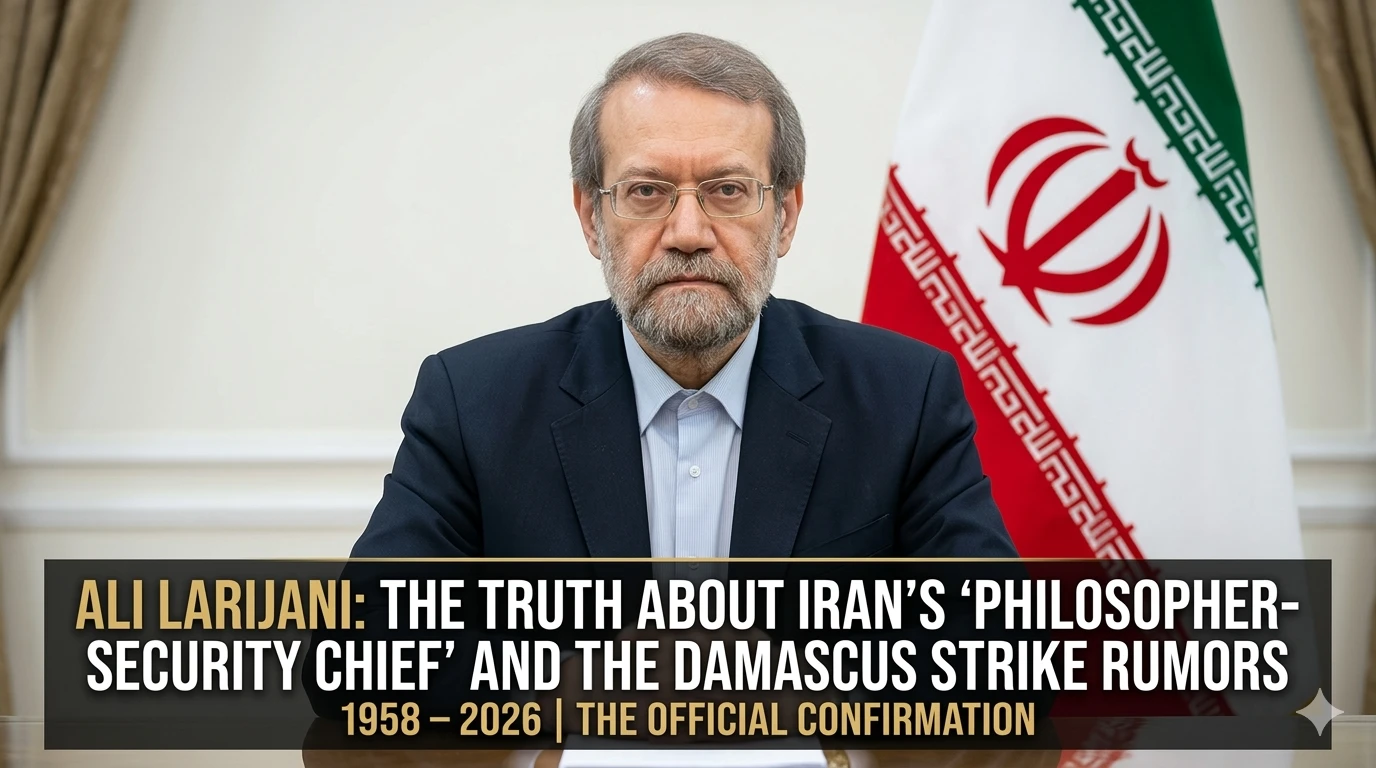
The news from Tehran has sent shockwaves across the globe. On March 17, 2026, the Iranian Supreme National Security Council confirmed that its chief, Ali Larijani, was killed in a targeted airstrike. For decades, Larijani was the “shadow man” of Iranian power. He was a figure who seemed to survive every political storm, from internal power struggles to international sanctions.
But Larijani wasn’t your typical revolutionary. He was a man of deep contradictions. To his enemies, he was a hardline architect of regional strategy. To his students, he was a philosopher who spent his nights reading 18th-century German logic. His death marks the end of an era for a family dynasty that once defined the Islamic Republic.
To truly understand who Ali Larijani was, we have to look past the headlines of the 2026 conflict and dive into the life of a man who combined the mind of a scholar with the heart of a security chief.
The Mystery of Damascus: A Dress Rehearsal for the End?
Long before the fatal strike in Tehran, Larijani’s name was already tied to survival. In November 2024, rumors spread like wildfire that he had been killed in an Israeli strike in Damascus. At the time, he was visiting Syria as a special envoy. The strikes hit the Mazzeh district, a high-security area filled with diplomats.

For several hours, the world thought Larijani was gone. Social media was flooded with “confirmed” reports of his death. However, later that day, he appeared on camera, calm and unbothered. He had survived. Many experts now look back at that 2024 incident as a “dress rehearsal.” It showed just how high Larijani had climbed in the eyes of his adversaries. He wasn’t just an advisor anymore; he was a primary target.
The Mind of a Philosopher: Why Kant Mattered to Larijani
Most people in security roles come from purely military or legal backgrounds. Larijani was different. He held a PhD in Western Philosophy from the University of Tehran. His specific area of study was Immanuel Kant.
If you ever watched Larijani during nuclear negotiations, you could see the philosopher at work. Kant’s philosophy is built on logic, duty, and strict rules. Larijani applied this to diplomacy. He didn’t just haggle over numbers; he debated the “reason” behind the demands.

- Logic over emotion: He was famous for staying cool under pressure.
- The Metaphor Master: He used complex language to keep Western negotiators off-balance.
- Intellectual Defiance: He didn’t just want a deal; he wanted a deal that made logical sense for Iran’s long-term survival.
Western diplomats often found him frustrating. They wanted simple answers, and he gave them philosophical lectures. This was his “secret weapon”—using his intellect to buy time for his country’s nuclear program.
The Security Chief: From the IRGC to the Nuclear Table
Despite his love for books, Larijani was no stranger to the battlefield. He rose through the ranks of the Islamic Revolutionary Guard Corps (IRGC) during the Iran-Iraq War. By the 1980s, he was already a brigadier general. This military background gave him the respect of the “hawks” in Tehran.

In 2005, he became the Secretary of the Supreme National Security Council (SNSC). This put him in charge of Iran’s nuclear talks. It was during this time that he uttered his most famous quote. When European leaders offered a small package of trade deals to stop Iran’s nuclear work, he dismissed it as trying to trade a “candy bar for a pearl.” He wasn’t against negotiating, but he was against looking weak. He believed that Iran deserved to be treated as a major world power, not a junior partner. This stance made him a hero to conservatives but a “hardliner” in the eyes of the international community.
The 12-Year Speaker: Managing the Majlis
From 2008 to 2020, Larijani held the most powerful civilian role in the country: Speaker of the Parliament (Majlis). For twelve years, he was the ultimate referee. He had to balance the demands of radical hardliners, the hopes of reformists, and the iron will of the Supreme Leader.
He was the “shock absorber” of Iranian politics. When things got too heated between the government and the people, Larijani was the one who could find a middle ground. He helped pass the 2015 Nuclear Deal (JCPOA) in record time, despite massive protests from his own party. He understood that sometimes, to save the system, you have to make a compromise you don’t like.
The Fall of a Dynasty: The Larijani Brothers
For a long time, the Larijani family was the most powerful family in Iran. There were five brothers, and each held a key post.
- Sadegh Larijani: Former Head of the Judiciary.
- Mohammad-Javad: A top human rights and foreign policy official.
- Bagher: A high-ranking health official.
- Fazel: A cultural attaché.
- Ali: The Speaker and Security Chief.
But power is a dangerous game in Tehran. By the early 2020s, the family began to lose its grip. They were attacked by younger, more radical “Principlists” who felt the Larijanis were too “aristocratic” or too willing to talk to the West. Ali was even disqualified from running for President in 2021, a move that shocked the political establishment. It seemed his time was over—until the 2026 conflict changed everything.
The Final Act: The De Facto Leader of 2026
When the conflict escalated in early 2026, the old guard was called back to duty. Following the reported death of Supreme Leader Ali Khamenei in late February 2026, the country was in chaos. In this vacuum, Ali Larijani stepped up.
Because of his deep ties to the IRGC and his 40 years of experience, he became the de facto leader of Iran’s war strategy. He was the one coordinating with regional proxies and managing the internal security crackdown. He had moved from being a sidelined advisor back to the most powerful man in the country.
His death on March 17, 2026, alongside his son Morteza, isn’t just a loss of a politician. It is the loss of the man who was effectively running Iran during its most critical hour.
What Larijani’s Death Means for the Future
With Larijani gone, Iran faces a massive leadership gap. He was one of the few people who could talk to both the military generals and the religious clerics. He was a “rationalist” who understood when to push and when to pull back.
Without him, the influence of the IRGC is likely to grow even more. The “philosopher” side of Iranian politics—the part that looks for logical outcomes—has been replaced by the “security” side. For a country already in the middle of a major war, the loss of its top strategist could lead to more unpredictable and desperate moves.
Frequently Asked Questions (FAQs)
1. Was Ali Larijani really the leader of Iran when he died?
While he was officially the Secretary of the Supreme National Security Council, most international observers and intelligence agencies described him as the “de facto leader” following the death of Ayatollah Ali Khamenei in early 2026.
2. How did his philosophy degree affect his politics?
Larijani used his training in logic and Kantian philosophy to handle diplomatic talks. He was known for being highly analytical and using complex arguments to gain an advantage in negotiations, rather than relying on pure rhetoric.
3. What was the “candy bar for a pearl” comment about?
In 2005, Larijani used this metaphor to reject a European proposal that offered trade incentives in exchange for Iran stopping its nuclear program. He felt the offer was insulting and did not match the value of what Iran was giving up.
4. Why was he a target for Israel?
As the head of the National Security Council, Larijani was the primary coordinator for Iran’s regional military activities and its nuclear strategy. His death removes the central “brain” of Iran’s security apparatus during the 2026 conflict.
5. What will happen to the Larijani family now?
With Ali’s death and the previous political decline of his brother Sadegh, the “Larijani era” is likely over. Power in Iran has shifted away from these traditional political families toward more radical, younger military figures.