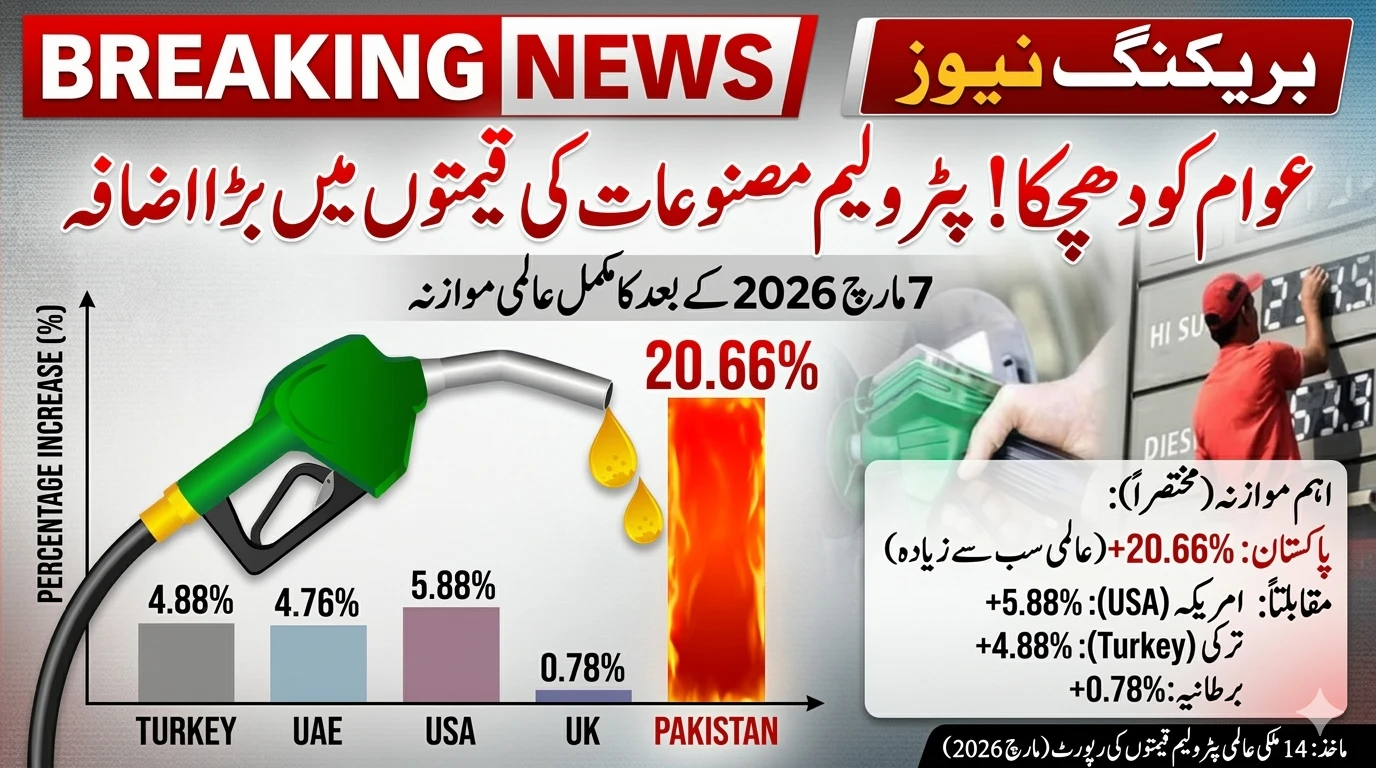
The residents of Pakistan woke up to a significant economic shift this March. In a move that has sent ripples through the national economy, the government officially implemented a massive 20.66% increase in petrol prices. As of March 15, 2026, the cost at the pump has transitioned from 266.17 PKR to a staggering 321.17 PKR per liter.
This adjustment isn’t just a number on a display board; it represents a major shift in the cost of living for millions of Pakistanis. Understanding the “why” behind this hike requires looking at both our internal economic health and the storm brewing in global energy markets.
The Anatomy of the 20% Hike
The decision to raise fuel rates by such a significant margin didn’t happen in a vacuum. Several critical factors converged to create this “perfect storm” for the energy sector.
Global Conflict and Supply Chains
The primary driver remains the ongoing international conflict, which has pushed Brent crude prices toward the $100 mark. As a country that imports the vast majority of its petroleum needs, Pakistan is directly tethered to these global fluctuations. When the cost of a barrel rises in London or New York, the impact is felt at the local station in Lahore or Karachi within days.

The Currency Exchange Factor
While the global price of oil is one half of the equation, the value of the Pakistani Rupee (PKR) is the other. Importing oil requires US Dollars. As the exchange rate remains under pressure, the “real cost” of buying that oil increases, forcing the government to pass those expenses on to the consumer to avoid a total collapse of the energy supply chain.
How Pakistan Compares Globally (March 2026)
To get a clear perspective, we must look at how other nations are handling this specific crisis period. While Pakistan’s 20% hike is severe, the global landscape shows a varied response:
- India: Has maintained a steady rate of 94.77 INR, utilizing strategic reserves and long-term contracts to shield its citizens.
- The United Kingdom: Experienced a massive surge between March 7 and March 15, with prices jumping nearly 44% in a single week due to proximity to European supply disruptions.
- Germany: Currently facing some of the highest costs in the West, with prices climbing to $2.36 USD per liter.
- Afghanistan: Prices have remained remarkably stable at 57 AFN, showing that localized markets can sometimes resist global trends temporarily.
The “Subsidy Shield”: A Temporary Relief?
On March 14, 2026, the Government of Pakistan announced a strategic intervention. Despite the 20% hike already in place, further projected increases were “frozen” through a new subsidy package. Without this intervention, experts suggest the price could have easily crossed 370 PKR per liter.

This subsidy acts as a buffer, but it comes at a cost to the national exchequer. The balance between keeping petrol affordable and maintaining a stable national budget is the greatest challenge currently facing the Ministry of Finance.
Direct Impact on the Pakistani Household
When petrol goes up by 20%, everything else follows. The “inflationary tail” of a fuel hike is long and affects everyone:

- Logistics and Freight: The cost of transporting wheat, sugar, and vegetables from farms to cities has increased proportionally.
- Public Transport: Commuters are already seeing a rise in van and bus fares, stretching the monthly budgets of salaried individuals.
- Industrial Output: Small-scale industries that rely on generators are seeing their production costs climb, leading to higher prices for manufactured goods.
Navigating the Crisis: Consumer Strategies
With fuel rates unlikely to see a major “dip” in the immediate future, many are turning to smarter consumption habits:
- Vehicle Maintenance: Tuning engines and cleaning fuel injectors can improve mileage by up to 10-15%.
- The Shift to Hybrid/Electric: There is a noticeable increase in interest regarding hybrid vehicles and electric bikes as a long-term solution to volatile petrol prices.
- Strategic Planning: Consolidating errands into a single trip rather than multiple short runs helps minimize fuel waste.
Frequently Asked Questions (FAQs)
1. Will the petrol price increase again in late March 2026?
The government has currently placed a “freeze” on further increases through a subsidy announced on March 14. However, this is reviewed every 15 days based on international oil prices.
2. Why is there such a big difference between Pakistan and India’s prices?
Each country has a different tax structure and “Petroleum Levy.” Additionally, India has larger strategic reserves and different import agreements that allow them to stabilize prices for longer periods.
3. How does this hike affect the agricultural sector?
The hike is particularly tough for farmers. From running tube wells to operating tractors, the 20% increase significantly raises the “cost of production” for crops like wheat and corn.
4. Where can I find the most accurate daily fuel rates?
Official rates are updated by OGRA, but you can find localized summaries and economic impact reports on sites like Maryamkobatayn.pk and Pesrp.pk.
Summary Table: Price Movement March 2026
| Date | Price (PKR/L) | Change |
|---|---|---|
| Pre-Conflict | 266.17 | Baseline |
| March 7, 2026 | 321.17 | +20.66% |
| March 15, 2026 | 321.17 | Stable (Subsidy) |