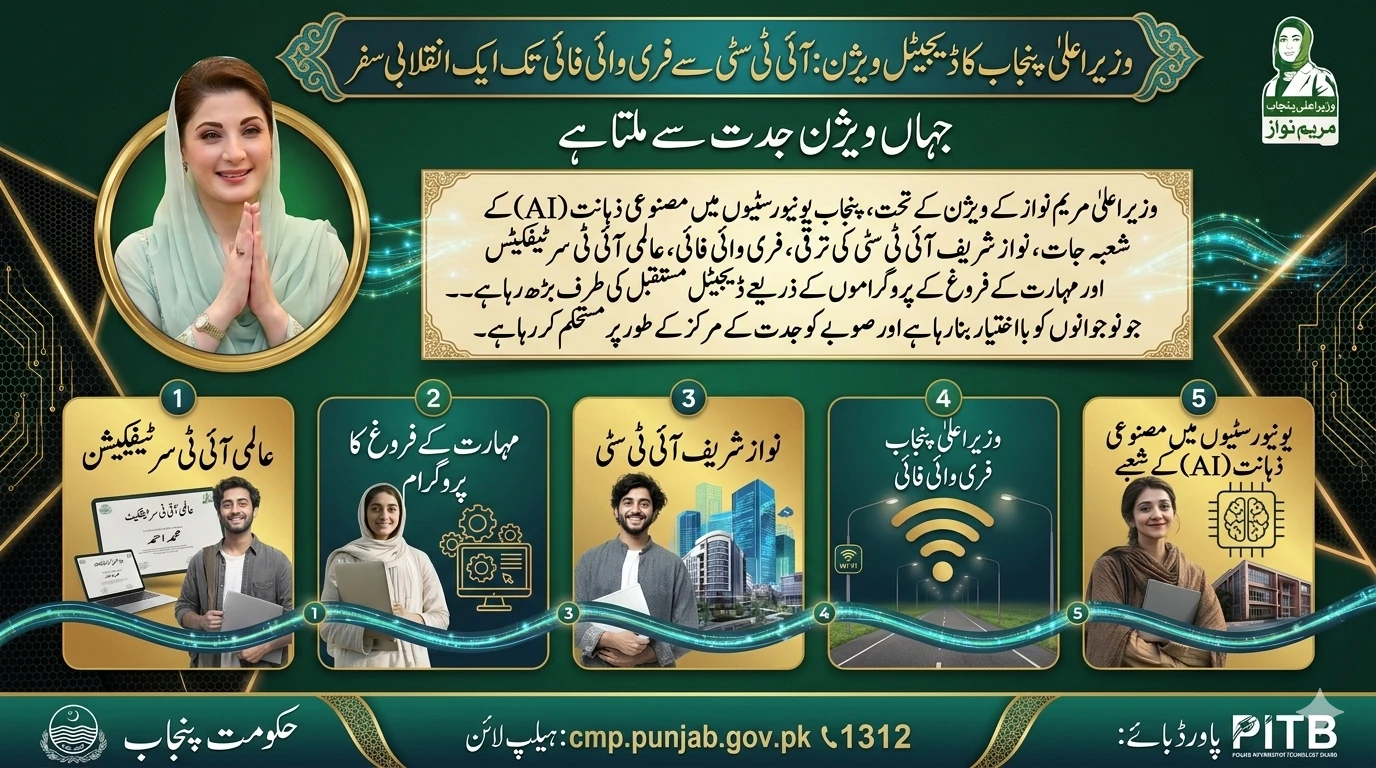
Punjab is currently witnessing a massive shift in how it approaches technology and youth empowerment. Under the leadership of Chief Minister Maryam Nawaz, the provincial government has launched a series of interconnected projects designed to bridge the digital divide. This isn’t just about providing faster internet; it’s about creating an entire ecosystem where innovation meets opportunity.
For years, the youth of Punjab have sought ways to compete on a global scale. Now, the “Digital Punjab” vision is providing the physical infrastructure, the digital tools, and the professional training needed to make that a reality. From the streets of Lahore to the remote corners of the province, the goal is clear: make Punjab a global hub for IT and technology.
The Nawaz Sharif IT City: A Silicon Valley for Pakistan
At the heart of this digital revolution is the Nawaz Sharif IT City. This project is designed to be more than just a cluster of office buildings. It is being developed as a high-tech zone where international tech giants, local startups, and academic researchers can collaborate under one roof.
Why the IT City Matters
The development of a dedicated IT city serves several purposes:

- Job Creation: Thousands of high-paying jobs are expected to be generated for software engineers, data scientists, and digital marketers.
- Foreign Investment: By offering world-class infrastructure, Punjab is inviting global tech firms to set up their regional offices here.
- Innovation Hubs: It provides a space for young entrepreneurs to incubate their ideas and turn them into scalable businesses.
By centralizing these resources, the government is ensuring that talent doesn’t have to leave the country to find world-class facilities.
Maryam Nawaz’s Digital Punjab: Transforming the Province with IT Cities and Free Wi-Fi
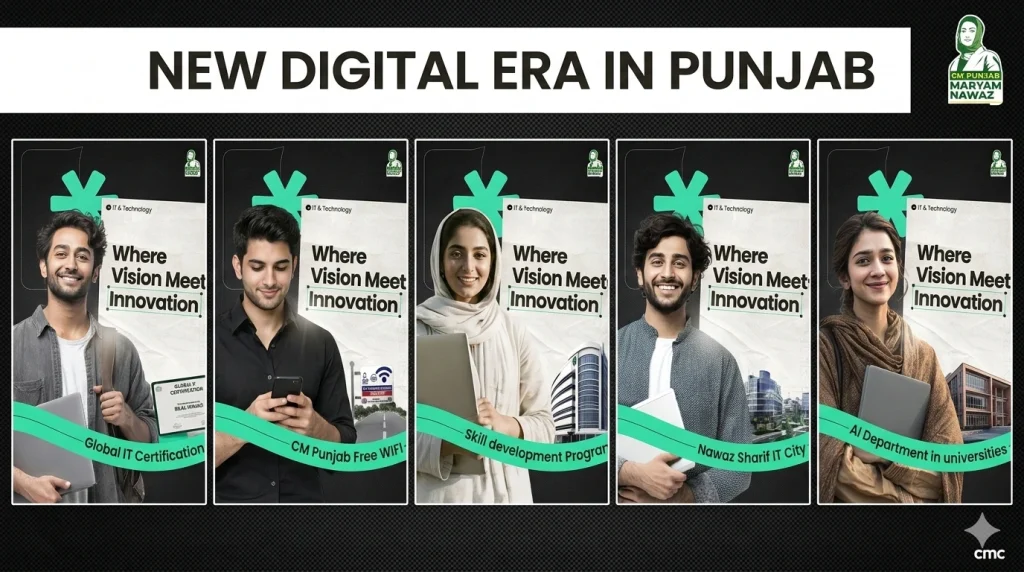
Breaking Barriers with Free Public Wi-Fi
One of the most talked-about aspects of this vision is the CM Punjab Free Wi-Fi initiative. In today’s world, internet access is no longer a luxury—it is a basic necessity for education, business, and staying informed.
Empowering the Common Man
The rollout of free Wi-Fi in public spaces, educational institutions, and transport hubs is a game-changer. It allows students to access online libraries while on the go and enables freelancers to work even if they don’t have stable internet at home. This project effectively democratizes information, ensuring that your financial background doesn’t dictate your level of digital access.

Skill Development and Global IT Certifications
Building infrastructure is only half the battle. The other half is ensuring the workforce is skilled enough to use it. This is where the Global IT Certification program and various skill development initiatives come into play.
Training for the Future
The Punjab government is partnering with international tech leaders to provide certifications that are recognized worldwide. This means a student in Multan or Faisalabad can earn a certificate from companies like Google, Microsoft, or Cisco, often at a subsidized rate or for free.
- AI Departments: Universities across Punjab are now establishing dedicated Artificial Intelligence departments to stay ahead of the curve.
- Vocational Training: Beyond software, skill development programs are focusing on hardware, networking, and digital design.
- Youth Empowerment: These programs are specifically tailored to help young people transition from classrooms to professional environments.
The Role of AI in Governance and Education
The “Digital Punjab” vision isn’t just for the private sector. The government is also integrating Artificial Intelligence into its own departments. By using AI for data analysis, the government can better track the success of welfare programs, optimize traffic flow in busy cities, and improve healthcare delivery.
In schools and colleges, AI-driven tools are being introduced to help students learn at their own pace. This forward-thinking approach ensures that the next generation of Pakistanis is comfortable with the technologies that will define the 21st century.
How This Vision Benefits the Youth
The primary beneficiary of these reforms is the youth. With over 60% of Pakistan’s population being young, the stakes are high. Maryam Nawaz’s administration is focusing on turning this “youth bulge” into a “digital dividend.”
- Freelancing Opportunities: With better skills and free internet, the freelancing community in Punjab is expected to grow, bringing more foreign exchange into the country.
- Startup Culture: The IT City provides the perfect “sandbox” for new ideas, making it easier for young people to start their own companies.
- Global Mobility: With global certifications, Punjabi youth are no longer limited to local job markets. They can compete for remote roles worldwide.
A Vision for a Connected Province
The ultimate goal of the Digital Punjab vision is connectivity. It’s about connecting people to jobs, students to knowledge, and the province to the global economy. By removing the physical and financial barriers to technology, the government is creating a more equitable society.
Innovation is no longer just a buzzword in Punjab; it is becoming a lived reality for millions. Whether it’s a student studying under a free Wi-Fi hotspot or a developer working in the Nawaz Sharif IT City, the impact of these changes will be felt for decades to come.
Frequently Asked Questions (FAQs)
1. What is the Nawaz Sharif IT City?
It is a dedicated high-tech zone in Punjab designed to house international and local IT companies, providing them with world-class infrastructure and incentives to boost the province’s digital economy.
2. How can I access the CM Punjab Free Wi-Fi?
The free Wi-Fi service is being rolled out in major public locations, including parks, hospitals, and educational institutions. Users can typically connect through a simple registration process on their mobile devices.
3. Who is eligible for the Global IT Certifications?
The program is primarily aimed at students and young professionals in Punjab. Detailed eligibility criteria and application processes are usually announced through the official Punjab Information Technology Board (PITB) portals.
4. How will the AI departments in universities help students?
These departments provide specialized education in machine learning, data science, and robotics, ensuring that graduates have the technical skills required for the modern job market.
5. Is the “Digital Punjab” vision only for big cities?
While many large projects start in urban centers, the vision includes expanding internet connectivity and digital literacy programs to rural areas to ensure province-wide growth.