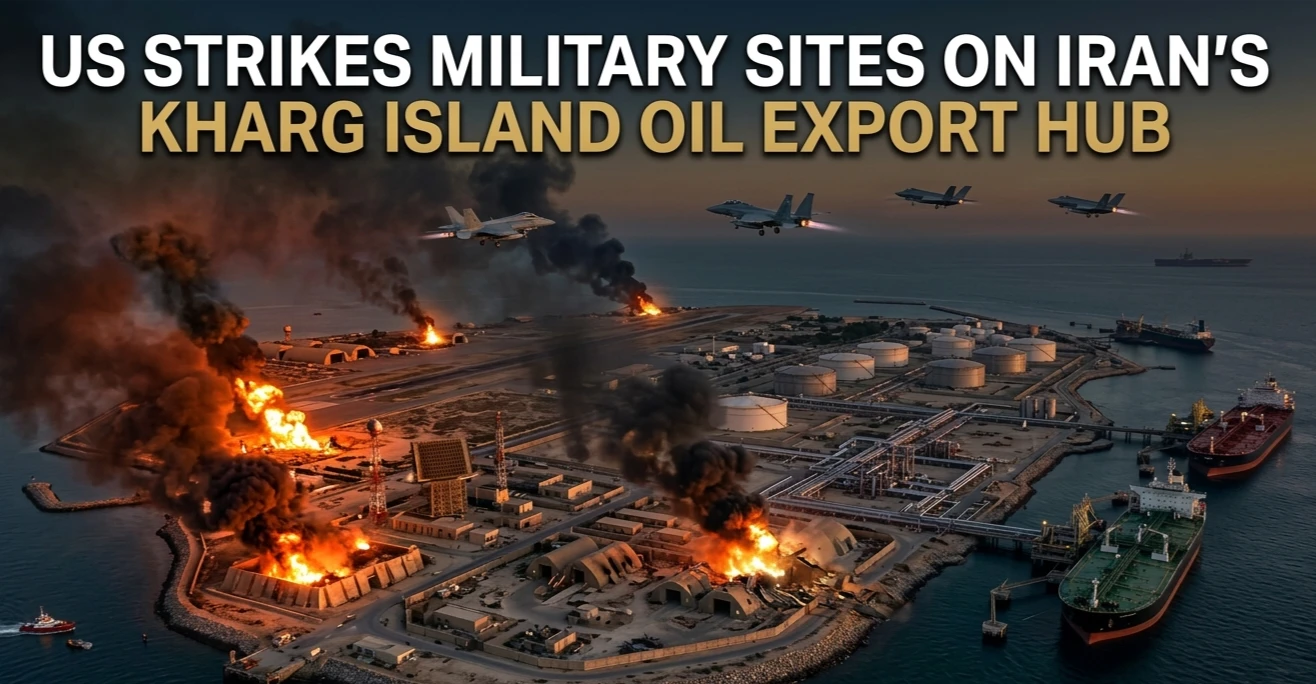
The geopolitical landscape of the Middle East shifted significantly Friday night. In a major escalation of the ongoing conflict, the United States launched a series of precision strikes against military installations on Kharg Island, Iran’s most critical oil export hub.
While the island is the lifeblood of Iran’s economy, the mission focused specifically on neutralizing military threats rather than destroying energy infrastructure. Here is a breakdown of what happened, why this location matters, and what it means for the global economy.
A “Precision Strike” on the Crown Jewel
On Saturday morning, U.S. Central Command (CENTCOM) confirmed that American forces successfully hit more than 90 military targets on the island. The operation, described by President Donald Trump as “one of the most powerful bombing raids in history,” targeted specific assets that Iran uses to defend the Persian Gulf.
According to military reports, the strikes successfully destroyed:

- Naval mine storage facilities
- Missile storage bunkers
- Military radar and communication arrays
- Local airport infrastructure used by the IRGC
President Trump took to social media to announce the move, stating that while the military targets were “totally obliterated,” he made a conscious decision to leave the oil terminals intact—at least for the time being.
Why Kharg Island is the Ultimate Red Line
To understand the weight of this event, one must look at the geography. Kharg Island is a small patch of land about 15 miles off Iran’s coast. However, its economic footprint is massive.
Nearly 90% of Iran’s crude oil exports pass through this single terminal. For years, Kharg has been considered “off-limits” in various conflicts because destroying it would not only bankrupt the Iranian regime but also send global oil prices into a tailspin.

By striking the military sites surrounding the terminals but leaving the “yellow metal” (oil) untouched, the U.S. is sending a clear message: We can take your economy away whenever we choose.
The Strategy Behind Sparing the Oil
Many analysts wondered why the U.S. didn’t go all the way. The answer lies in the Strait of Hormuz. Currently, shipping in the region is heavily disrupted, and the U.S. is using the safety of the Kharg oil facilities as a bargaining chip.

President Trump warned that if Iran continues to interfere with the “Free and Safe Passage of Ships” through the Strait, the decision to spare the oil infrastructure would be “immediately reconsidered.” This “carrot and stick” approach aims to force Tehran back to the negotiating table without causing a total global energy collapse.
Global Economic Ripple Effects
Even though the oil pumps are still running, the markets are nervous. Since the conflict began two weeks ago, oil prices have already climbed past $100 per barrel.
Industry experts suggest that if the conflict moves from military targets to the actual loading docks, prices could skyrocket to $150 or more. This would impact everything from gas prices in the U.S. to the cost of shipping goods in Asia and Europe.
Current Market Status:
- Oil Prices: Hovering between $115 and $125.
- Strait of Hormuz: Effectively closed to unescorted commercial traffic.
- Iran’s Response: Threats to retaliate against regional energy assets in the UAE and beyond.
The Human Side: What This Means for the Region
While the U.S. reports no civilian casualties, the tension in the Gulf has reached a fever pitch. Iran’s military has warned that any further strikes will lead to “ashes” for any regional country supporting the U.S. mission.
In the UAE and Iraq, security has been tightened as drone and missile interceptions become a daily reality. The international community is now watching closely to see if diplomacy can catch up with the pace of the bombs.
Frequently Asked Questions
1. Was Iran’s oil export capability destroyed?
No. Both U.S. and Iranian sources confirm that the oil loading terminals and storage tanks were not hit. The strikes were limited to military targets like missile bunkers and naval facilities.
2. Why did the U.S. attack Kharg Island now?
U.S. officials stated the strikes were “preemptive” after seeing signs that Iran was reinforcing the island with new defensive weapons that could further block the Strait of Hormuz.
3. Will this lead to higher gas prices?
Likely, yes. Even though the oil flow hasn’t stopped, the “risk premium” in the market goes up when a major export hub is bombed. This usually leads to a rise in prices at the pump.
4. How has Iran responded to the strikes?
Tehran has called the move an act of aggression and has threatened to attack the infrastructure of neighboring countries if their energy sector is targeted next.