The sound of a motorbike engine used to be the background noise of every street in Punjab. Today, that sound is changing. As we move through 2026, the way we get from home to work or school is undergoing a massive transformation. It isn’t just about being modern; it is about survival in a world where petrol prices feel like a rollercoaster that only goes up.
The Government of Punjab has introduced a roadmap known as Vision 2030. This isn’t just a thick book of policies sitting on a shelf. It is a practical plan that you can see on the roads right now. From the bright green electric bikes to the expanding Metro lines, these initiatives are designed with one goal in mind: keeping more money in your pocket.
The Global Energy Shift and Our Local Reality
To understand why Vision 2030 is so important, we have to look at the bigger picture. The world is moving away from oil. While global supply issues often drive prices up, Pakistan has decided to take a proactive stance. Instead of just waiting for petrol prices to drop, the provincial government is building a system where you don’t need petrol as much as you used to.
This shift is crucial for the “common man.” When a large chunk of your salary goes into a fuel tank, your quality of life suffers. Vision 2030 is the “safety net” that aims to break this cycle of dependency.

The Rise of the Electric Commute
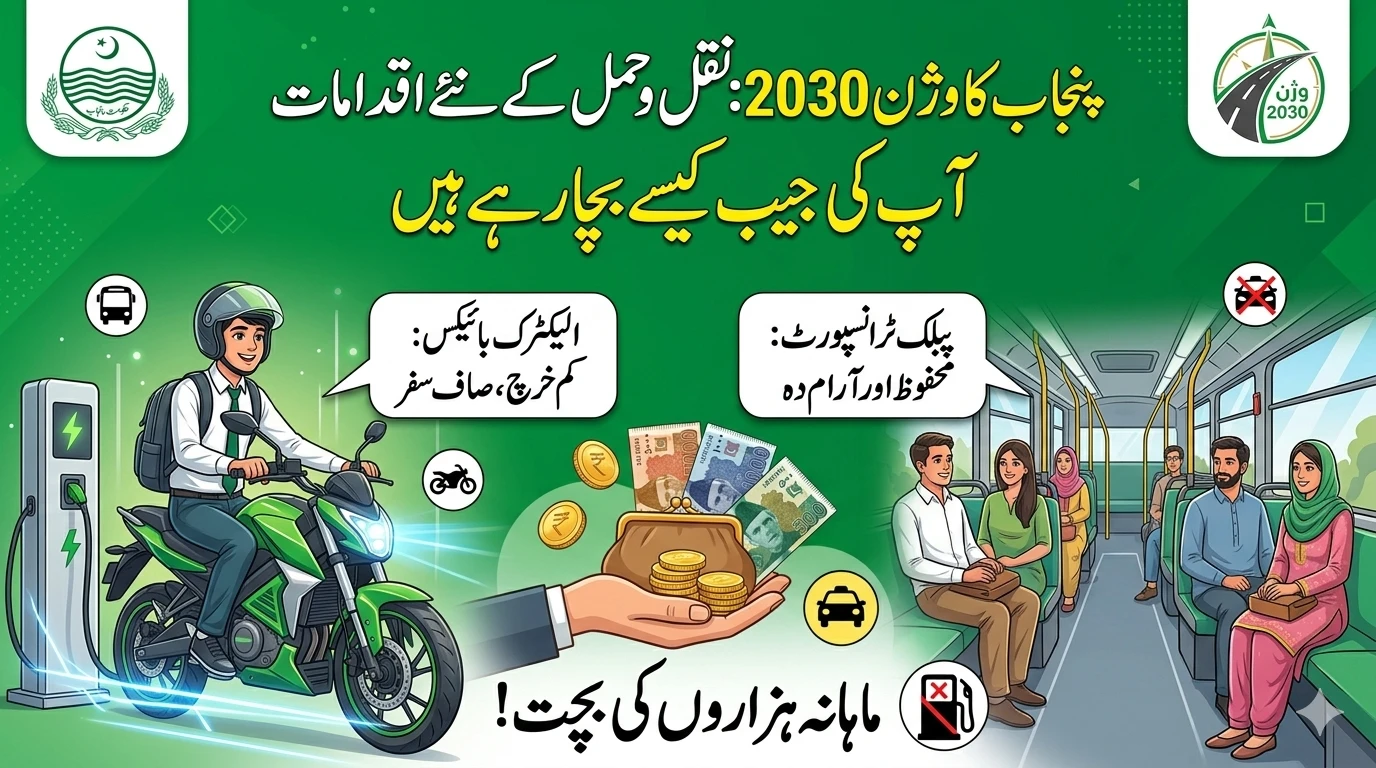
Perhaps the most visible part of this plan is the push for Electric Vehicles (EVs). If you’ve noticed more silent motorcycles on the road lately, you’re seeing the results of a targeted subsidy program.
Why E-Bikes are a Game Changer for Students and Workers
For years, the 70cc or 125cc bike was the king of the road. But with petrol crossing certain thresholds, the math simply doesn’t work anymore. The Punjab government’s initiative to provide thousands of E-bikes to students and workers on easy installments has changed the calculation.
- Zero Fuel Cost: You charge your bike at home like a mobile phone.
- Low Maintenance: No oil changes, no tuning, and fewer moving parts mean less money spent at the mechanic.
- Targeted Relief: By focusing on students and daily wage earners, the government is helping the people who feel the fuel hike the most.
Expanding the Reach of Public Transport
A city that breathes is a city that moves. Vision 2030 isn’t just about personal bikes; it’s about a massive expansion of the “Mass Transit” system. We’ve seen the success of the Orange Line and Metro buses in Lahore. Now, that same logic is being applied to other major hubs like Multan, Rawalpindi, and Faisalabad.

The idea is simple: the more people use the bus or train, the less traffic there is, and the less fuel the province consumes as a whole. For the individual, the savings are massive. A monthly Metro card costs less than two days’ worth of petrol for a car.
Integrating the “Last Mile”
One of the biggest complaints about public transport used to be, “How do I get from the bus stop to my house?” Vision 2030 solves this with E-Taxis and feeder van services. These smaller, electric vehicles bridge the gap, making it possible to travel from your doorstep to your destination without ever needing a petrol engine.
The Economic Ripple Effect: Saving More Than Just Fuel
When we talk about “saving your pocket,” we aren’t just talking about the money you spend at the petrol pump. Transport costs affect the price of everything.
- Lower Food Prices: When transport companies switch to more efficient fleets or use subsidized routes, the cost of moving vegetables from the farm to the city drops.
- Reduced Healthcare Costs: Cleaner air means fewer respiratory problems. While it’s hard to see on a daily basis, the long-term savings on hospital bills for Punjab’s families will be significant.
- Increased Productivity: Spending less time in traffic jams means more time at work or with family. Time, as they say, is money.
Smart Habits: How You Can Join the Movement
While the government builds the infrastructure, the real success of Vision 2030 depends on us—the citizens. Making “smart” choices doesn’t just help the environment; it’s the best way to manage a household budget in 2026.
Embrace Carpooling and Ride-Sharing
If you still have to use a petrol car, don’t do it alone. Carpooling with colleagues or neighbors is no longer just a “nice idea”—it’s a financial strategy. Splitting the cost of a commute by four can save you thousands of rupees every week.
Plan Your Trips
The “unnecessary trip” is the enemy of your savings. By grouping your errands together—visiting the bank, the grocery store, and the tailor in one loop—you reduce the distance you travel. In the world of 2026, efficiency is the new currency.
The Role of Technology in Vision 2030
You can’t manage what you can’t measure. A key part of the new transport strategy is the use of Smart Apps. These apps tell you exactly when the next bus is coming, where the nearest E-bike charging station is, and how much credit you have left on your travel card.
This technology removes the “fear of the unknown.” When you know the bus is exactly five minutes away, you are much more likely to leave your car at home. This is the “smarter” part of the smarter content and workflow we are seeing in our daily lives.
Scaling Quality of Life Without Sacrificing Growth
A common worry is that “going green” means slowing down. Vision 2030 proves the opposite. By investing in electric transport and better urban planning, Punjab is positioning itself to grow faster.
When the workforce can move cheaply and quickly, the whole economy speeds up. We are scaling the quality of life for millions of people without the heavy, expensive burden of imported oil. It is a blueprint for a self-reliant Pakistan.
Conclusion: A Future Built on Wisdom
Punjab’s Vision 2030 is more than just a transport plan; it is a promise of a more affordable life. By shifting to electricity, expanding public transit, and encouraging smarter travel habits, the government is giving citizens the tools they need to navigate the global energy crisis.
The road ahead is green, silent, and most importantly, much easier on your wallet. As we look toward the end of the decade, the choices we make today—choosing the E-bike over the petrol bike, or the Metro over the car—will determine how much we thrive in the years to come.
Frequently Asked Questions (FAQs)
1. Who is eligible for the Punjab E-Bike scheme?
Currently, the scheme prioritizes regular students of colleges and universities, as well as working women and daily wage earners. You can check the official Punjab Transport Department portal for the latest registration dates and criteria.
2. How much can I actually save by switching to the Metro?
On average, a commuter in Lahore or Multan can save between Rs. 15,000 to Rs. 25,000 per month by switching from a small petrol car to the Metro and feeder bus system. This includes savings on fuel, oil changes, and parking fees.
3. Are there enough charging stations for E-bikes in Punjab?
As part of Vision 2030, the government is partnering with private companies to install “Flash Charge” stations at petrol pumps, Metro stations, and major markets. The goal is to have a charging point within every 3 kilometers in urban centers by late 2026.
4. Does Vision 2030 include rural areas?
Yes. While the focus started with big cities, the plan includes “Rural-Urban Linkages.” This involves upgrading the road networks and introducing subsidized inter-city bus services to help farmers and rural workers reach city markets more cheaply.
5. Is the government providing any relief for people who still have to use petrol?
Yes, the government occasionally adjusts provincial taxes on fuel and offers targeted subsidies for transporters to keep public fares stable. However, the long-term goal remains a total shift toward electric and mass transit to avoid the “petrol trap” entirely.