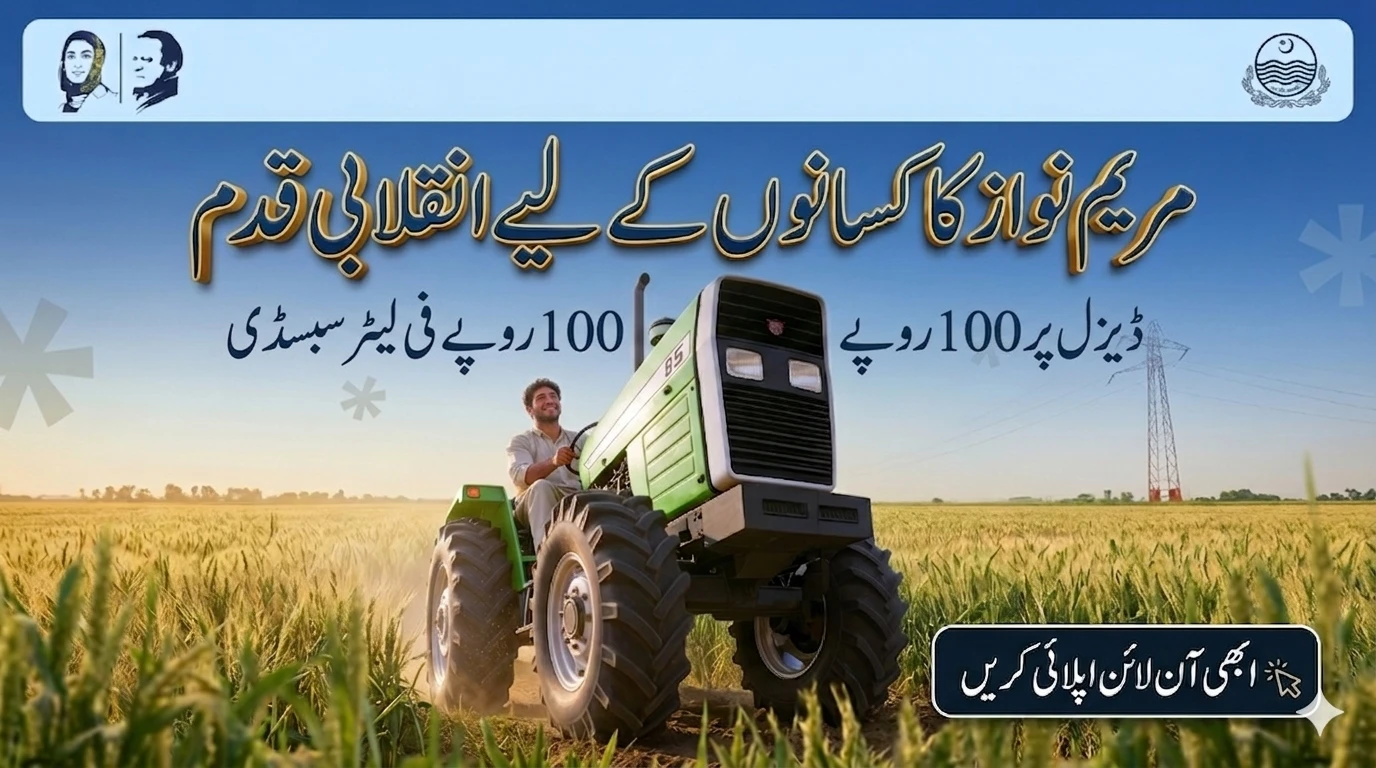
The agriculture sector in Punjab is currently facing one of its toughest economic periods. With global fuel prices shifting and local inflation rising, the cost of running a farm has reached record highs. To tackle this, Chief Minister Maryam Nawaz Sharif has introduced a major financial cushion for the farming community.
This new initiative offers a 100 PKR per liter subsidy on diesel, specifically calculated on a per-acre basis. If you are a grower in Punjab, understanding how this money reaches your pocket is essential for your next harvest cycle.
Understanding the New Diesel Relief Package
For the first time in recent years, the provincial government is directly addressing the “input cost” crisis. Diesel is the backbone of modern farming. It powers the tractors that plow the land and the tube wells that provide water to thirsty crops.
When the price of high-speed diesel climbs toward 520 PKR per liter, the profit margins for small and medium farmers often vanish. The government’s decision to slash 100 PKR off that cost per liter is intended to keep food prices stable and ensure that farmers don’t stop sowing due to high costs.
Why the “Per Acre” Metric Matters
The subsidy isn’t just a random discount at the fuel station. It is structured around land ownership. By linking the subsidy to the number of acres a farmer manages, the government ensures that the relief is proportional to the work being done.
- Fair Distribution: Larger plots require more tractor hours, meaning more fuel.
- Targeted Aid: This system prevents “fuel hoarding” by ensuring the money is tied to actual agricultural land.
- Digital Accuracy: The use of land records makes it harder for non-farmers to exploit the system.
How the 100 PKR Subsidy Works
The math is simple but significant. For every liter of diesel used for agricultural purposes, the Punjab government will effectively pay 100 PKR of that price.
How much can a farmer save?
If a specific crop requires 15 liters of diesel per acre for land preparation and irrigation, a farmer with 10 acres could save 15,000 PKR in a single phase of the season. When you multiply this across the entire growing cycle—from tilling to harvesting—the savings can help cover the costs of seeds or high-quality fertilizers.

The Role of the CM Punjab Kissan Card
You cannot talk about agricultural relief in 2026 without mentioning the Kissan Card. This digital tool has become the primary bridge between the government and the grower.
Why you need the Kissan Card for this subsidy
The Punjab government is moving away from cash-handouts or paper vouchers. These old methods were slow and often prone to corruption. Instead, the diesel subsidy is being funneled through the Kissan Card system.

- Verification: The card proves you are a registered farmer with the Punjab Agriculture Department.
- Direct Transfers: Funds are sent directly to the digital wallet associated with your card.
- Transparency: You can track exactly how much relief you have received through the official mobile app or designated kiosks.
If you haven’t registered for a Kissan Card yet, this diesel subsidy is the strongest reason to do so immediately. The registration process usually requires a visit to the nearest Agriculture Extension office with your CNIC and land ownership proof.
Eligibility: Who Qualifies for the Relief?
While the program is broad, it is specifically designed to help those who feel the pinch of inflation the most.
- Registered Growers: You must be listed in the Punjab land record system.
- Active Kissan Card Holders: As mentioned, this is the “key” to the lock.
- Land Ownership Limits: While the scheme covers various sizes, priority is often given to “small to medium” landholders who lack the massive capital of corporate farms.
- Verified Land Records: Your land must be computerized in the “Arazi Record Center” to ensure quick processing.
Steps to Claim Your Diesel Subsidy
Claiming this relief doesn’t require standing in long lines at a government office. The process has been simplified to be as “hands-off” as possible for the farmer.
1. Check Your Registration Status
Ensure your mobile number is linked to your Kissan Card. Most announcements and confirmation SMS messages are sent to this number. If your number has changed, visit your local bank or agriculture office to update it.
2. Digital Wallet Activation
The subsidy is often disbursed into a digital account (like those managed by the Bank of Punjab). Ensure your account is active and you remember your PIN code.
3. Monitoring the Announcement Dates
The government usually releases these funds in phases corresponding to the sowing seasons (Kharif or Rabi). Stay tuned to local agricultural bulletins or the “CM Punjab” social media handles for the exact dates when the 100 PKR per liter credit will hit your account.
Broader Impact on the Agriculture Sector
This subsidy isn’t just about saving a few thousand rupees; it’s about the survival of the rural economy.
Lowering the Cost of Wheat and Vegetables
When diesel costs go down, the “cost of production” for crops like wheat, rice, and corn also drops. This means farmers can sell their produce at competitive prices without losing money. It also helps control the price of flour and vegetables for the urban population in cities like Lahore, Multan, and Faisalabad.
Encouraging Mechanization
High fuel prices often force farmers to go back to manual labor or outdated methods, which results in lower yields. By making diesel more affordable, the government encourages farmers to use modern tractors and harvest machinery, which leads to better crop quality and higher exports for Pakistan.
Challenges and What to Watch Out For
No government program is without its hurdles. Farmers should be aware of a few things to ensure they don’t miss out.
- System Lag: During peak season, digital systems can slow down. It’s best to verify your documents before the rush.
- Scams: Always remember that the government will never ask for your bank PIN or a “fee” over the phone to release your subsidy. Only use official channels.
- Land Disputes: If your land is under a legal dispute or the records haven’t been updated after a transfer, the subsidy might be delayed.
Conclusion: A Step Toward Farmer Prosperity
The Punjab Diesel Subsidy of 100 PKR per liter is a vital lifeline. By lowering the barriers to modern farming, CM Maryam Nawaz is signaling that agriculture remains the top priority for the province.
For the average farmer, this relief represents more than just cheaper fuel—it represents a chance to invest more in their land, their family, and the future of Pakistan’s food security. Make sure your Kissan Card is ready, your records are updated, and you are prepared to take full advantage of this historic relief package.
Frequently Asked Questions (FAQs)
1. Can I get the diesel subsidy if I don’t own a tractor?
Yes. The subsidy is based on your land acreage. Even if you rent a tractor, the subsidy helps you cover the increased rental costs that owners charge due to high fuel prices.
2. How much total money will I receive per acre?
The total amount depends on the government’s calculation of “average liters required per acre” for the current crop. For example, if they estimate 20 liters per acre, you would receive 2,000 PKR per acre (100 PKR x 20 liters).
3. Is this subsidy available for farmers in Sindh or KPK?
This specific “100 PKR per liter” announcement is a Punjab-specific initiative by CM Maryam Nawaz. However, other provinces often launch similar programs, so check with your local agriculture department.
4. What should I do if my Kissan Card is blocked?
You should visit the nearest branch of the Bank of Punjab (BOP) or the Agriculture Extension office. They can help you biometric-verify your identity and unblock the card.
5. Will this subsidy continue for every crop season?
The current announcement is a response to the 2026 fuel price hike. While the government aims to provide ongoing support, the duration of such subsidies often depends on the provincial budget and fuel market stability.