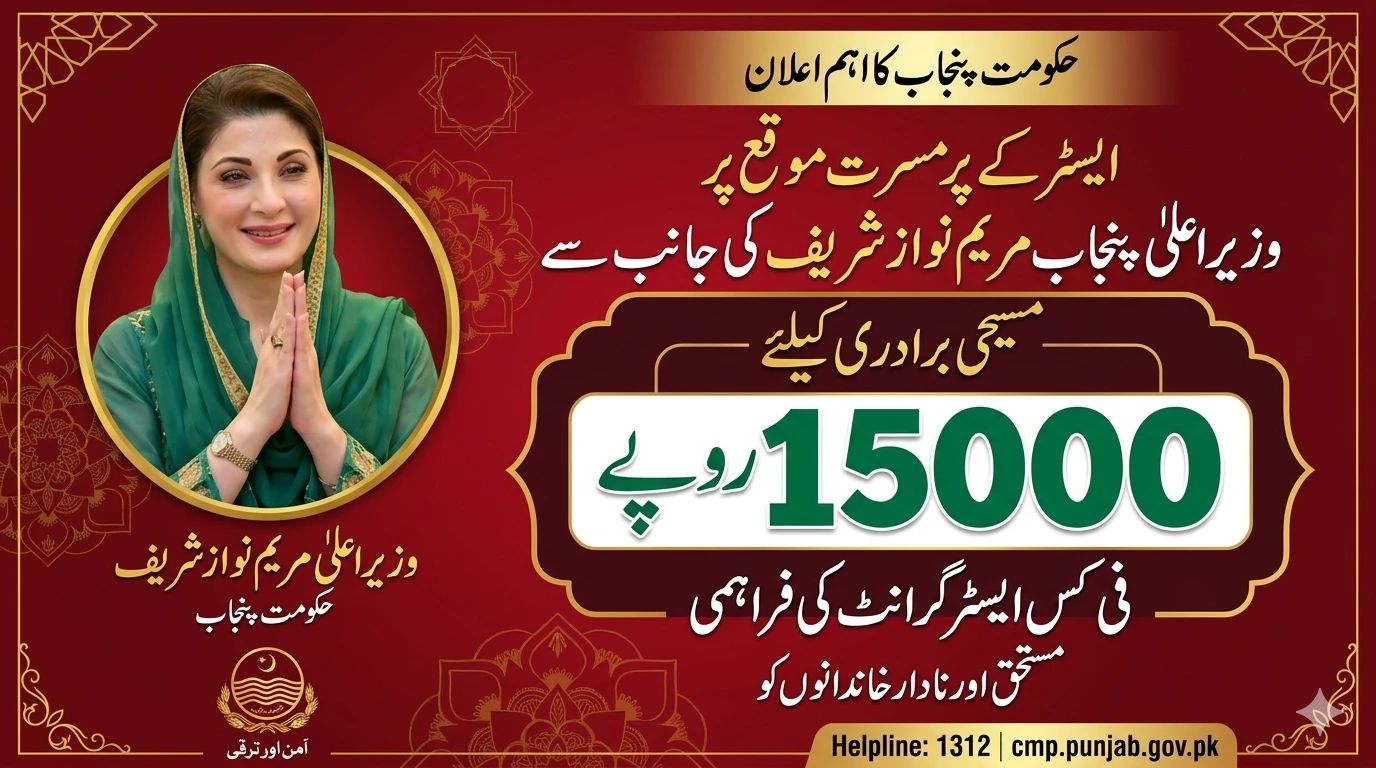
The arrival of Easter in 2026 brings a significant message of hope and support for the Christian community across Punjab. Following the vision of Chief Minister Maryam Nawaz Sharif, the provincial government has officially rolled out a special financial relief package. This initiative provides a direct cash grant of 15,000 PKR to deserving families, ensuring that the financial burden of the holiday does not overshadow the spirit of celebration.
This program is not just a one-time payment; it is part of a larger, structured effort to uplift minority groups within the province. By increasing the grant amount and streamlining the distribution process, the Punjab government aims to foster a sense of belonging and security among all its citizens.
What is the CM Punjab 15,000 Easter Grant?
The Easter Grant is a dedicated social safety net program designed specifically for the Christian residents of Punjab. While the government runs various welfare schemes throughout the year, this particular grant is timed to coincide with the religious festivities of Easter.
In previous years, the festival grant was set at 10,000 PKR. However, recognizing the impact of global inflation and the rising cost of essential goods, CM Maryam Nawaz approved an increase to 15,000 PKR per eligible household for 2026. This increase reflects a 50% jump in support, aimed at providing tangible relief for food, clothing, and holiday preparations.
The Role of the Provincial Government
The Department of Human Rights and Minority Affairs, in collaboration with the Punjab Information Technology Board (PITB), manages the logistics of this scheme. The goal is to ensure that the money reaches the “right hands” without the interference of middlemen or unnecessary bureaucratic delays.
Who Can Receive the 15,000 PKR Grant?
To maintain transparency and ensure the most vulnerable individuals are prioritized, the government has set specific eligibility markers. Not every resident is automatically eligible; the program targets those who fall within lower-income brackets.
1. Religious Affiliation
The primary requirement is that the applicant must belong to the Christian community. This is verified through the religion section on the applicant’s Computerized National Identity Card (CNIC).

2. Residency in Punjab
Only those with a permanent address in Punjab (as mentioned on their CNIC) can apply. Residents of other provinces like Sindh or KP are not covered under this specific provincial fund.
3. Income Threshold (Poverty Scorecard)
The government often uses the National Socio-Economic Registry (NSER) data—the same data used by the Benazir Income Support Program (BISP)—to identify beneficiaries. Typically, families with a poverty scorecard (PMT) below 32 or 35 are prioritized.
4. Valid Documentation
A valid, non-expired CNIC is mandatory. If your ID card is expired, the biometric verification system will not be able to process your payment at the bank or retail point.
Step-by-Step Registration Guide for 2026
Many people wonder if they need to fill out a new form every year. The answer depends on whether you are already registered in the provincial welfare database.
Checking Your Eligibility Online
For 2026, the government has integrated the Easter Grant check into the existing minority welfare portals. You can often verify your status by:
- Visiting the official Punjab Minority Affairs website.
- Entering your 13-digit CNIC number without dashes.
- Clicking on the “Check Status” button to see if your name is on the list of approved beneficiaries.
The SMS Verification Method
In many districts, a dedicated SMS code is activated during the Easter season. While 8171 is the standard for BISP, the Punjab government sometimes uses alternative codes like 8070 or 9999 for specific provincial relief packages. Always look for official government advertisements in newspapers or on verified social media handles before sending your data to any number.
Manual Registration at DC Offices
If you believe you are eligible but cannot find your record online, you can visit the office of the Deputy Commissioner (DC) or the Assistant Commissioner (AC) in your tehsil. These offices have dedicated “Minority Desks” where staff can help you register manually by verifying your income and identity.
How the Payment Distribution Works
The Punjab government has moved away from physical checks and cash-in-hand distributions at local offices to prevent corruption. The 2026 payment system is entirely digital and biometric.
Bank of Punjab (BOP) Partnership
Most festival grants are disbursed through the Bank of Punjab. Once you receive an SMS confirmation that your grant is ready, you can visit any BOP branch or an authorized ATM.
Biometric Verification (Fingerprint)
To withdraw the 15,000 PKR, the beneficiary must undergo a biometric thumbprint scan. This ensures that only the person named on the CNIC can receive the funds. If you have elderly family members whose fingerprints have faded, they may need to visit a NADRA office first to update their records or seek a “manual override” through the DC office.
Retailer Points
In rural areas where bank branches are far away, the government often authorizes Connect by BOP or similar digital payment agents to handle the payouts. Always ensure you receive a printed receipt after your transaction.
Difference Between the “Minority Card” and the “Easter Grant”
It is important to distinguish between these two separate initiatives introduced by CM Maryam Nawaz:
- The Minority Card: This is a long-term welfare card that provides 10,500 PKR every three months (quarterly). It acts like a regular stipend for low-income minority families.
- The Easter Grant: This is a special, one-time “top-up” or “festival gift” of 15,000 PKR. It is specifically meant for the holiday and is usually given in addition to any existing stipends the family might be receiving.
If you already have a Minority Card, your chances of receiving the Easter Grant are very high, as you are already pre-verified as a deserving candidate.
Why This Program Matters for Social Harmony
Financial aid is more than just money; it is a tool for social inclusion. In a country like Pakistan, where inflation has hit the poor the hardest, special grants for religious holidays ensure that minority communities feel supported by the state.
Chief Minister Maryam Nawaz has frequently stated that the protection and prosperity of minorities are a top priority for her administration. By increasing the budget for these grants by 60% this year, the government is sending a clear message of interfaith solidarity.
Staying Safe from Scams and Fraud
Whenever the government announces a cash program, scammers often try to trick people. Follow these rules to keep your money safe:
- No Processing Fees: The government never asks for money to register you. If someone asks for 500 or 1,000 PKR to “guarantee” your grant, they are lying.
- Don’t Share OTPs: Never tell anyone the 4-digit or 6-digit code you receive on your phone.
- Use Official Points: Only go to official bank branches or authorized retailers mentioned by the government.
- Helpline: If you face any issues, call the CM Punjab Helpline at 0800-02345 to lodge a complaint.
Conclusion
The Punjab CM Easter Grant 2026 is a vital lifeline for thousands of Christian families. By providing 15,000 PKR directly into the hands of those who need it, the government is making the holiday more accessible and joyful. Whether you are checking your status online or visiting a local bank for biometric withdrawal, ensure your documents are ready and you follow the official guidelines.
Frequently Asked Questions (FAQs)
1. Can a family receive both the Ramzan Relief and the Easter Grant?
Yes. If a Christian family meets the criteria for both poverty-based relief (like the Ramzan package) and the religious festival grant, they can benefit from both, provided they are registered in the system.
2. What should I do if my biometric verification fails?
Biometric failure is common among laborers or the elderly. You should visit your local NADRA office to refresh your fingerprints or contact the Social Welfare Department to request a manual verification process.
3. Is the 15,000 PKR per person or per household?
The grant is generally issued “per household” based on the family head’s CNIC. However, in some special cases or through specific minority cards, multiple members may be eligible if they live in separate registered units.
4. When will the 2026 payments start?
Payments typically start 1 to 2 weeks before Easter Sunday. For 2026, the distribution began in late March and continued through early April.
5. Do I need to be a BISP beneficiary to get this grant?
While many beneficiaries are pulled from the BISP list, it is not the only way. You can also qualify if you are registered with the Punjab Human Rights and Minority Affairs department or hold a Minority Card.