If you live in or travel to Islamabad, you know that the city’s security setup can be a bit of a maze. From the winding roads of the Margalla Hills to the busy borders of Rawalpindi, checkpoints have always been a staple of life in the capital. However, a major shift is currently underway that will change how you enter and exit the city.
In a move aimed at balancing high-level security with better traffic flow, the government has decided to drastically cut down the number of entry points into the federal capital. This isn’t just a small tweak; it is a complete overhaul of how the city breathes.
From 109 to 25: The Logic Behind the Consolidation
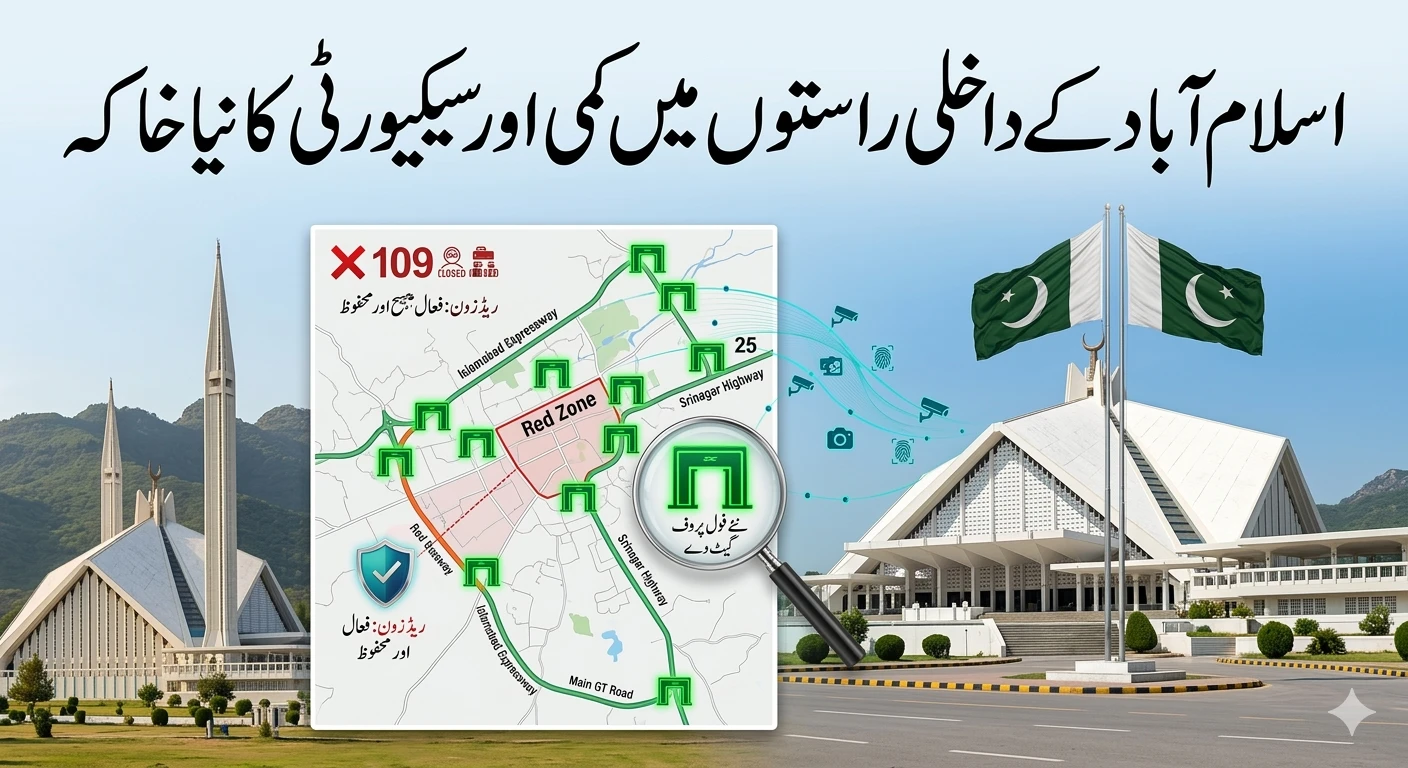
For years, Islamabad had a staggering 109 different ways for vehicles to enter the city limits. While this gave drivers plenty of options, it created a massive headache for law enforcement. Managing over a hundred points meant spreading resources thin.
Interior Minister Mohsin Naqvi recently chaired a high-level meeting where the decision was finalized to bring that number down to just 25. But why such a big drop?

The goal is “quality over quantity.” By focusing on 25 main gates, the Islamabad Police and security agencies can install better technology, more cameras, and more experienced staff. Instead of having a dozen poorly manned “leakage points,” the city will now have 25 foolproof gateways.
Making Security More Than Just a Show
One of the most interesting points from the recent meeting was the Minister’s stance on “visible effectiveness.” In the past, some checkpoints felt like they were there just to slow down traffic without actually catching anything suspicious.
The new 2026 plan demands that every remaining checkpoint must serve a clear, practical purpose. If a post is there, it must be working. This means better monitoring and a move away from the “stop and go” tradition that rarely yielded results.

The Transformation of the Red Zone
The Red Zone is the heart of Pakistan’s government. It houses the Parliament, the Supreme Court, and most foreign embassies. For a long time, the Red Zone has been a place of high walls and blocked roads.
Under the new directives, the Red Zone is being made “fully operational in practical terms.” This suggests a move toward a more organized security perimeter. Instead of temporary containers and messy blocks, the authorities are working on a strategy that keeps the area safe without making it look like a fortress under siege.

Technology’s Role in the Red Zone
While the official report focuses on manpower and strategy, insiders suggest that the reduction in entry points will be supported by advanced surveillance. By narrowing the entries to the Red Zone, security forces can use facial recognition and automated number plate readers (ANPR) more effectively.
Civic Improvements: Cleanliness and Encroachments
It is rare to see a security meeting also discuss trash collection and street cleaning, but that is exactly what happened here. The government is linking a “Safe City” with a “Clean City.”
Interior Minister Mohsin Naqvi has placed the responsibility of cleanliness and the removal of illegal encroachments directly on the shoulders of Assistant Commissioners (ACs).
Why the Security-Cleanliness Link Matters
When roads are cluttered with illegal stalls, carts, or debris, it creates “blind spots.” These spots can be used for illegal activities or simply block the view of security cameras. By clearing the major roads of unnecessary items, the city becomes:
- Easier to monitor: Clear sightlines for police.
- Faster for emergencies: Ambulances and police vans can move without hurdles.
- More attractive: Restoring Islamabad’s reputation as one of the most beautiful capitals in the world.
Impact on Daily Commuters
If you drive from Rawalpindi to Islamabad every morning, you might be worried. Will 25 entry points create massive traffic jams?
Actually, the hope is for the opposite. When there are 109 entries, traffic is often chaotic. By streamlining the flow into 25 well-managed points, the authorities can use better lane management. The removal of “unnecessary items” from major roads, as ordered by the Minister, should also free up extra lanes that were previously blocked.
Accountability for the Administrative Staff
A key takeaway from the latest administrative meeting was the promise of full support for the staff, but with high expectations. The Chief Commissioner, IG of Islamabad Police, and various DIGs were all present. This shows that the plan has “buy-in” from every level of the government.
The administrative staff is being given the tools they need, but in return, they are expected to show results in law enforcement and city development.
A Look at the Future: What to Expect in the Coming Months
Residents can expect to see physical changes on the ground very soon. You will likely see certain smaller, less-used entries being blocked off with permanent dividers or green belts. At the same time, the 25 primary entries—like those on the Expressway, Srinagar Highway, and GT Road—will likely see upgrades.
The Role of the Public
As these changes roll out, public cooperation is essential. The government is focusing on making the city “foolproof.” While the transition might take some time to get used to, the end goal is a capital where you can feel safe and move freely without a checkpoint on every corner.
Frequently Asked Questions (FAQs)
1. Which entry points are staying open in Islamabad?
While the exact list of the 25 points hasn’t been released to the general public for security reasons, it is confirmed that all major arteries like the Islamabad Expressway, Srinagar Highway, and main GT Road entries will remain functional with upgraded security.
2. Will these changes increase my morning commute time?
Initially, there might be a “learning curve” as drivers adjust to the new routes. However, the removal of illegal encroachments and the streamlining of checkpoints are designed to make the overall flow of traffic faster in the long run.
3. What does “fully operational Red Zone” mean?
This means that the security strategy for the high-profile area is being moved from a “reactive” state to a “proactive” one. It involves better planning, smarter entry/exit protocols, and ensuring all security equipment is working 24/7.
4. Who can I contact if my street is being encroached upon?
According to the latest orders, Assistant Commissioners are now directly responsible for removing encroachments and ensuring cleanliness. You can contact the Islamabad Administration or the Deputy Commissioner’s office to lodge a complaint.
5. Are these changes permanent?
Yes, this is part of a long-term strategic plan for 2026 to modernize the capital’s security and administrative framework.
Final Thought:
Islamabad is entering a new era of urban management. By cutting down the entries from 109 to 25, the government is betting on a “less is more” approach. If successful, this could serve as a model for other major cities in Pakistan looking to balance the need for safety with the desire for a clean, livable environment.