Have you ever stood in a long line at a bank or a government office, only to be told that you can’t get your work done because you forgot your original plastic ID card at home? It is a frustrating experience that millions of Pakistanis have faced. However, the way we prove who we are is changing rapidly.
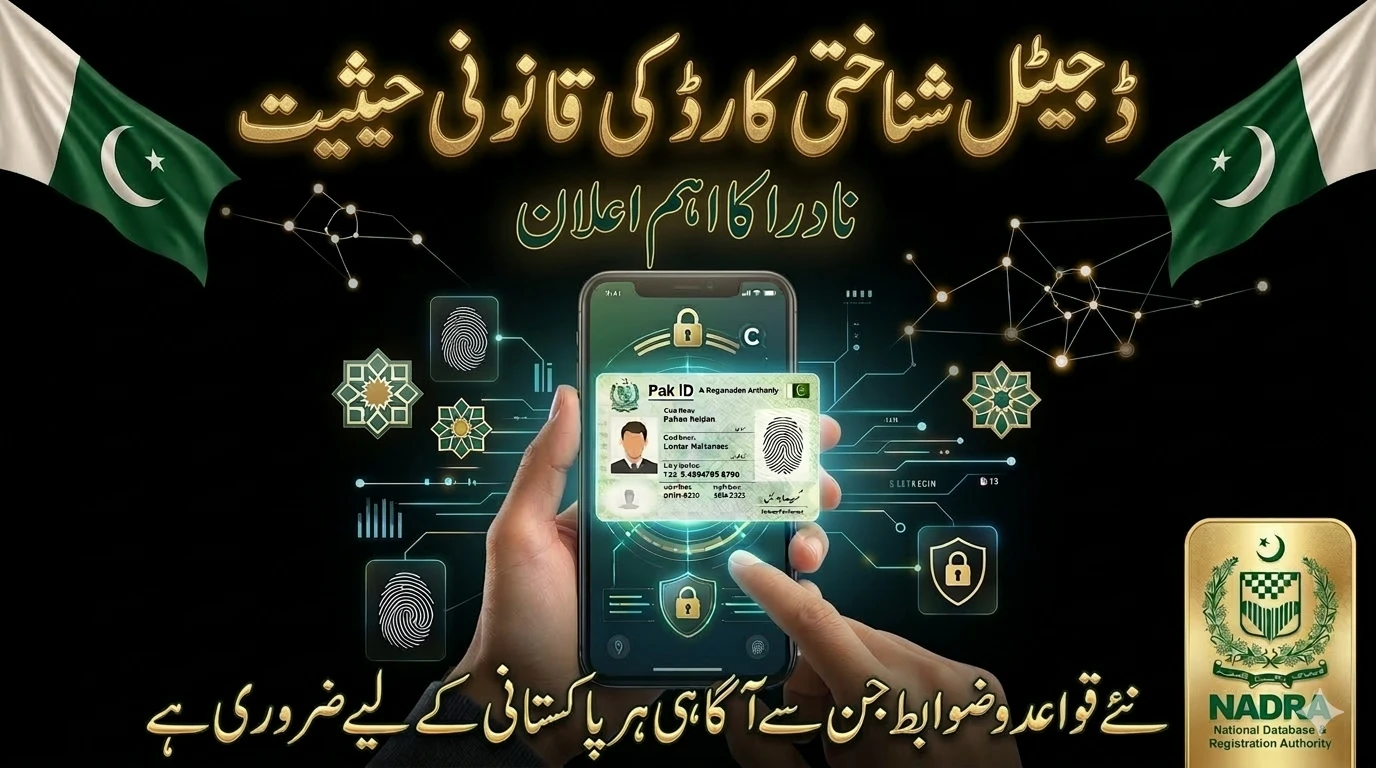
In a major move toward a “Digital Pakistan,” the National Database and Registration Authority (NADRA) has issued a clear and firm warning to all institutions. Whether it is a private bank, a telecom shop, or a government department, they can no longer refuse your Digital CNIC.
In this guide, we will break down what these new rules mean for you, the legal power behind your smartphone screen, and how you can use this information to save time and protect your data.
The Big Announcement: Why NADRA Intervened
For a long time, there has been a gap between technology and practice. While NADRA launched the “Pak Identity” app to make life easier, many office clerks and bank managers were still stuck in the old ways. They would insist on seeing a physical card or, worse, demand a paper photocopy.

Recently, the NADRA spokesperson issued a formal notification from Lahore. The message was simple: A Digital CNIC is exactly the same as a physical one in the eyes of the law. This notice came after several reports of citizens being turned away because they only had their digital ID available on their phones.
Understanding the Legal Power: Regulation 9 and 10
To understand why you have the right to use a digital ID, we need to look at the rules. You don’t need to be a lawyer to understand this. NADRA operates under a specific “Ordinance” (a set of laws).
Under Regulations 9 and 10 of the NADRA framework, digital identity documents are given full legal status. This means:

- Your digital ID is a “valid proof of identity.”
- It carries the same weight as the plastic card in your wallet.
- Refusing to accept it is a violation of the official legal framework.
When you show your ID on the Pak ID app, you aren’t just showing a picture; you are showing a legally verified electronic document.
Who is Required to Accept Your Digital ID?
NADRA has made it very clear that this isn’t an optional choice for organizations. The instructions have been sent to a wide range of sectors, including:

- Banking and Financial Institutions: For opening accounts, withdrawing cash, or verifying biometrics.
- Government Departments: Including excise offices, passport offices, and utility providers.
- Telecom Operators: When you are buying a SIM card or changing your data plan.
- Private Entities: Any office that requires identity verification for entry or services.
If any of these places tell you “we only accept the original plastic card,” they are actually going against government policy.
Why the Move to Digital is Better for You
You might wonder why NADRA is pushing so hard for digital IDs. It isn’t just about being modern; it’s about safety and efficiency.
1. Stopping Identity Theft
When you give someone a paper photocopy of your CNIC, you lose control of that information. That piece of paper can be copied again, scanned, or misused by bad actors. Digital IDs reduce the need for unnecessary physical copies, which keeps your personal data much safer.
2. No More “Photocopy Culture”
We have a habit in Pakistan of asking for “two copies of everything.” This is a waste of paper and money. By using the digital version, institutions can verify your data electronically without needing a physical file.
3. Convenience on the Go
Most of us are more likely to forget our wallets than our smartphones. Having your ID on your phone means you are always “carrying” your documentation. Whether you are stopped at a check post or need to visit an office unexpectedly, your ID is right there in your pocket.
How to Access Your Digital CNIC
To benefit from these laws, you need to set up your digital profile correctly.
- Download the Pak Identity App: This is the official app by NADRA.
- Verification: You will need to log in and verify your identity using your CNIC number and biometrics (fingerprint scanning via your phone’s camera).
- The Digital Card: Once verified, your digital CNIC, NICOP (for overseas Pakistanis), or POC (Pakistan Origin Card) will be available on the dashboard.
What to Do if an Office Refuses Your Digital ID
Despite these clear rules, you might still run into a stubborn official. If a bank or office refuses to accept your digital ID, here is what you can do:
- Stay Calm and Inform: Politely inform them about the NADRA Lahore notification and mention Regulations 9 and 10. Often, the staff simply isn’t aware of the latest updates.
- Ask for a Supervisor: If the clerk refuses, speak to a manager. Most managers are better informed about legal compliance than front-desk staff.
- Lodge a Complaint: NADRA has encouraged citizens to report institutions that refuse digital IDs. You can visit a NADRA center or use their online portals to register a formal complaint.
The Future of Identity in Pakistan
The shift toward digital ID is part of a larger plan to make Pakistan a tech-forward nation. In the coming years, we expect to see even more services linked to the Pak ID app. From voting to healthcare access, your digital identity will be the “master key” to all government services.
By embracing this change now, you are not just making your own life easier; you are helping the country move away from slow, paper-based systems and toward a faster, more secure future.
Frequently Asked Questions (FAQs)
1. Is a screenshot of my CNIC the same as a Digital CNIC?
No. A screenshot is just an image and can be faked. A true Digital CNIC is the one accessed through the official Pak Identity app, which includes security features and live verification.
2. Can I use my Digital ID at the airport?
While NADRA says it is legally equivalent, some high-security areas like airports may still have their own specific protocols. It is always a good idea to keep your physical card as a backup for international travel until digital gates are fully implemented everywhere.
3. Does this apply to NICOP and POC holders too?
Yes! The notification specifically mentions that Digital CNIC, NICOP (National Identity Card for Overseas Pakistanis), and POC (Pakistan Origin Card) are all covered under the same legal status.
4. Is the Pak Identity app safe to use?
Yes, the app uses advanced encryption and biometric verification to ensure that only you can access your ID. It is much safer than carrying a physical card that could be lost or stolen.
5. Do I still need to pay for a physical card?
Yes. Currently, the digital ID is an extension of your physical identity. You still need to apply for a physical card to have a record in the database, but once you have it, you can use the digital version for daily tasks.
Final Thought:
The era of carrying around bulky files of photocopies is coming to an end. NADRA’s latest move is a win for every citizen. It gives you the power to prove who you are with just a few taps on your phone. Make sure you have the Pak Identity app ready, and don’t be afraid to stand up for your digital rights!