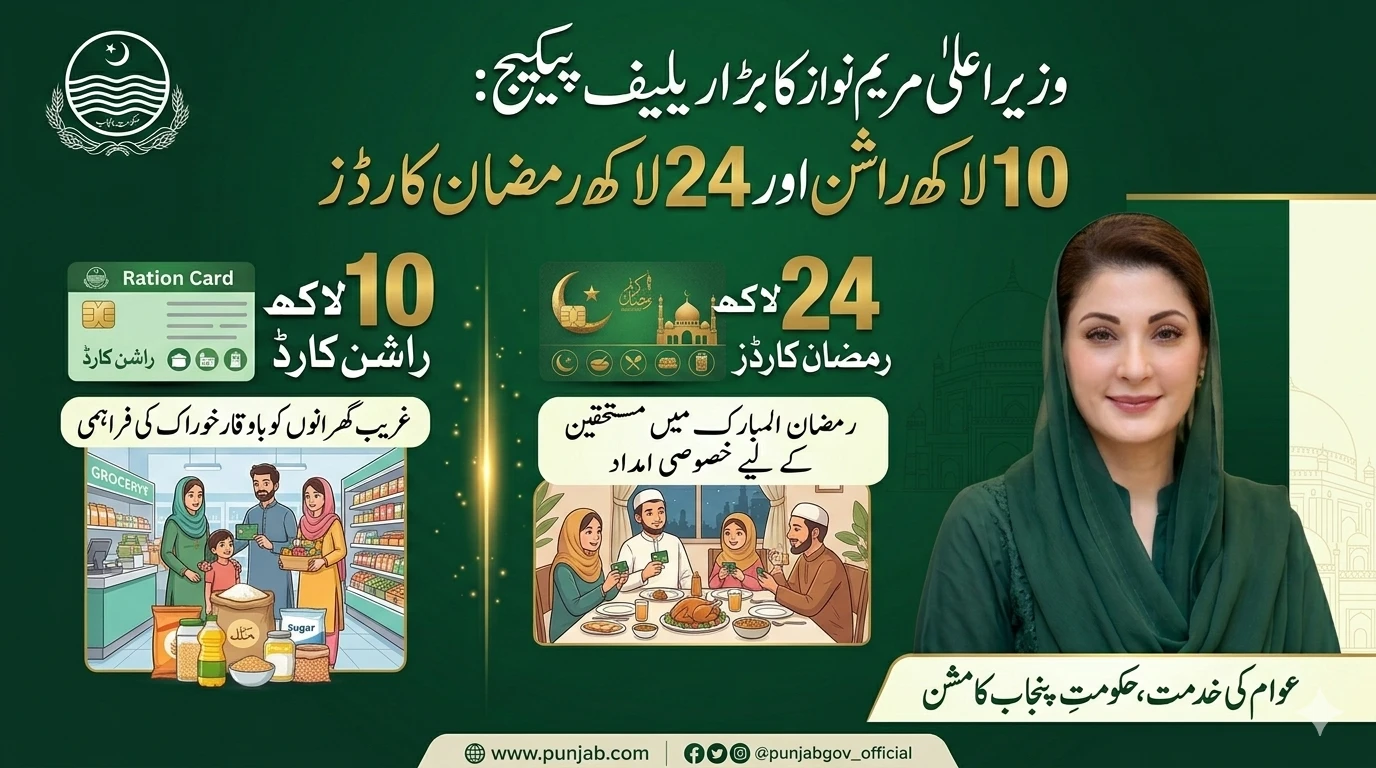
In a significant move to combat inflation and ensure food security for the most vulnerable sections of society, the Punjab government has launched a massive social welfare initiative. Under the leadership of Chief Minister Maryam Nawaz Sharif, the province has witnessed the strategic distribution of millions of aid cards designed to streamline the delivery of essential commodities and financial support.
This project isn’t just about handing out supplies; it’s about building a digital infrastructure that ensures help reaches the right people without the hurdles of the past. By integrating modern technology with local administrative efforts, the government is setting a new standard for provincial welfare in Pakistan.
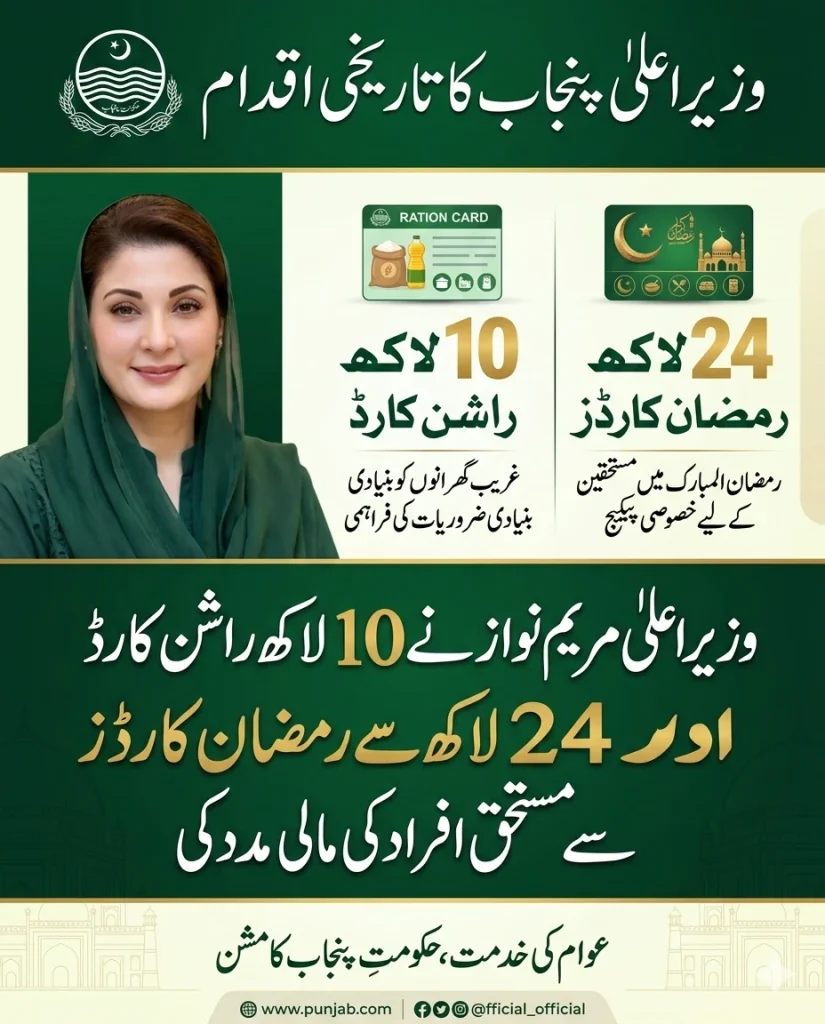
CM Punjab Distributed 10 Lakh Ration Cards and 24 Lakh Ramadan Cards
A New Era of Targeted Welfare in Punjab
For years, social safety nets in the region faced challenges related to transparency and accessibility. The current administration has addressed these issues head-on by moving toward a “card-based” system. This shift allows for better tracking of beneficiaries and ensures that resources are not diverted or wasted.
The primary focus of this latest push is twofold: providing year-round food security through Ration Cards and offering specialized relief during the holy month through Ramadan Cards. Together, these initiatives form a comprehensive shield for low-income households struggling with the rising costs of daily living.

Understanding the 10 Lakh Ration Card Initiative
The introduction of 1,000,000 Ration Cards marks a permanent shift in how Punjab handles food subsidies. Unlike one-time grants, these cards are intended to provide ongoing support to families identified as “mustahiq” (deserving) through rigorous data verification.
- Long-Term Security: These cards allow families to access basic food items like flour, ghee, and sugar at subsidized rates throughout the year.
- Network of Retailers: Beneficiaries can use their cards at a growing network of registered shops and government-run utility stores.
- Digital Integration: Every transaction is recorded, ensuring that the subsidy reaches the intended recipient directly.
The Impact of 24 Lakh Ramadan Cards
Recognizing the increased financial pressure families face during the holy month, the government distributed 2,400,000 specialized Ramadan Cards. This seasonal intervention is designed to ensure that the spirit of Ramadan is not dampened by the inability to afford a nutritious Iftar or Suhoor.
- Immediate Relief: These cards provide access to specialized food hampers containing essential items specifically needed during Ramadan.
- Financial Assistance: In many cases, these cards also facilitate direct financial transfers to help families cover extra holiday expenses.
- Wide Reach: By targeting over two million individuals, the government has significantly expanded the welfare net compared to previous years.
Data-Driven Governance: How Beneficiaries are Chosen
A common concern with large-scale welfare programs is the fairness of selection. To ensure 100% transparency, the Punjab government has relied on a combination of existing databases and new provincial registries.

The Role of the PSER and BISP
The backbone of this distribution is the Punjab Socio-Economic Registry (PSER). By cross-referencing this with the federal Benazir Income Support Programme (BISP), authorities can create a highly accurate profile of every household in the province.
- Eliminating Duplication: Using CNIC-linked data ensures that one individual cannot claim multiple benefits under different names.
- Targeting the Neediest: The system prioritizes widows, daily wage earners, and families with no stable source of income.
- Continuous Updates: The registry is designed to be dynamic, allowing new families to register as their financial situations change.
Innovation in Delivery: The Nigehban Model
One of the most praised aspects of CM Maryam Nawaz’s welfare strategy is the Nigehban Ramadan Package. This model focuses on the dignity of the citizen by moving away from traditional distribution points where people often had to wait in long, exhausting lines.
Doorstep Delivery
Instead of making people travel to centers, the government has organized a logistical operation to deliver aid directly to the doorsteps of verified households. This approach:
- Protects Dignity: It prevents the public “spectacle” of poverty that often occurs during large-scale distributions.
- Ensures Safety: It eliminates the risk of stampedes or heat-related illnesses that can happen at crowded collection points.
- Verifies Reception: Delivery teams use mobile apps to log every successful drop-off, providing real-time data to the provincial dashboard.
Local Oversight and Accountability
To ensure the program runs smoothly in every corner of the province, District Police Officers (DPOs) and Deputy Commissioners (DCs) have been given oversight roles. This localized management ensures that any logistical issues are resolved quickly on the ground.
Why This Matters for Punjab’s Future
The distribution of 3.4 million cards represents more than just a logistical feat; it represents a commitment to a “Citizen-First” philosophy. By using AI-driven hubs and digital dashboards to monitor welfare, Punjab is moving toward a more modern, transparent, and efficient form of government.
These efforts help stabilize the local economy by ensuring that even the poorest citizens have purchasing power for essential goods. It creates a ripple effect of security that benefits the entire province, reducing the desperation that often leads to social unrest.
Frequently Asked Questions (FAQs)
1. How can I check if I am eligible for the Ration or Ramadan Card?
Eligibility is primarily checked through the Punjab Socio-Economic Registry (PSER). You can visit a local registration center or check the official provincial portal with your CNIC to see your status.
2. What items are typically included in the Ramadan relief package?
The packages are designed to cover basic needs and usually include a specified amount of flour (atta), sugar, cooking oil or ghee, gram flour (baisan), and various pulses.
3. Are these cards valid for use at private grocery stores?
The cards are valid at all Government Utility Stores and a specific list of private retail partners that have been officially registered and equipped with the necessary digital scanning tools.
4. What should I do if my card is lost or stolen?
You should immediately report the loss to your local Assistant Commissioner’s office or the dedicated helpline provided by the Punjab government to have the card blocked and a replacement initiated.
5. Is the Ration Card a permanent benefit?
While the card itself is a long-term tool, eligibility is reviewed periodically through the PSER to ensure that the aid continues to go to those who truly need it as their economic conditions evolve.