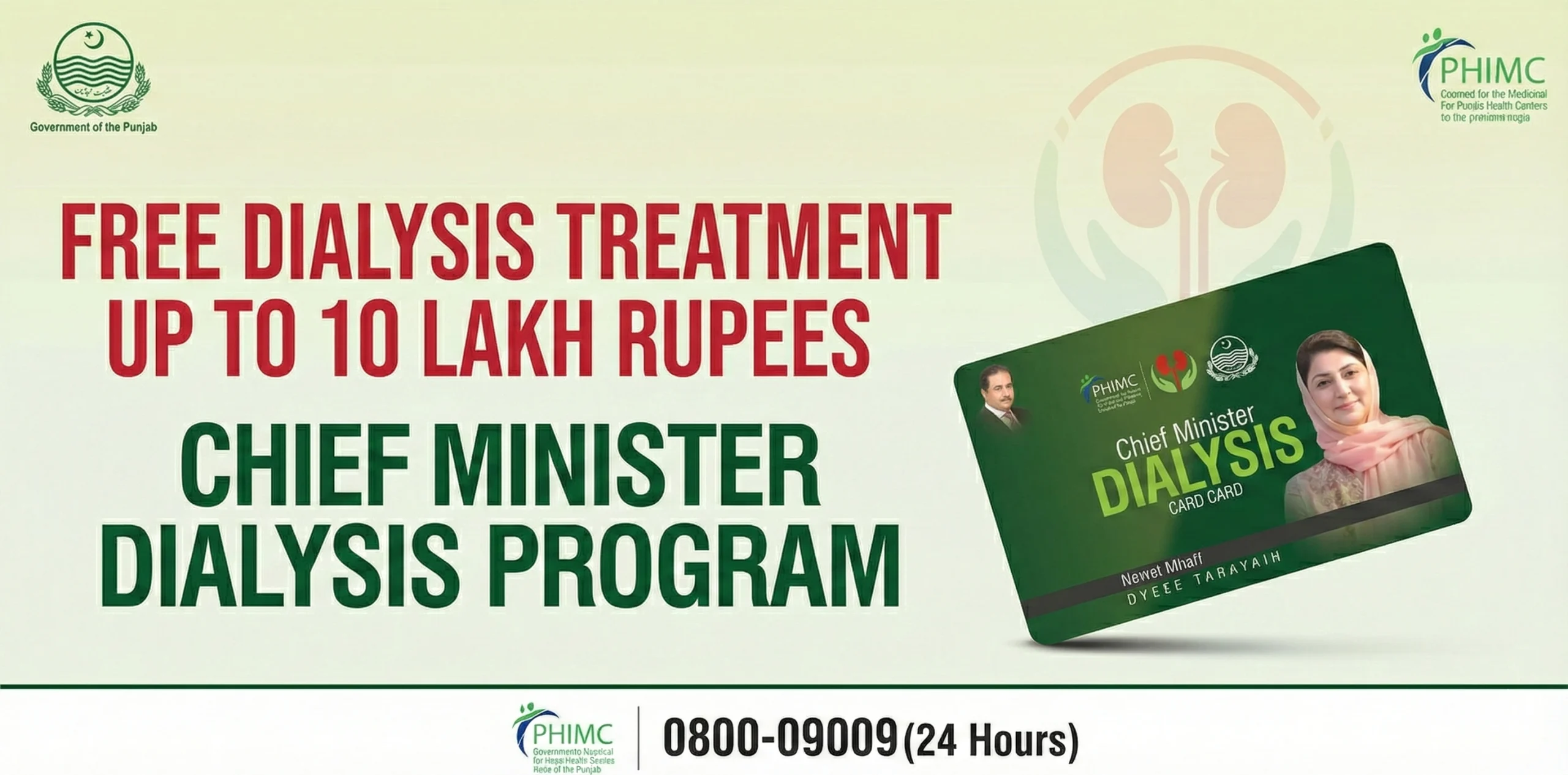
The Chief Minister’s Dialysis Program 2026 stands as a landmark healthcare initiative in Pakistan. Launched under the visionary leadership of Chief Minister Punjab, Maryam Nawaz Sharif, this program aims to ensure that no kidney patient in the province is deprived of treatment due to a lack of money.
By providing free, high-quality dialysis services and essential medicines, the Punjab government is transforming the lives of thousands of families. Below is a comprehensive guide to the program’s features, benefits, and registration process.
Chief Minister Dialysis Program Overview and Impact
Chronic Kidney Disease (CKD) is a growing health challenge in Pakistan. For many, the cost of regular dialysis—which is often required two to three times a week—is financially devastating. The CM Dialysis Program has stepped in as a lifeline, offering a fully funded solution for those in need.
Current Statistics (2026 Updates)
The program has achieved remarkable milestones in a short period:

- 35,400+ Patients Registered: Thousands of citizens have already received their special Dialysis Cards.
- 212+ Empanelled Hospitals: A vast network of both public and private hospitals is actively delivering services across all districts of Punjab.
- 1.38 Million+ Free Dialysis Sessions: This massive number of sessions highlights the scale and success of the initiative.
Financial Benefits: Rs. 1 Million per Patient
One of the most significant aspects of the Chief Minister Dialysis Program 2026 is the increased financial coverage. Each registered patient is entitled to treatment worth up to PKR 1,000,000 (10 Lakh) per year.
This package is broken down into two main categories:
- Dialysis Procedures (Rs. 850,000): This covers the cost of regular dialysis sessions at authorized centers.
- Medicines and Tests (Rs. 150,000): This portion is dedicated to diagnostic lab tests, essential medications, and related procedures like AV Fistula or Double Lumen Catheterization.
Note: The Chief Minister has strictly directed that dialysis treatment must continue uninterrupted, even if there are temporary administrative delays, ensuring patient safety remains the top priority.

Key Features of the Program
- Cashless Treatment: Patients do not need to pay out of pocket. The “Special Dialysis Card” allows for seamless, cashless access to services.
- Private Hospital Access: To reduce the burden on government hospitals, the government has partnered with top-tier private medical facilities.
- Free Medicines: All necessary medicines required during and after the dialysis process are provided free of cost.
- High Standards of Care: The Punjab Healthcare Commission (PHC) monitors these centers to ensure strict SOPs and prevent the spread of infections like Hepatitis or HIV.
Eligibility Criteria for Chief Minister Dialysis Program
To benefit from this free healthcare scheme, applicants must meet the following requirements:
- Residency: You must be a permanent resident of Punjab (verified via a valid CNIC).
- Medical Diagnosis: A confirmed diagnosis of Chronic Kidney Disease (CKD) from a qualified nephrologist.
- Documentation: Possession of medical reports and a recommendation for regular dialysis.
How to Register for the CM Dialysis Card
Getting registered for the program is a straightforward process designed for the convenience of the public.

- Visit an Empanelled Hospital: Go to any of the 212+ designated public or private hospitals with your CNIC and medical records.
- Verification: The hospital administration will verify your documents through the Punjab Health Initiative Management Company (PHIMC) system.
- Card Issuance: Once verified, you will be issued a Special Dialysis Card linked to your CNIC.
- Helpline Support: For assistance or to find the nearest center, you can call the official helpline at 0800-09009.
Conclusion
The Chief Minister Dialysis Program 2026 is more than just a medical scheme; it is a promise of dignity and health for the people of Punjab. By removing the financial barrier to life-saving treatment, the Punjab government is setting a high standard for social welfare in the region.
Whether you are a patient or a caregiver, this program ensures that “Access to dialysis is not a privilege, but a right.”