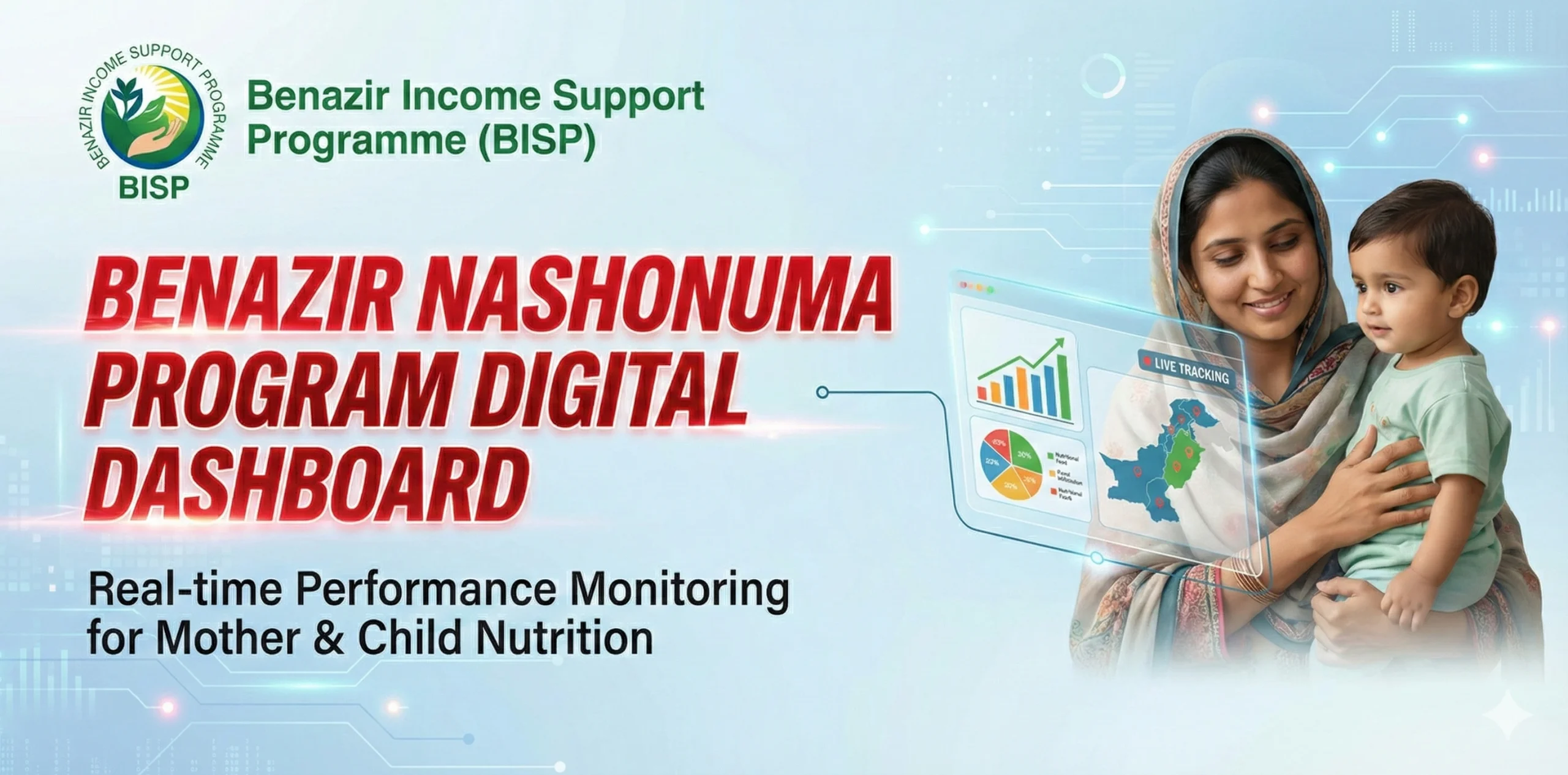
The Benazir Income Support Programme (BISP) has reached a significant milestone in its mission to combat malnutrition and stunting in Pakistan. With the official launch of the Benazir Nashonuma Program Digital Dashboard, the organization is embracing a new era of transparency, real-time monitoring, and data-driven decision-making.
BISP Launched Benazir Nashonuma Program Digital Dashboard
The Benazir Nashonuma Program Digital Dashboard is a sophisticated, real-time monitoring platform designed to track the progress of the Nashonuma initiative across the country. As a flagship project focused on maternal and child health, the Nashonuma program provides specialized nutritious food and cash transfers to pregnant and lactating women and children under two years of age.
The launch of this dashboard ensures that every rupee spent and every beneficiary served is tracked with precision, reducing manual errors and increasing the speed of interventions.
What is the Digital Dashboard and How Does it Work?
A digital dashboard is a centralized data management tool that visually tracks, analyzes, and displays key performance indicators (KPIs) and data points.
How it works:
- Data Integration: It pulls information from various Nashonuma centers located in District Headquarter Hospitals (DHQs) and Tehsil Headquarter Hospitals (THQs).
- Real-Time Processing: As health workers enter data regarding beneficiary registration, health check-ups, and the distribution of specialized nutritious food, the dashboard updates instantly.
- Visual Analytics: It converts complex raw data into easy-to-read charts, maps, and graphs, allowing officials to see which regions are performing well and which require more resources.
The Importance of the Real-Time Dashboard for BISP
The introduction of this technology is not just about modernization; it is about accountability.
- Preventing Stunting: By identifying gaps in service delivery immediately, BISP can ensure that no child misses out on the critical “first 1,000 days” of life.
- Evidence-Based Decisions: Instead of relying on monthly or quarterly reports, leadership can now make decisions based on what is happening today.
- Global Standards: Developed in collaboration with partners like the World Food Programme (WFP), it brings Pakistan’s social safety net in line with international digital standards.
Key Benefits of the Nashonuma Program Dashboard
The dashboard offers a wide range of benefits for both the government and the beneficiaries:
- Enhanced Transparency: Public and internal stakeholders can see the program’s reach, ensuring that funds are utilized correctly.
- Improved Maternal & Child Outcomes: By tracking health markers, the program can more effectively reduce stunting and wasting among children.
- Targeted Interventions: If a specific district shows a sudden drop in attendance or health quality, authorities can intervene immediately.
- Data Integrity: Digital logging minimizes the risk of fraudulent entries or duplicate beneficiaries.
How to Login to the Benazir Nashonuma Dashboard
While certain high-level analytics and sensitive beneficiary data are reserved for official use, the dashboard serves as a portal for authorized personnel.
- Access the Portal: Authorized officials can visit the official BISP Management Information System (MIS) or the dedicated Nashonuma portal link provided by the department.
- Enter Credentials: Users must enter their registered username and secure password.
- Two-Factor Authentication: For enhanced security, many government dashboards now require a secondary verification code sent to a registered mobile number.
- Public View: BISP often provides a “Public Window” on their official website (bisp.gov.pk) where general statistics and progress reports are accessible to the public without a login.
Conclusion
The BISP Launched Benazir Nashonuma Program Digital Dashboard is a transformative step for Pakistan’s social sector. By leveraging technology to monitor health and nutrition, BISP is ensuring a healthier future for the next generation. This digital leap ensures that the program remains transparent, efficient, and, most importantly, effective in its fight against poverty and malnutrition.