The way we look at security is changing fast. For a long time, police work was mostly about what happened on the streets and in our neighborhoods. But today, the sky is becoming just as busy as the ground. Small, remote-controlled drones are everywhere now. While most people use them for fun or photography, they can also be used for the wrong reasons.
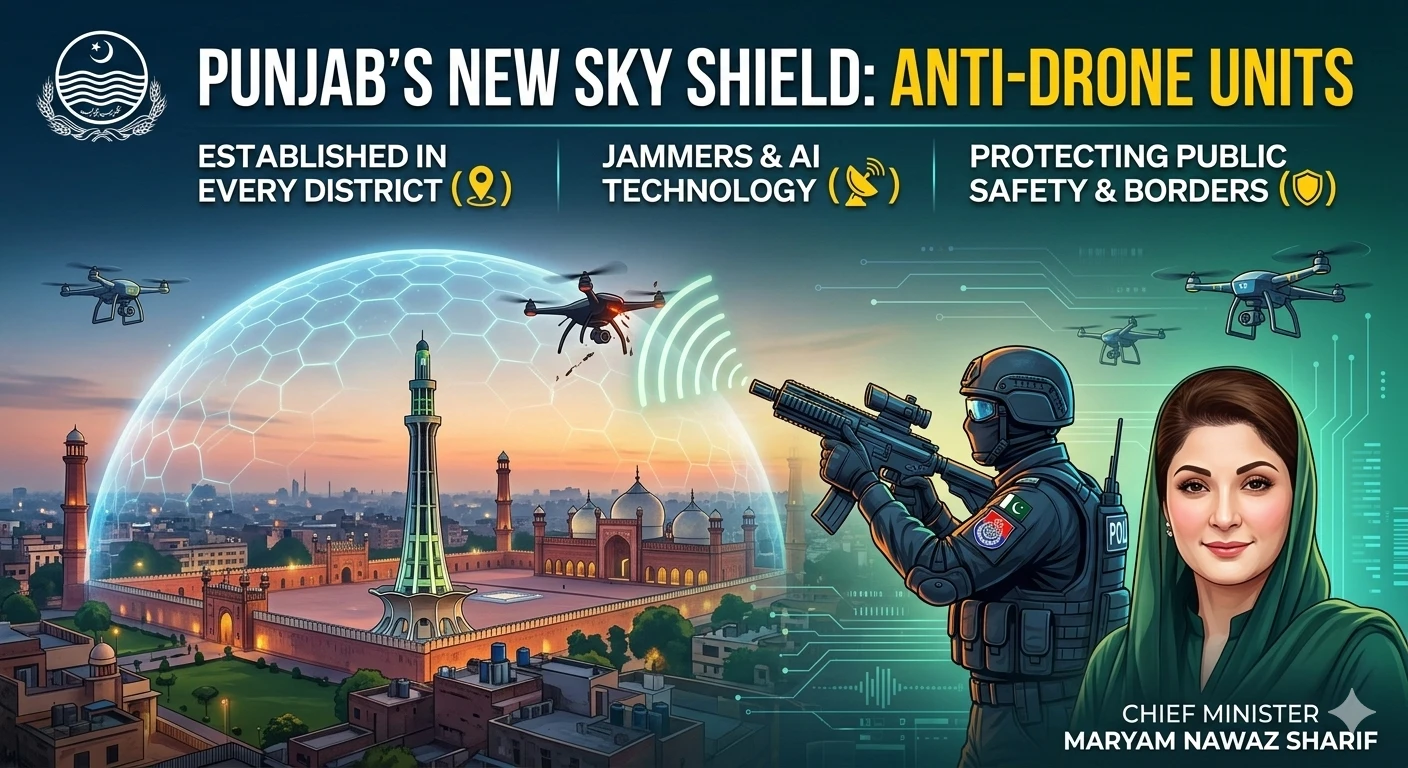
To stay ahead of these new risks, the Punjab government has launched a bold new initiative. Every single district in the province will now have its own dedicated Anti-Drone Unit. This plan is designed to make sure that as technology grows, our safety grows along with it.
Why Punjab is Building a “Sky Police” Force
You might wonder why we need police for the sky. The truth is that drones have become very advanced and very cheap. This makes them a great tool for filmmakers, but it also makes them a tool for criminals. From smuggling illegal items to spying on sensitive areas, drones can do things that were once impossible.
By setting up these units in every district, the government is making sure that help is always nearby. It is no longer just a big-city project for Lahore. Whether you are in Multan, Rawalpindi, or a small border town, there will be trained experts ready to monitor the local airspace.

How the New Anti-Drone Units Will Work
This isn’t just about buying new gadgets. It’s a complete system that combines people, technology, and smart planning. Here is how the government is setting things up to keep us safe.
Local Leadership and Faster Response
Each unit will be led by the District Police Officer (DPO). This is important because the DPO already knows the local area better than anyone else. By putting them in charge, the government ensures that the response is fast and fits the specific needs of that town or city.
Advanced Detection and Jammers
The primary tool of these units is the anti-drone system. These systems don’t usually shoot things out of the sky. Instead, they use “jammers.” These devices send out a signal that blocks the connection between the drone and its pilot. When this happens, the drone usually just lands safely or flies back to where it started.

High-Tech Surveillance Fleets
The police will also have their own “good” drones. These specialized fleets will be used to watch over crowded places like markets, festivals, and religious gatherings. They can see things from above that officers on the ground might miss, helping to prevent crimes before they even happen.
Stopping Smuggling and Protecting Borders
One of the biggest reasons for this new plan is the threat of cross-border smuggling. In recent years, drones have been used to fly drugs and weapons across borders into Punjab. Because these drones are small and fly low, they are hard for normal radar to see.

The new units in border districts will focus specifically on this problem. They will act like a “digital fence,” watching the sky 24/7 to catch any unauthorized flights. This is a huge step forward in national security that protects not just the province, but the whole country.
The Role of Artificial Intelligence (AI)
Technology is the heart of this project. The government is linking these district units to a central AI Hub. This hub uses smart software to analyze everything that happens in the sky.
- Pattern Recognition: The AI can tell the difference between a bird, a toy drone, and a potentially dangerous one.
- Predictive Policing: By looking at data, the AI can suggest where illegal drones are most likely to appear, allowing the police to be there waiting.
- Real-Time Dashboards: Local leaders like Deputy Commissioners will have a “live view” of their district’s security on a digital screen.
Keeping Public Events and Buildings Safe
We all enjoy going to big public events, but they can be a target for trouble. The Anti-Drone Units will provide a “security bubble” over these gatherings. If someone tries to fly a drone over a sensitive government building or a large crowd without permission, the units can ground it immediately.
This gives peace of mind to the public. You can enjoy your day knowing that the authorities have eyes in the sky looking out for your safety.
New Rules for Drone Owners
With this new technology comes new responsibility. The government isn’t trying to ban all drones; they just want to know who is flying them and why.
Temporary Bans and Section 144
You may have heard about temporary bans on drone flying. These are usually called Section 144 orders. These are often put in place for 30 days at a time to give the new units a chance to test their equipment and clear the air of any confusion during sensitive times.
Future Registration
Soon, there will be a clearer way for people to register their drones. Much like having a license for a car, having a registered drone will show that you are a law-abiding user. This helps the police focus their energy only on the “mystery” drones that shouldn’t be there.
A Smarter, Safer Punjab
This initiative shows that the Punjab government is thinking about the future. We can’t use old-fashioned methods to solve modern-day problems. By embracing AI, jammers, and local drone units, the province is becoming a leader in technology-based security.
The goal is simple: to make sure that the progress we make with technology doesn’t come at the cost of our safety. With these new units in every district, the people of Punjab can look up at the sky and know they are being protected.
Frequently Asked Questions (FAQs)
1. Will the police take my drone if I fly it for fun?
As long as you follow the local laws and any temporary bans (like Section 144), you should be fine. The police are looking for unauthorized or “hostile” drones. However, it is always best to check with local authorities before flying in public spaces.
2. Do these anti-drone units “shoot down” drones?
No, they rarely use physical force. Most systems use “soft-kill” technology, which means they use radio signals (jammers) to take control of the drone and force it to land or return home safely.
3. How do I know if there is a ban on flying drones in my area?
The government usually announces these bans through official news channels and social media. These bans are often temporary and related to specific security events or the setup of new equipment.
4. Can these units see into my house or private property?
The main goal of the Anti-Drone Units is to monitor public airspace and protect sensitive areas like borders and government buildings. Their focus is on the flight path of the drone itself, not on spying on private citizens.
5. Who is in charge of the unit in my town?
The District Police Officer (DPO) is the head of the Anti-Drone Cell in each district. They coordinate with the central AI Hub in Lahore to keep the local area safe.